The International Marking Code is a five-color system that identifies a queen’s birth year by its final digit. Blue represents years ending in 0 or 5, white in 1 or 6, yellow in 2 or 7, red in 3 or 8, and green in 4 or 9. A small, non-toxic paint mark or numbered disc is placed on the queen’s thorax so beekeepers can identify her age, lineage, and replacement status during inspections.
Color-coding turns queen identification into an immediate visual management tool. It reduces inspection time, supports accurate breeding records, and helps reveal when a colony has replaced its original queen through supersedure or swarming.
How the International Marking Code Works
The five-color rotation
The system repeats on a five-year cycle, with each color covering two possible year endings:
| Year ending in | Marking color |
|---|---|
| 0 or 5 | Blue |
| 1 or 6 | White |
| 2 or 7 | Yellow |
| 3 or 8 | Red |
| 4 or 9 | Green |
A queen emerging in a year ending in 4, for example, should receive a green mark. The same color will apply to queens emerging in years ending in 9.
Where the mark is applied
The mark is normally placed as a small dot on the queen’s thorax, where it is visible above the surrounding worker bees.
Specialized marking pens or water-based, permanent queen-marking paints are preferred because they are designed for controlled application and visibility. The paint should be sufficiently viscous to remain in place rather than running toward the neck or wing bases.
Applying the mark safely
The queen must be handled gently, using suitable queen-marking equipment and a controlled grip. After applying the mark, allow it to dry—approximately one minute according to the supplied guidance—before returning the queen to her cage or colony.
The objective is a small, clear mark, not a large quantity of paint. Poor handling or excessive paint can stress or injure the queen.
Why Color-Coding Matters in Queen Rearing
It makes queen age immediately visible
A marked queen provides an instant age reference during a routine hive inspection. The beekeeper does not need to search through paper records before deciding whether the queen is young, mature, or approaching a planned replacement period.
This is particularly valuable in commercial apiaries managing hundreds or thousands of colonies.
It speeds up hive inspections
Queens are often difficult to locate among large populations of worker bees. A visible thorax mark makes the queen easier to spot, reducing the time and disruption associated with finding her.
Faster inspections improve labor efficiency while allowing teams to audit more colonies consistently.
It identifies queen replacement
An unmarked queen in a colony that previously contained a marked queen is an important management signal. It may indicate natural supersedure, swarming, or another form of queen replacement.
The new queen may be healthy and productive, but her lack of a mark tells the beekeeper that the colony’s queen history has changed and should be updated.
It supports lineage and breeding records
Marking is most valuable when combined with systematic colony records. A beekeeper can connect the queen’s color and identification with information about her mother queen, genetic line, temperament, disease buildup, reproductive performance, and varroa mite levels.
This creates a practical foundation for selecting queens that perform well under field conditions.
It improves replacement planning
Queen age is one factor in scheduling re-queening programs. Color-coding helps managers identify colonies with older queens and prioritize them for evaluation or replacement rather than relying on uncertain estimates.
The color is a management prompt, not a substitute for assessing colony performance. A younger queen may still require attention if the colony shows poor brood patterns, undesirable temperament, or disease pressure.
How Color-Coding Supports Commercial Operations
It standardizes communication
A shared color system allows beekeepers, technicians, breeders, distributors, and buyers to communicate about queen age without relying on local terminology. A red-marked queen immediately indicates a year ending in 3 or 8 under the international standard.
This consistency is especially useful when colonies, queens, or inspection responsibilities move between teams or locations.
It reduces recordkeeping errors
Written records remain essential, but visual marking provides a second layer of verification. If the color on the queen conflicts with the colony record, the discrepancy can be investigated before breeding or replacement decisions are made.
This helps protect the accuracy of queen-production and distribution programs.
It supports scalable inspection workflows
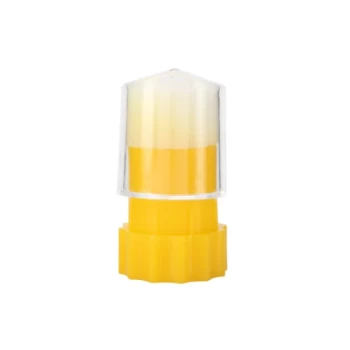
Large apiaries benefit from standardized tools that can be used consistently across many colonies. Color-coded pens, numbered discs, queen cages, and recordkeeping systems can form a coordinated inspection workflow.
For distributors and B2B resellers, this creates a practical one-stop product category serving queen breeders, commercial apiaries, and professional beekeepers.
It makes supply reliability operationally important
Queen-marking supplies are small tools, but a shortage can interrupt inspections, breeding identification, and fulfillment schedules. Professional customers therefore value not only product quality but also rapid response, dependable availability, and efficient order fulfillment.
A supplier with a full-spectrum portfolio can support related requirements, including marking paints, pens, cages, and queen-rearing equipment.
Understanding the Trade-offs
Color does not identify the exact age
The code identifies the year category, not the queen’s exact emergence date. A blue mark could represent a queen from a year ending in 0 or 5, so the colony record is still needed for precise age tracking.
Color should be treated as a rapid field reference rather than a complete historical record.
Marking does not prove performance
A correct color tells you when the queen was produced, but it does not establish her fertility, brood quality, temperament, disease resistance, or productivity. These characteristics require direct colony evaluation.
Overreliance on age or color can lead to unnecessary replacement of queens that are performing well.
Marks can fade or become difficult to read
Paint may wear, become obscured, or be confused with debris during the queen’s life. Inspections should verify the mark rather than assuming that every faint or missing mark indicates queen replacement.
Numbered discs can provide an additional identification method, particularly where individual queen tracking is important.
Handling always carries risk
Queen marking requires careful technique. Rough handling, prolonged confinement, paint applied in the wrong location, or insufficient drying time can create avoidable risks.
Training and suitable, purpose-designed marking supplies are more important than speed alone.
The color standard must be used consistently
The system is only effective when everyone follows the same color assignments. Mixing local conventions with the international code can create incorrect age assessments and unreliable breeding records.
Apiaries should document the standard they use and ensure that staff, customers, and supply partners understand it.
Making the Right Choice for Your Goal
Choose the marking method and supporting workflow according to the scale and precision of your operation.
- If your primary focus is rapid hive inspections: Use clearly visible, non-toxic color-coded marking paint or pens to locate queens quickly and identify their year category.
- If your primary focus is queen breeding: Combine the international color code with lineage, performance, disease, and varroa records to support reliable genetic selection.
- If your primary focus is commercial apiary management: Standardize colors, tools, handling procedures, and inspection records across all teams and locations.
- If your primary focus is queen distribution or resale: Maintain dependable access to marking supplies and related queen-rearing equipment so customer orders can be fulfilled without operational delays.
- If your primary focus is accurate colony auditing: Use color as a visual check, then confirm queen identity and replacement events against written or digital records.
A consistent marking system transforms queen identification from a difficult inspection task into a fast, reliable, and scalable management process.
Summary Table:
| Year Ending | Color |
|---|---|
| 0 or 5 | Blue |
| 1 or 6 | White |
| 2 or 7 | Yellow |
| 3 or 8 | Red |
| 4 or 9 | Green |
Streamline your queen rearing with top-quality marking paints, pens, and cages. For commercial beekeepers and distributors, HONESTBEE offers premium supplies, fast shipping, and expert support. Contact us for tailored solutions and bulk pricing.
Related Products
- Plastic Long Marker Device for Catching and Marking Bees Queen Bee Marking Tube and Cage
- One Hand Yellow Queen Marking Catcher Tube Cage Beekeeper Tool Accessory for Queen Bee
- Queen Bee Marking Tube Cage Bottle Catcher Holder with Clear Plastic Plunger Marker
- Queen Bee Marking Pen POSCA Queen Marking Pens for Beekeeping Bee Markers
- Queen Bee Marking Pen UNI Medium Point for Queen and Bee Marking
People Also Ask
- Where on the queen bee's body should the mark be applied? Master the Art of Safe Queen Identification
- What are the primary objectives for marking a queen bee? Master Hive Management and Data Tracking
- Why is the physical marking of a queen bee important? Ensure Precise Colony Replacement Cycle Tracking
- How do you capture and immobilize a bee for marking? Master Safe Queen Handling for Your Apiary
- What are the different methods for applying a mark to a queen bee? Master Safe and Effective Queen Marking Techniques