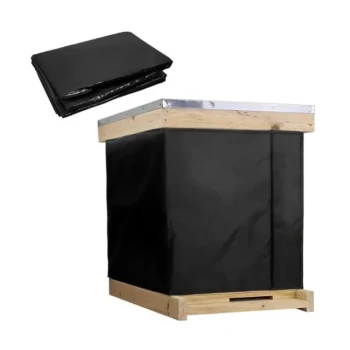
The material composition of your beehive acts as the primary regulator of thermal energy, directly dictating the return on investment for supplemental feeding. Materials that offer superior thermal insulation prevent heat loss, ensuring that the caloric energy provided by syrups and cakes is utilized for biological growth rather than immediately burned for survival.
By minimizing heat loss and helping maintain a stable nest temperature of 35°C, superior insulation allows colonies to redirect energy from thermoregulation to brood development. This significantly improves feed conversion efficiency, turning supplemental food into population growth rather than waste heat.
The Thermodynamics of Feed Efficiency
Energy Allocation Priorities
Honeybees operate on a strict energy hierarchy, where maintaining a nest temperature of approximately 35°C is the absolute priority. If a hive is constructed from materials with poor insulation properties, the colony loses heat rapidly to the environment.
The Cost of Thermoregulation
When heat loss occurs, bees must consume supplemental feed solely as fuel to generate warmth. This metabolic "tax" reduces the amount of nutrition available for other biological functions.
Redirecting Caloric Input
High-insulation materials trap thermal energy within the hive structure. This efficiency allows the colony to divert the energy from ingested feed toward secretion of royal jelly and supporting larval development, rather than wasting it on heating the air.
Measuring the Impact on Colony Health
Utilizing Standardized Frames
To verify the efficiency of your hive materials, you must look beyond the feeder and inspect the standardized frames. These serve as the primary diagnostic tool for monitoring reproductive dynamics and health.
Quantitative Indicators
Beekeepers should track specific metrics such as bee coverage area, the number of larval cells, and honeycomb height. These data points provide the quantitative basis needed to determine if your insulation choice is actually improving colony resilience.
Understanding the Trade-offs and Strategy
The Role of Strategic Feeding
Supplemental feeding is a planned intervention used to stimulate early spring growth or ensure winter survival. However, it is not a standalone solution; it works best when the physical infrastructure (the hive) supports energy retention.
Balancing Artificial and Natural Inputs
While insulation improves the efficiency of syrups, relying solely on artificial feeding has limits. Minimizing the need for supplements by planting forage that blooms during dearth periods or leaving more natural honey in the hive remains a viable, low-maintenance strategy.
Making the Right Choice for Your Goal
Material choice is not just about durability; it is an energy management decision. Here is how to apply this to your operation:
- If your primary focus is rapid colony expansion: Prioritize high-insulation materials to maximize the conversion of feed into brood and royal jelly.
- If your primary focus is data-driven management: Use standardized frames to actively measure larval counts, verifying that your infrastructure is reducing thermal stress.
- If your primary focus is reducing input costs: Combine high-insulation hives with natural forage planning to minimize the volume of supplemental feed required.
Optimizing hive insulation turns supplemental feeding from a survival mechanism into a growth accelerator.
Summary Table:
| Feature | Wood Hives | High-Polymer Insulation Hives | Impact on Feeding Efficiency |
|---|---|---|---|
| Thermal Retention | Moderate to Low | High (Maintains 35°C) | High insulation prevents caloric waste on heating. |
| Energy Allocation | High metabolic 'tax' for heat | Redirected to brood/royal jelly | More feed is converted to population growth. |
| Feed ROI | Variable | Maximized | Lower volume of syrup needed for same growth. |
| Strategic Best Use | Traditional/Low-cost | Rapid expansion & winter survival | Insulation turns survival feed into a growth accelerator. |
Maximize Your Colony Growth with HONESTBEE Professional Infrastructure
At HONESTBEE, we understand that every calorie of supplemental feed counts toward your bottom line. As a premier provider for commercial apiaries and global distributors, we supply high-performance beehives and advanced beekeeping machinery designed to optimize thermal efficiency and colony health.
Whether you need specialized hive-making equipment, honey-filling machines, or a full suite of wholesale beekeeping tools, our portfolio is engineered to turn your infrastructure into a growth engine.
Ready to elevate your apiary's efficiency? Contact our expert team today to explore our comprehensive wholesale offerings and custom equipment solutions.
References
- Ahmet Dodoloğlu, Berna Emsen. Effect of Supplementary Feeding on Honey Bee Colony. DOI: 10.1080/09712119.2007.9706878
This article is also based on technical information from HonestBee Knowledge Base .
Related Products
- Professional Insulated Plastic Bee Hives
- Professional Insulated Winter Hive Wrap for Beekeeping
- Inner Beehive Cover for Beekeeping Bee Hive Inner Cover
- Stainless Steel Round Beehive Air Vents for Ventilation
- Durable Plastic Interlocking Hive Connector for Beekeeping
People Also Ask
- What are the advantages of plastic bee hives? Boost Efficiency & Durability for Your Apiary
- Are plastic bee hives any good? Unlock Durability & Efficiency for Your Apiary
- How do plastic bee hives compare to wooden hives in handling? Reduce Strain & Boost Efficiency
- Are plastic bee hives good? Durable, Low-Maintenance Hives for Modern Apiaries
- What are the disadvantages of plastic beehives? Key Operational and Environmental Risks Exposed