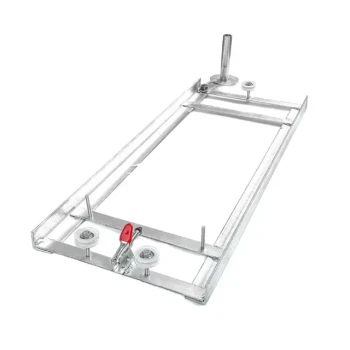
The procurement of standardized beehive hardware serves as the critical infrastructure necessary to transition beekeeping from a manual craft to an efficient industrial operation. It directly contributes to efficiency by enabling mechanized honey harvesting, facilitating migratory beekeeping, and drastically reducing the manual labor intensity required for colony inspections and artificial splitting.
The Core Insight Standardization is not merely about convenience; it is the prerequisite for scalability. By converting variable biological colonies into uniform production units, standardized hardware allows for the optimization of labor, precise data modeling, and the achievement of critical economies of scale.
Operational Impact on Labor and Logistics
Enabling Mechanization
The primary driver of efficiency in commercial beekeeping is the ability to move away from manual extraction. Standardized hardware creates a uniform interface for machinery.
This compatibility allows for mechanized honey harvesting, where equipment can handle frames and boxes rapidly without manual adjustment. This significantly lowers the time per hive during the most labor-intensive phase of production.
Facilitating Migratory Beekeeping
Modern beekeeping often requires moving colonies to chase bloom cycles or pollination contracts. Standardized hives are designed specifically for stacking and transport.
This uniformity ensures that hives can be packed densely and securely on trucks. It transforms the logistical nightmare of moving irregular structures into a streamlined, routine shipping process.
Streamlining Routine Management
Standardized designs simplify the daily workflow of the apiarist. Because every component is interchangeable, maintenance becomes modular.
Tasks such as artificial colony splitting—dividing a colony to increase hive count—become procedural rather than bespoke. This reduces the skill and time required for routine inspections, allowing operators to manage significantly more hives per worker.
Stability in Production and Environment
Creating a Controlled Micro-Climate
Efficiency is lost when colonies collapse due to environmental stress. Standardized hardware provides a stable structural support system with optimized insulation and ventilation.
This design creates a controlled micro-climate, protecting the colony from extreme temperature fluctuations and predators. By buffering against weather stress, the hardware ensures consistent colony growth and survival, reducing the need for emergency interventions.
Transforming Biology into Data
To manage efficiency, you must be able to measure it. Standardized hives serve as identical production units, allowing for accurate comparison and analysis.
This uniformity converts dispersed apiary sites into quantifiable spatial distribution data. Beekeepers can accurately record production capacity and colony size, enabling precise ecological modeling and yield forecasting that is impossible with traditional, random rearing methods.
The Economics of Scale
Optimizing Input-to-Output Ratios
The adoption of industrial-grade hardware is the foundational step for achieving economies of scale. It allows the enterprise to spread fixed costs across a larger production base.
By using high-quality standardized units, businesses can optimize their Cost of Goods Sold (COGS) and improve their Benefit-Cost (B/C) Ratio. The efficiency gains in labor and transport directly lower the Break-Even Point (BEP) for the operation.
Accessing Financial Incentives
In many regions, standardization is a compliance requirement. Governments often link agricultural subsidies and direct payments to specific operational standards.
maintaining a specific quantity of standardized hives is frequently a prerequisite for these financial aids. Therefore, the hardware itself is an asset class that unlocks external capital and supports the financial viability of the business.
Understanding the Trade-offs
The Capital Intensity Barrier
While standardized hardware improves operational efficiency, it represents a significant upfront capital expenditure. Moving from low-cost, traditional methods (like varying box sizes or natural shelters) to high-quality standardized gear increases the initial financial risk.
The Maintenance of Standards
Efficiency relies on the integrity of the standard. Mixing "standardized" equipment from different manufacturers with slight tolerance variations can negate the benefits of mechanization.
If specifications are not rigorously maintained, the workflow advantages crumble. A beekeeper must commit to a single, high-quality hardware ecosystem to prevent compatibility issues that slow down mechanized processes.
Making the Right Choice for Your Goal
- If your primary focus is Rapid Expansion: Prioritize hardware compatibility with automated splitting and transport systems to maximize the number of hives one person can manage.
- If your primary focus is Yield Stability: Focus on the insulation and ventilation specifications of the hardware to ensure maximum colony survival during extreme weather.
- If your primary focus is Financial Planning: Ensure your hardware selection meets the specific regulatory standards required to qualify for regional agricultural subsidies and grants.
Standardization is the lever that allows a beekeeping business to decouple labor hours from production volume.
Summary Table:
| Key Efficiency Driver | Operational Impact | Business Benefit |
|---|---|---|
| Mechanization | Enables automated harvesting and frame handling | Reduces labor costs and extraction time |
| Logistics | Uniform stacking for migratory transport | Optimizes truck space and transport safety |
| Modularity | Interchangeable components for routine tasks | Simplifies colony splitting and maintenance |
| Data Modeling | Uniform units allow for precise yield tracking | Better forecasting and production analysis |
| Financial Compliance | Meets regulatory standards for equipment | Unlocks agricultural subsidies and grants |
Scale Your Apiary with HONESTBEE Precision Hardware
Transitioning from manual craft to industrial efficiency requires more than just tools—it requires a standardized ecosystem. HONESTBEE specializes in supporting commercial apiaries and distributors with high-quality, standardized beekeeping hardware and machinery.
From automated honey-filling machines and durable hive-making equipment to essential consumables and honey-themed merchandise, we provide the infrastructure needed to optimize your labor, reduce COGS, and achieve true economies of scale.
Ready to modernize your operation? Contact us today to discuss our wholesale offerings and discover how our equipment can transform your production capacity.
References
- Cristina Bianca Pocol. Sustainable policies for the development of beekeeping in Romania. DOI: 10.22630/prs.2011.11.3.49
This article is also based on technical information from HonestBee Knowledge Base .
Related Products
- Professional Grade Foldable Beehive Handles
- Ergonomic Plastic Frame Spacer Tool for Rapid Hive Management Beekeeping
- Ergonomic Two Person Foldable Hive Lifter
- Durable Plastic Interlocking Hive Connector for Beekeeping
- HONESTBEE Premium Italian Style Hive Tool with Hardwood Handle
People Also Ask
- How do bee hive handles facilitate the evaluation of food stores? Use the Lift Test for Winter Survival
- How do the geometry and dimensions of hive handles influence operational safety and control? Expert Design Insights
- What is a bee hive tool? Discover Why It’s the Most Essential Hand Tool for Every Beekeeper
- What are the common sizes and features of bee hive tools? Choose the Right Tools for Your Apiary
- What is the role of professional hive tools in routine apiary maintenance? Expert Tips for Hive Health and Longevity