The queen bee acts as the definitive biological engine of a commercial colony, directly dictating its reproductive capacity, foraging efficiency, and disease resistance. The economic viability of an apiary relies less on the sheer number of hives and more on the genetic quality of the queens within them, as superior queens drive significant breakthroughs in yield per hive.
The central economic lever in beekeeping is not hive quantity, but biological efficiency. Investing in high-quality queens allows apiaries to optimize genetic traits for higher yields and stability, fundamentally shifting the business model from managing volume to managing performance.
The Biological Impact on Productivity
The Genetic Multiplier
The queen is the biological core of the colony. Because she is the sole reproductive source, her genetics determine the traits of tens of thousands of worker bees.
Enhancing Foraging Efficiency
High-quality queens produce workers with superior foraging instincts. This directly translates to higher resource gathering rates, maximizing the honey harvest potential of the entire operation without increasing equipment inventory.
Disease Resistance and Adaptability
Superior genetic lines are bred for environmental adaptability and disease resistance. Colonies headed by these queens are more robust, requiring fewer chemical interventions and suffering fewer losses during environmental stress.
Economic Implications of Queen Quality
Yield vs. Volume
A common misconception is that scaling up requires simply adding more boxes. However, the primary reference indicates that optimizing genetic traits leads to better yield per hive.
Reducing Operational Costs
High-quality queens are often bred for gentle temperaments. This reduces aggression, allowing beekeepers to work faster and more efficiently, effectively lowering the labor cost per hive.
Stability and Recovery
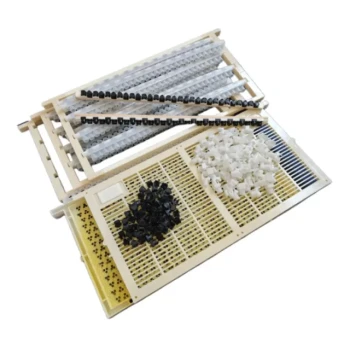
Using specialized queen-rearing tools allows for the independent increase of colony numbers. This capability ensures rapid recovery following disasters or winter losses, maintaining the production capacity necessary to justify investments in automated processing machinery.
The Role of Identification and Management
Speed of Inspection
Marked queens feature a standardized colored dot on the thorax. This allows the beekeeper to locate the queen instantly among thousands of workers, significantly reducing the duration of colony disturbance.
Accurate Age Tracking
The color of the mark follows an international code representing the queen's birth year. This acts as a vital record-keeping tool, allowing managers to track age and make informed decisions about replacing older, less productive queens before they fail.
Identifying Supersedure
Markings provide immediate visual feedback on colony events. If an unmarked queen is found in a hive that previously held a marked one, the beekeeper knows a supersedure or swarm event has occurred, signaling a change in the colony's genetic direction.
Understanding the Trade-offs
The Cost of Genetics vs. Scale
While increasing the number of hives does lower fixed costs (economies of scale), doing so with poor-quality queens creates inefficient scale. You may reduce the average cost per unit, but if the yield per unit is low due to poor genetics, the operation remains marginally profitable.
Dependency on Rearing
Sourcing high-quality queens requires either purchasing from breeders or investing in queen-rearing equipment. This adds an upfront cost or a skill requirement compared to relying on catching wild swarms, which costs nothing but offers zero genetic control.
Making the Right Choice for Your Goal
To maximize economic viability, align your queen management strategy with your specific operational needs:
- If your primary focus is Maximum Yield per Hive: Prioritize purchasing or breeding queens selected specifically for high foraging capacity and disease resistance to maximize the output of existing equipment.
- If your primary focus is Operational Efficiency: Invest in marked queens with gentle temperaments to drastically reduce inspection times and labor costs per apiary.
- If your primary focus is Rapid Scaling: Utilize queen-rearing tools to mass-produce stock internally, allowing you to expand hive numbers quickly while maintaining a baseline of genetic quality.
The most profitable apiaries treat the queen not just as a resident of the hive, but as the primary asset that determines the return on investment for all other equipment and labor.
Summary Table:
| Key Impact Area | Impact of High-Quality Queens | Economic Benefit |
|---|---|---|
| Foraging Efficiency | Superior instincts and higher resource collection rates | Maximized honey harvest per hive |
| Disease Resistance | Stronger immunity and better environmental adaptability | Lower medication costs and reduced colony loss |
| Temperament | Gentler bees allowing for faster hive inspections | Significant reduction in labor hours and costs |
| Management | Marked queens enable rapid age and health tracking | Data-driven culling and replacement strategies |
| Scaling | Controlled rearing allows for stable colony expansion | Reliable recovery and consistent ROI on machinery |
Maximize Your Apiary's Genetic Potential with HONESTBEE
At HONESTBEE, we understand that high-quality queens are the engines of your success, but the right infrastructure keeps those engines running. We cater to commercial apiaries and distributors by providing a comprehensive wholesale range of professional beekeeping tools and machinery.
Whether you are looking for specialized queen-rearing equipment to control your genetics, automated honey-filling machines to process your increased yields, or durable hive-making hardware, we offer the full spectrum of industry essentials. Partner with us to scale your operation efficiently and profitably.
Contact HONESTBEE Today to Optimize Your Operation
References
- Mustafa Bahadır ÇEVRİMLİ. Assessment of the effects of subsidies to the beekeeping sector in Turkey on the number of hives and amount of honey produced. DOI: 10.33188/vetheder.506916
This article is also based on technical information from HonestBee Knowledge Base .
Related Products
- Durable Galvanized Steel Spring Queen Bee Cage
- Portable Queen Bee Incubator with 12V Car Adapter for Safe Transport
- Professional Queen Bee Introduction and Transport Cage
- Heavy Duty Stainless Steel Queen Bee Catcher Clip
- Classic Wooden and Mesh California Queen Cage
People Also Ask
- Why are specialized queen bee cages used for the banking of mated queen bees? Maximize Commercial Apiary Storage Efficiency
- What is the mechanism of action for using temporary queen bee cages? Master Successful Queen Introduction
- What is the step-by-step process for installing a queen bee's cage onto a frame? Ensure Hive Acceptance Safely
- What is the optimal placement for a queen bee cage? Essential Strategies for Successful Re-queening
- What are the advantages and disadvantages of introducing a queen bee by embedding the cage? Boost Your Queen Acceptance