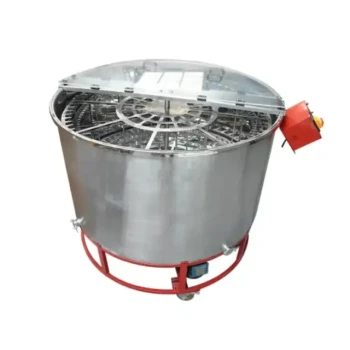
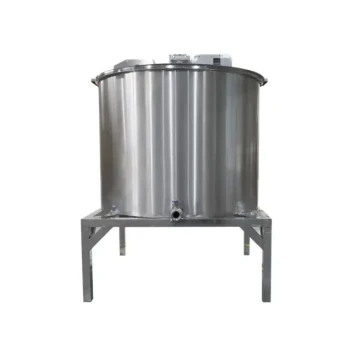
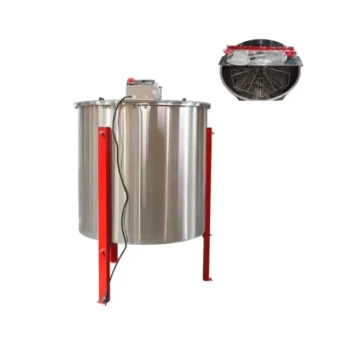
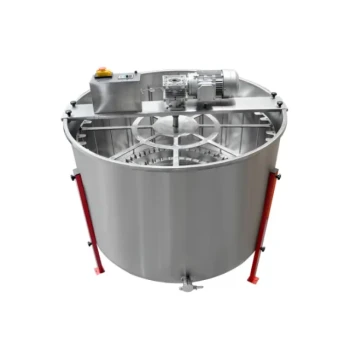
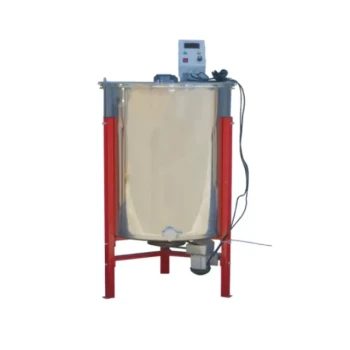
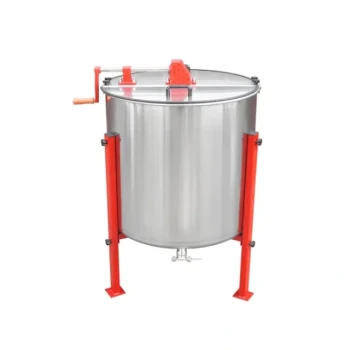
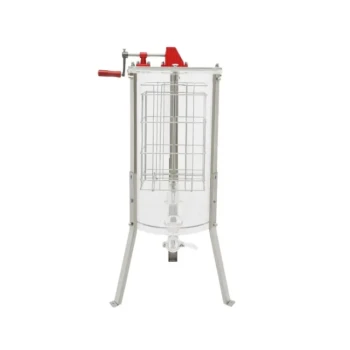
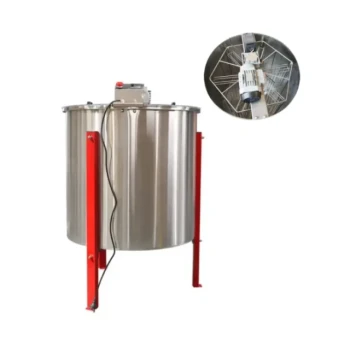
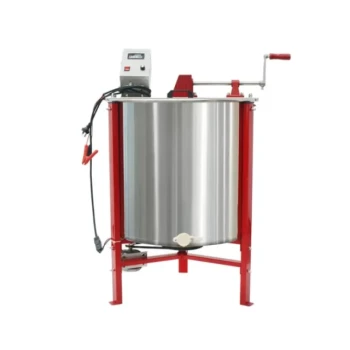
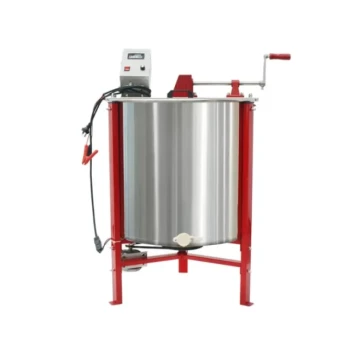
Industrial-grade honey extractors fundamentally shift the operational focus of a hive from infrastructure building to resource accumulation. By utilizing high-speed centrifugal force, these machines extract honey without destroying the wax combs, allowing them to be immediately returned to the hive. This eliminates the biological need for bees to secrete new wax, thereby significantly shortening the production cycle and increasing overall yield.
The primary driver of productivity is energy conservation: because the extractor preserves the honeycomb structure, the colony redirects its massive energy expenditure from rebuilding wax foundations to gathering nectar.
The Mechanism of Non-Destructive Extraction
Utilizing Centrifugal Force
Unlike manual methods that may crush or strain the comb, industrial extractors use high-speed rotation to generate centrifugal force.
This force pulls the honey out of the cells effectively while leaving the delicate wax structure intact.
Preserving Comb Integrity
The core advantage of this technology is the preservation of the comb foundation.
Because the wax remains undamaged, the frames can be recycled immediately for the next cycle of honey storage.
Biological Impacts on Productivity
Eliminating Wax Secretion Costs
Bees consume a significant amount of energy and resources to secrete wax for building combs.
By providing empty, intact combs back to the hive, you remove this energy burden from the colony.
Redirection of Colony Energy
With the infrastructure already in place, the colony can focus entirely on nectar collection and storage.
This shift in focus results in a faster turnover and a substantially higher annual honey yield per hive.
Commercial and Operational Efficiency
Standardization and Hygiene
Industrial extractors often operate within closed chambers, which protects the honey from environmental contaminants and oxidation.
This controlled environment is essential for meeting international hygiene regulations and ensuring product traceability.
Enhancing Market Competitiveness
The ability to produce cleaner honey with preserved floral aromas allows producers to target high-end retail markets.
Furthermore, mechanized separation reduces impurities, allowing for the creation of high-quality secondary products like beeswax for creams and soaps.
Understanding the Trade-offs
Infrastructure Demands
Transitioning to industrial extraction requires a controlled physical space designed to accommodate large machinery.
You must ensure your facility meets the electrical and spatial requirements to operate this equipment safely.
Capital vs. Labor
While these machines reduce manual labor costs significantly, they represent a higher upfront financial commitment than manual tools.
This investment is generally a prerequisite for large-scale production but requires a sufficient hive count to justify the ROI.
Making the Right Choice for Your Goal
To maximize the benefits of this technology, align your equipment choice with your specific operational targets.
- If your primary focus is Maximum Yield: Prioritize extractors with precise speed controls to ensure absolute comb preservation, as comb reuse is the single biggest factor in increasing volume.
- If your primary focus is Market Expansion: Select equipment that features closed-chamber processing to minimize oxidation and meet strict food safety standards for high-end or international sales.
Ultimately, the industrial extractor is not just a harvesting tool; it is an energy management device that converts potential wax production into pure honey yield.
Summary Table:
| Feature | Traditional Manual Extraction | Industrial-Grade Extraction |
|---|---|---|
| Comb Integrity | Often crushed or damaged | Preserved and reusable |
| Bee Energy Focus | Rebuilding wax foundations | Concentrated nectar collection |
| Production Cycle | Slow (requires wax secretion) | Fast (immediate frame recycling) |
| Hygiene & Safety | Open air, manual handling | Closed chamber, food-grade standards |
| Labor Efficiency | High manual effort required | Automated high-volume processing |
| Honey Quality | Variable purity | High purity with low oxidation |
Elevate Your Commercial Apiary with HONESTBEE
Maximize your honey production and operational efficiency with HONESTBEE’s premium range of industrial beekeeping solutions. As a dedicated partner to commercial apiaries and distributors, we provide the full spectrum of wholesale beekeeping tools, hive-making machinery, and honey-filling equipment designed for high-performance extraction.
Whether you are looking to scale your yield or enhance product purity to meet international standards, our specialized hardware and industry consumables ensure you stay competitive in the global market. From advanced honey-themed cultural merchandise to heavy-duty machinery, we help you transform hive management into a high-yield enterprise.
Ready to modernize your operations? Contact us today to explore our wholesale catalog and expert solutions!
References
- Nicholaus Bhikolimana Tutuba, Consolatha Kapinga. Beekeeping Productivity: Why is the Beekeeping Sector less Productive in Tanzania?. DOI: 10.51505/ijebmr.2022.6914
This article is also based on technical information from HonestBee Knowledge Base .
Related Products
- HONESTBEE 72 Frame Industrial Electric Honey Extractor for Beekeeping
- Commercial Electric 12 Frame Honey Extractor Spinner Motorized Honey Extractor
- 32 Frame Commercial Electric Honey Extractor for Beekeeping and Honey Production
- 8-Frame Electric Self-Reversing Honey Extractor Spinner for Commercial Honey Extraction Equipment
- electric honey extractor honey centrifuge 3 frame honey extractor stainless steel honey frame extractor
People Also Ask
- What is the importance of balancing honeycomb frames within a honey extractor? Ensure Stability and Protect Machinery
- How is honey separated from the frames after they are uncapped? Efficient Extraction Methods for High Yields
- What are the main benefits of using a honey extractor? Maximize Yields and Protect Your Honeycomb
- What are the recommended methods for removing honey from the honeycomb? Top Extraction Techniques for Maximum Efficiency
- How do manual honey extractors compare to electric honey extractors? Choosing the Right Tool for Your Apiary Growth