Upgrading commercial beekeeping machinery helps apiaries do more with fewer people while reducing inconsistency, safety incidents, processing bottlenecks, and colony-management risks. Automated hive-making tools, honey extractors, filling systems, pollen traps, transport equipment, and monitoring devices shift repetitive work from manual labor to standardized processes. The result is more efficient resource use, lower unit production costs, better workflow control, and improved productivity during critical harvesting periods.
The central benefit is operational resilience: the right equipment reduces dependence on scarce labor, makes work more consistent, and helps apiaries protect yield, product quality, colony health, and profitability as they scale.
Why Labor Shortages Create Operational Risk
Labor scarcity affects more than payroll
When skilled workers are difficult to recruit or external labor costs rise, apiaries may postpone hive maintenance, harvesting, colony relocation, or processing. These delays can reduce the value of narrow nectar-flow windows and place greater pressure on the available workforce.
Labor shortages also increase dependence on individual experience. If too few operators are responsible for too many colonies, routine work becomes harder to standardize and mistakes become more likely.
Manual bottlenecks limit production capacity
Traditional operations often require substantial labor for hive construction, frame handling, honey extraction, filling, pollen collection, transport, and cleaning. A bottleneck in any one of these stages can hold back the entire production workflow.
This is particularly important during peak collection and harvesting periods. An apiary may have strong colony output but still lose productivity if it cannot process or transport products quickly enough.
Operational risks compound each other
Labor scarcity, yield variability, disease management, and environmental changes are interconnected. Poor monitoring or delayed intervention can affect colony health, while inconsistent harvesting and processing can affect product quality and customer reliability.
Modern machinery does not remove these risks, but it gives managers more control over the processes that influence them.
How Machinery Directly Reduces Labor Dependence
Automation absorbs repetitive work
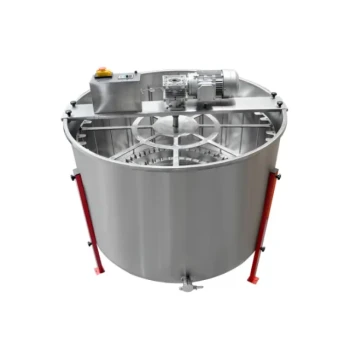
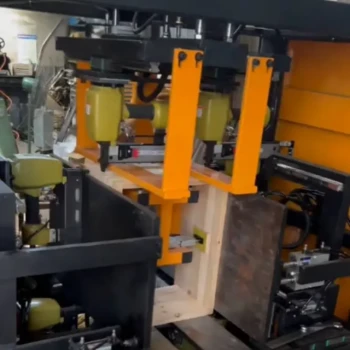
Automated or semi-automated hive-making equipment can reduce the manual effort required to prepare and maintain standardized hive components. Automated extraction and filling equipment similarly reduces the number of labor hours needed after honey is harvested.
This allows employees to focus on tasks that require judgment, such as colony assessment, disease prevention, queen management, and production planning.
Equipment increases output per worker
The objective is not simply to replace people. It is to increase the amount of productive work that each trained operator can complete without excessive physical strain or unnecessary handling.
Automatic scrapers, high-efficiency pollen traps, electric transport forklifts, and specialized extraction systems can make collection and processing faster and more repeatable.
Safer tools support workforce continuity
Hive tools, smokers, protective clothing, and purpose-built handling equipment help operators work more safely and precisely. They support smoother hive opening, calmer bee management, and more controlled frame extraction.
Reducing injuries, colony disturbance, and avoidable colony loss helps preserve operational continuity—an important benefit when replacing an experienced worker is difficult.
How Technical Equipment Improves Productivity
Standardized hive management improves consistency
Precision hive-making tools and standardized beekeeping hardware help create more uniform equipment across the apiary. Consistency simplifies maintenance, training, inspection, and replacement.
It also reduces variation between colonies caused by inconsistent handling practices, allowing managers to organize work more systematically across a larger operation.
Faster extraction protects workflow capacity
Automated honey extraction equipment can reduce the labor intensity of harvesting and improve the movement of honey from the apiary to processing. Filling machines then help standardize packaging and reduce manual handling at the final production stage.
Together, these systems help prevent harvested honey from accumulating as unfinished inventory during peak periods.
Monitoring improves management precision
Intelligent monitoring devices and environmental monitoring tools provide technical support for more informed decisions. They can help operators manage colonies and respond to environmental changes with less reliance on frequent manual inspection alone.
Monitoring should complement, not replace, experienced beekeepers. Its value comes from helping limited staff prioritize attention and identify management needs more efficiently.
Transport equipment reduces handling delays
Electric transport forklifts and related handling equipment can improve the movement of hives, frames, containers, and finished products. This is especially useful for operations that relocate colonies or manage production across multiple sites.
More efficient transport shortens human intervention time and reduces the physical burden associated with large-scale colony movement and harvesting.
How Upgrades Mitigate Broader Operational Risks
Disease management becomes more systematic
Standardized equipment and professional disease-prevention consumables support more consistent colony-management routines. They can reduce the variation that arises when different workers use different tools or follow inconsistent processes.
However, machinery is not a substitute for disease surveillance, sanitation procedures, or qualified veterinary and beekeeping guidance. Equipment supports a disease-management system; it does not create one by itself.
Hygiene and product quality improve
Professional processing machinery can raise hygiene standards by reducing unnecessary manual contact and making cleaning and handling procedures more repeatable. This is important for honey and for higher-value products such as royal jelly, propolis, and bee venom.
Stable processing conditions help apiaries deliver more consistent product quality to distributors, wholesalers, and downstream buyers.
Yield windows are used more effectively
Bee production is strongly influenced by nectar and pollen collection cycles. A modern equipment configuration helps apiaries allocate labor and processing capacity around these windows instead of allowing harvesting, transport, or packaging delays to reduce the value of available output.
The commercial advantage is greater throughput when production opportunities are at their highest.
Resource allocation becomes more measurable
Equipment can make workflow performance easier to evaluate. Managers can identify where labor is being consumed, which processes are slowing production, and where capacity is insufficient.
This supports more disciplined investment decisions than purchasing equipment solely because it appears technologically advanced.
Building a Complete Equipment System
Start with the operational bottleneck
An apiary should first identify whether its primary constraint is hive preparation, colony handling, extraction, packaging, transport, monitoring, or labor safety. The most valuable upgrade is usually the one that removes the constraint affecting the entire workflow.
A high-capacity extractor, for example, provides limited benefit if harvesting and transport remain too slow to feed it consistently.
Match equipment to scale and workflow
Machinery should be selected according to colony numbers, seasonal throughput, product mix, site layout, labor availability, and expected growth. Equipment that is undersized creates bottlenecks, while equipment that is oversized can tie up capital without improving utilization.
A complete solution may combine hive-making tools, extraction and filling machinery, monitoring devices, transport equipment, safety tools, and disease-prevention supplies.
Treat sourcing as part of productivity
For distributors, wholesalers, and B2B resellers, productivity depends not only on the equipment itself but also on supply reliability. A one-stop supplier can simplify product matching, documentation, order coordination, replacement procurement, and delivery planning.
Rapid response, technical expertise, dedicated customer service, and efficient fulfillment are particularly important when apiaries operate under tight seasonal deadlines.
Understanding the Trade-offs
Upfront investment must be justified
Modern machinery requires capital, installation, training, maintenance, and sometimes changes to the production layout. The business case should therefore consider labor savings, increased throughput, reduced waste, product consistency, and avoided operational disruptions—not only the purchase price.
The strongest investments address a clearly identified recurring bottleneck.
Automation still requires skilled oversight
Automated systems need operators who understand colony behavior, equipment settings, hygiene requirements, and maintenance procedures. Poorly trained staff may misuse machinery or fail to recognize problems that an experienced beekeeper would detect quickly.
Technology reduces repetitive labor; it does not eliminate the need for professional judgment.
Compatibility and service matter
Equipment should be evaluated for compatibility with existing hives, frames, processing lines, power availability, facility layout, and cleaning procedures. Spare parts, technical support, and response times are also essential considerations.
A machine that cannot be maintained during a peak season may create a new operational risk rather than solve an existing one.
Over-automation can reduce flexibility
Not every task benefits equally from automation. Highly variable colony conditions may still require manual inspection and adaptive handling, while smaller operations may not generate enough throughput to justify specialized machinery.
The correct objective is appropriate automation, not maximum automation.
Making the Right Choice for Your Goal
Use the following priorities to align equipment investment with the apiary’s most important business objective:
- If your primary focus is reducing labor dependence: Prioritize automated hive-making, extraction, filling, transport, and pollen-collection equipment that removes repetitive work and increases output per operator.
- If your primary focus is improving productivity during peak seasons: Build an integrated workflow that connects colony handling, harvesting, extraction, packaging, and delivery capacity.
- If your primary focus is reducing operational risk: Combine standardized hardware, monitoring devices, safety tools, and disease-prevention supplies with clear operating procedures and staff training.
- If your primary focus is improving product quality: Select processing equipment that strengthens hygiene, handling consistency, and quality stability for honey and higher-value bee products.
- If your primary focus is supporting customers as a distributor or reseller: Work with suppliers that offer broad product coverage, professional technical guidance, rapid quotation and response times, reliable fulfillment, and dependable after-sales support.
- If your primary focus is controlling capital expenditure: Upgrade the bottleneck with the clearest labor, throughput, safety, or quality impact before expanding into less-utilized automation.
The right equipment strategy turns labor scarcity and operational uncertainty into a more standardized, scalable, and resilient commercial beekeeping operation.
Summary Table:
| Equipment Category | Key Benefits | Impact on Productivity |
|---|---|---|
| Hive-making tools | Standardize hive components, reduce manual effort | Consistent equipment, easier maintenance |
| Extraction & filling machines | Faster honey processing, less manual handling | Increased throughput during harvest |
| Monitoring devices | Informed decisions, reduced manual inspection | Better colony management |
| Transport equipment | Efficient movement of hives and products | Reduced handling delays |
| Safety & protective gear | Safer work, less injury risk | Workforce continuity |
Ready to overcome labor shortages and boost productivity? At HONESTBEE, we supply a comprehensive range of beekeeping tools, machinery, and equipment, from hive-making and honey-filling machines to monitoring devices and safety gear. Our one-stop sourcing capabilities, rapid response, dedicated customer service, and fast delivery support distributors, wholesalers, and commercial apiaries. For B2B partners, we offer OEM/ODM support, certifications, and reliable supply to protect your margins. Contact us today to discuss your needs and find the right equipment solution.
Related Products
- 40 Frame Commercial Electric Honey Extractor for Beekeeping
- Stainless Steel J Hook Hive Tool for Beekeeping
- Professional Wide Blade Honey Scraper for Beekeeping and Honey Processing
- Queen Bee Artificial Insemination Instrument Equipment for Instrumental Insemination
- Durable Galvanized Steel Frame Grip
People Also Ask
- Who are commercial honey extractors designed for? Scaling Your Industrial Beekeeping Success
- How is honey extracted commercially? Maximize Your Apiary's Efficiency and Honey Yield
- What are commercial honey extractors used for? Boost Your Apiary's Efficiency & Profitability
- What is a commercial honey extractor? The Essential High-Volume Solution for Large Apiaries
- What defines a commercial honey extractor? High-Efficiency Industrial Solutions for Large-Scale Beekeeping Operations