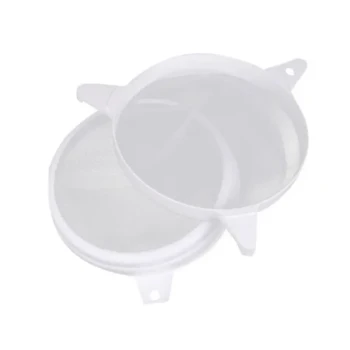
The scale of operation dictates the complexity of the honey straining process. Small-scale producers typically rely on manual filtration methods using simple cloth or nylon bags. In contrast, large-scale operations utilize automated systems that integrate straining with preheating in jacketed tanks to manage viscosity and volume.
While small-scale straining is a mechanical process dependent on gravity and frequent cleaning, large-scale processing relies on thermal conditioning to ensure efficiency and flow.
Small-Scale Straining Methods
Manual Filtration
In smaller operations, the removal of suspended solids—such as large wax particles—is a straightforward, manual task. Producers generally use cloth or nylon bags as the primary filtration medium.
Operational Requirements
Because these systems rely on simple barriers, the filtration bags are prone to clogging. Consequently, they require frequent cleaning to maintain flow rates and ensure the honey is effectively cleared of debris.
Large-Scale Straining Methods
Integrated Processing
High-volume operations cannot rely on gravity and manual cleaning alone. Instead, the straining process is fully integrated with thermal conditioning steps to handle the increased throughput.
Equipment Architecture
These facilities utilize jacketed tanks fitted with stirrers. The stirrer ensures the honey remains in motion, preventing hot spots and ensuring even consistency during the straining phase.
The Role of Temperature
To facilitate the removal of solids at this scale, the honey is preheated up to 40°C. This specific temperature point reduces the honey's viscosity, allowing it to pass through straining mechanisms much more rapidly than cold honey.
Understanding the Trade-offs
Simplicity vs. Efficiency
Small-scale methods are low-cost and require minimal equipment, but they are labor-intensive due to the need for constant bag maintenance. Large-scale methods offer high efficiency and continuous flow but require significant capital investment in specialized tanks and heating elements.
Thermal Impact
While large-scale heating improves processing speed, it introduces a thermal variable to the product. The system must be calibrated to ensure the honey reaches 40°C without exceeding temperatures that might degrade quality.
Making the Right Choice for Your Goal
Whether you are designing a processing line or evaluating production capacity, the choice of method depends on your volume requirements.
- If your primary focus is low-volume or artisanal production: Utilize varying grades of nylon or cloth bags, accepting that manual labor will be required for frequent cleaning.
- If your primary focus is high-volume efficiency: Invest in jacketed tanks with agitation capabilities to preheat the honey to 40°C, ensuring rapid filtration without bottlenecks.
Matching the straining technology to your production volume is the single most important factor in maintaining a consistent workflow.
Summary Table:
| Feature | Small-Scale Straining | Large-Scale Straining |
|---|---|---|
| Primary Equipment | Cloth or Nylon Bags | Jacketed Tanks with Stirrers |
| Mechanism | Gravity & Manual Filtration | Thermal Conditioning & Automation |
| Temperature | Ambient (Cold Straining) | Preheated up to 40°C |
| Labor Intensity | High (Frequent Bag Cleaning) | Low (Integrated Systems) |
| Key Benefit | Low Capital Investment | High Throughput & Efficiency |
Elevate Your Honey Production with HONESTBEE
Whether you are scaling an artisanal brand or managing a global distribution network, HONESTBEE provides the specialized hardware necessary to optimize your workflow. From manual beekeeping tools for small-scale operations to advanced honey-filling machines and jacketed thermal tanks for industrial-grade facilities, our comprehensive wholesale offering is designed to meet the demands of commercial apiaries and distributors.
Why partner with HONESTBEE?
- Full Spectrum Supply: Everything from hive-making machinery to essential industry consumables.
- Expert Solutions: Equipment tailored to handle thermal conditioning and viscosity management.
- Global Distribution: Reliable sourcing for honey-themed merchandise and professional hardware.
Ready to upgrade your processing line and maximize your output? Contact us today to discover how our premium beekeeping machinery can transform your business.
Related Products
- Stainless Steel Double Layer Honey Strainer Sieve Filters
- Stainless Steel Triangle Support Honey Strainer and Filters
- Conical Nylon Honey Strainer Filter Bag for Beekeeping and Honey Filtration
- Professional Cone-Shaped Honey Filter with Reinforced Steel Ring
- Nylon Honey Strainer Square Filter Cloth for Honey Filters
People Also Ask
- What are some typical mesh size combinations found in double sieve honey strainers? Expert Guide to Honey Filtration
- How is a double-layer honey filter used for monitoring Varroa mite infestation? Achieve Precise Pest Control Data
- How do double-layer honey filters and white blotting paper function together in Varroa mite detection? Expert Guide
- What is the function of honey sieves, strainers, and filters in processing? Master the 3 Stages of Honey Purity
- What mesh sizes are commonly used in double sieve honey strainers? Achieve Clean, Raw Honey Efficiently