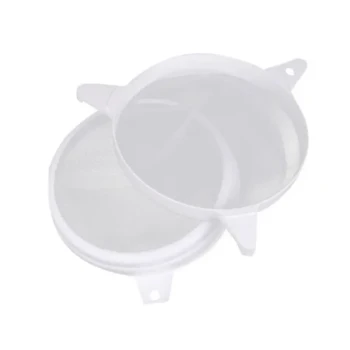
The standard method for separating honey from whole honeycombs involves a mechanical process often referred to as "crush and strain." To extract the liquid, the combs are cut into very small pieces within a container and then filtered through a porous material.
Core Takeaway: When harvesting whole combs—specifically from fixed comb or top bar hives—extraction is a destructive process. You must physically break the wax structure down to small fragments and use gravity to filter the honey through a mesh cloth, leaving the clean wax behind.
The Separation Process
Breaking Down the Structure
The first step in harvesting from whole combs is to disrupt the cellular structure of the wax. The combs are placed inside a large bucket and cut into very small pieces.
This increases the surface area and physically opens the wax cells. By chopping the comb thoroughly, you release the honey stored inside the hexagonal structures.
The Straining Phase
Once the comb is reduced to a mash of wax and honey, the mixture is poured through a clean mesh cloth. This cloth is typically suspended over a second, clean bucket.
Gravity Filtration
The separation relies on time and gravity. The viscous honey slowly drains through the cloth into the collection bucket below.
Because the mesh is fine, the liquid passes through while solid particles are held back. This ensures the final product is clear of debris.
Retaining the Wax
The wax does not pass through the filter. It remains behind in the cloth as a solid byproduct.
This wax is not waste; it is collected and set aside for further processing, such as melting down for candles or balms.
Understanding the Trade-offs
Destructive Harvesting
The primary trade-off of this method is that it is destructive. Unlike spinning framed hives in a centrifugal extractor, cutting the comb destroys the structure the bees have built.
Wax Production vs. Honey Speed
Because the comb is destroyed, the bees must consume energy and honey to rebuild the wax for the next batch. However, this method yields a high volume of beeswax as a valuable secondary harvest.
Time Constraints
This is a passive, gravity-fed process. It is significantly slower than using mechanical extractors or "special devices" designed to spin honey out quickly.
Making the Right Choice for Your Goal
This method is best suited for small-scale beekeepers using top bar or fixed comb hives where preserving the frame structure is not possible.
- If your primary focus is obtaining liquid honey: Ensure the mesh cloth is fine enough to filter out all wax particles for a clear final product.
- If your primary focus is harvesting beeswax: Thoroughly drain the honey to maximize the yield of the remaining wax cake before processing it further.
By chopping the comb fine and straining patiently, you maximize the harvest of both sweet honey and valuable wax.
Summary Table:
| Step | Action | Key Outcome |
|---|---|---|
| 1. Chopping | Break comb into small fragments | Increases surface area and releases honey from cells |
| 2. Straining | Pour mixture through mesh cloth | Separates liquid honey from solid wax particles |
| 3. Filtration | Gravity-fed drainage | Produces clear, debris-free honey in the collection bucket |
| 4. Collection | Gather remaining wax solids | Provides raw material for candles, balms, and processing |
Scale Your Honey Production with HONESTBEE
Whether you are a commercial apiary or a regional distributor, HONESTBEE provides the industrial-grade solutions you need to maximize every harvest. From efficient honey-filling machines to a complete spectrum of beekeeping tools and hive-making equipment, we supply everything required to turn raw honeycombs into market-ready products.
Our value to you:
- Comprehensive Wholesale Offering: A one-stop shop for all beekeeping machinery and consumables.
- Expert Engineering: Specialized hardware designed for durability and high-volume output.
- Marketing Support: Unique honey-themed cultural merchandise to help you stand out.
Ready to elevate your beekeeping operations? Contact our expert team today to discuss how we can streamline your production and supply chain!
Related Products
- Honey Wax Separating Wax Press with Metal Screw Wax Separator Machine
- Stainless Steel Jack Type Honey Comb Press Machine Wax and Honey Separator
- Stainless Steel Triangle Support Honey Strainer and Filters
- Electric Honey Press Machine for Squeezing Honey Comb Press Equipment
- HONESTBEE 2 Frame Manual Acrylic Honey Extractor Beekeeping Equipment
People Also Ask
- How do I separate honey from wax? A Two-Stage Process for Maximum Yield
- How do you separate honey from wax cappings? Choose the Best Method for Your Harvest
- How do you separate honey from wax at home? A Simple Guide to Zero-Waste Harvesting
- What is the importance of separating honey from wax? Master Product Purity & Processing Efficiency
- What temperature does wax separate from honey? Achieve Clean, Efficient Honey Rendering