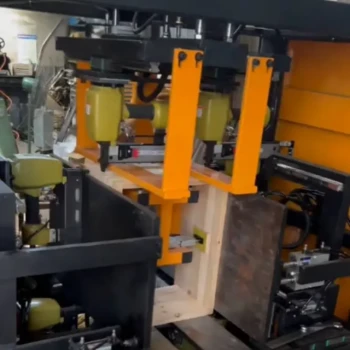
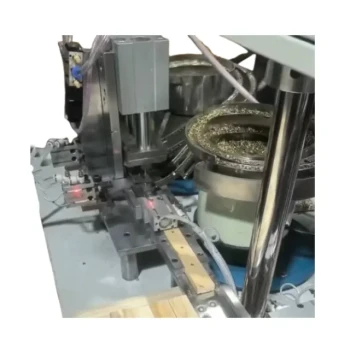
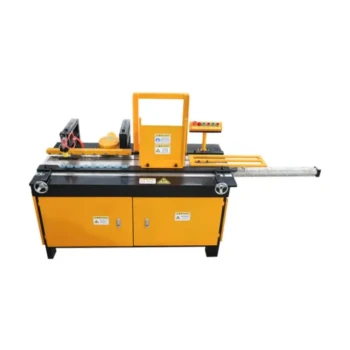
Adjusting the Bee Box machine is a straightforward mechanical process designed to be completed in approximately 15 minutes. This procedure involves three specific physical adjustments: repositioning a pin for height, shifting dado cutters for width, and realigning the infeed guides to accommodate the new panel dimensions.
The machine is more than a single-purpose tool; it is a flexible box-joint system. By swapping rabbet cutters and adjusting guides, operators can transition from making bee hives to producing high-quality gift boxes and product cases with consistent interior precision.
The Three-Step Adjustment Process
Step 1: Height Modification
The first step in reconfiguring the machine addresses the vertical dimension of the box.
This is accomplished by moving a specific pin to the desired setting. This simple mechanism locks in the height requirement for the new batch of panels.
Step 2: Width Calibration
Once the height is set, the machine must be adapted to the width of the material.
You must adjust the dado cutters either in or out. This physical spacing determines the width of the cut, ensuring the joint fingers align correctly with the panel size.
Step 3: Guide Alignment
The final step ensures the material travels through the cutters correctly.
You must readjust the infeed guides to match the width of the new panels. This ensures the wood remains stable and centered as it enters the cutting zone.
Operational Versatility
Diverse Output Capabilities
While the machine is named for its primary function, its utility extends well beyond apiary equipment.
It is fully capable of manufacturing other types of enclosures, such as gift boxes or product cases. This makes it a viable asset for general woodworking tasks requiring sturdy box joinery.
Joinery Customization
The machine allows for structural variations depending on the intended use of the box.
Specifically, the standard rabbet cutter can be changed out. This allows the operator to create a groove for a bottom panel, essential for boxes that require a floating bottom rather than a nailed-on base.
Operational Considerations
The Cost of Changeover
While the machine is versatile, it is not an "instant-switch" system.
The 15-minute reset time is a necessary investment for every size change. For efficient workflow, operators should batch similar-sized projects together to minimize production downtime.
Precision and Consistency
A distinct advantage during operation is the machine's ability to hold panels square and true.
Because it cuts both ends of the panel simultaneously, the interior dimensions of the finished box remain consistent. Crucially, the depth of the box joint fingers is independent of the pre-cut panel dimension, reducing waste from minor material variations.
Making the Right Choice for Your Project
To maximize the efficiency of the Bee Box machine, you should align your production schedule with its mechanical limitations.
- If your primary focus is high-volume production: Batch your work by box size to avoid frequent 15-minute changeover intervals.
- If your primary focus is custom joinery: Utilize the interchangeable rabbet cutter to create grooved bottom panels for higher-end gift boxes or cases.
- If your primary focus is dimensional accuracy: Rely on the simultaneous cutting feature to ensure perfectly square interiors, regardless of slight variations in your raw panel lengths.
Mastering the setup process transforms this machine from a niche tool into a versatile workshop asset.
Summary Table:
| Adjustment Step | Component Involved | Function |
|---|---|---|
| Height | Setting Pin | Locks the vertical dimension for the new panel batch. |
| Width | Dado Cutters | Spacing adjustment for finger joint alignment. |
| Alignment | Infeed Guides | Stabilizes and centers the material during the cut. |
| Customization | Rabbet Cutters | Swappable to create grooves for floating bottom panels. |
Scaling Your Beekeeping or Woodworking Business?
As a professional, your efficiency depends on reliable, versatile machinery. HONESTBEE specializes in supporting commercial apiaries and distributors with high-performance bee box-making machines, honey-filling equipment, and a full spectrum of industrial consumables.
Whether you are producing high-volume hive components or diverse product cases, our equipment ensures perfectly square interiors and professional-grade joinery every time. Partner with a supplier that understands the scale of your operations—from heavy machinery to honey-themed merchandise.
Ready to upgrade your production line?
Contact HONESTBEE Today for a Wholesale Quote
Related Products
- Automatic High-Speed Bee Hive Box Stapling Machine
- High-Efficiency Pneumatic Bee Hive Making Machine for Rapid Box Assembly
- HONESTBEE Top Bar & Bottom Bar Forming Machine | Bee Frame Machine
- Automatic Pneumatic Bee Frame Machine for Eyelet Insertion
- Professional Bee Frame Machine for Side Bar Shaping
People Also Ask
- How is the Bee Box machine operated? Optimize Your Commercial Hive Production with Scalable Staffing Solutions
- How was the Bee Box machine designed? Industrial Engineering for High-Volume Beekeeping Production
- What is the production capacity of the Bee Box machine? Boost Output up to 1,000 Boxes Daily
- What are the power requirements and control system for the Bee Box machine? Optimize Your Apiary Equipment Production
- What are the details regarding the tooling and its maintenance on the Bee Box machine? High-Volume Durability Guide