Varietal honey collection is primarily a logistical strategy involving precise timing and segregation. To produce a specific floral flavor, such as blueberry or buckwheat, beekeepers must harvest the honey frames immediately following a massive bloom of that specific plant, extracting those frames separately from the rest of the hive's stores.
Core Takeaway Producing varietal honey is less about how you extract the liquid and more about when you harvest it. By timing the collection to coincide with a specific floral bloom and relying on the bees' tendency to cluster similar nectar types, beekeepers can isolate specific flavor profiles before they blend into generic wildflower honey.
The Strategy of Segregation
Capitalizing on the Bloom
The most critical factor in collecting varietal honey is the availability of a specific nectar source in high concentrations.
Beekeepers monitor local flora closely. When a target plant (like buckwheat) begins to bloom intensely, the bees will focus their foraging efforts on that dominant source.
Relying on Bee Behavior
Bees are creatures of habit and efficiency. The primary reference notes that bees tend to store the same type of nectar together within the hive.
This clustering behavior allows the beekeeper to identify specific frames or entire boxes (supers) that contain the target varietal, rather than a mix of random nectars.
Selective Harvesting
Unlike a general harvest where all honey is taken at once, varietal collection requires extracting specific frames or boxes separately.
The beekeeper removes the frames filled during the specific bloom window to maintain the unique characteristics of that single floral source. If left in the hive too long, the bees will fill adjacent cells with nectar from a different flower, diluting the flavor.
The Physical Extraction Process
Removal from the Hive
Once the specific frames are identified, the physical removal begins. Because honey-filled boxes are heavy, it is advisable to remove them one frame at a time rather than lifting the whole box.
Beekeepers must gently brush the bees off the comb before placing the frames into a cart for transport. This requires standard protective gear ("apiary armor") and a smoker to keep the colony calm.
Extraction Methods
Once the specific frames are isolated, the honey is removed using one of two primary methods.
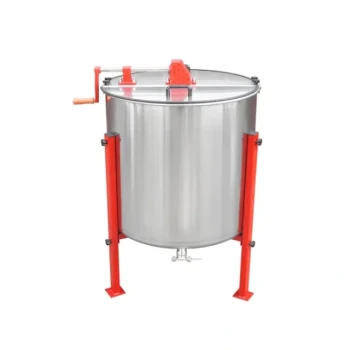
Spin Extraction: This is common when the honey is stored in frames. Centrifugal force spins the honey out, leaving the wax comb intact for the bees to reuse.
Crush-and-Strain: This method involves cutting the comb away, crushing it to release the honey, and straining out the wax. This destroys the comb but requires less specialized machinery.
Understanding the Trade-offs
The Purity Challenge
Achieving 100% purity is biologically impossible because bees are free-flying foragers.
However, beekeepers achieve "varietal" status by ensuring the target bloom is the overwhelming majority of the forage available. If the specific bloom is weak or competes with other strong nectar sources, the resulting honey will be a "wildflower" blend rather than a distinct varietal.
Labor Intensity
Collecting varietal honey is significantly more labor-intensive than general harvesting.
Instead of one massive harvest at the end of the season, the beekeeper must perform multiple, smaller extractions throughout the year to capture different blooms. This requires constant monitoring of hive weight and bloom cycles.
Making the Right Choice for Your Goal
Whether you are a consumer or an aspiring beekeeper, understanding this process helps clarify the value of different honey types.
- If your primary focus is distinct flavor profiles: Look for honey harvested during specific, short bloom windows where the beekeeper utilized selective frame extraction.
- If your primary focus is maximum yield: A single, end-of-season harvest is more efficient, but it will result in a blended "wildflower" honey rather than a specific varietal.
True varietal honey is a snapshot of a specific time and place, captured by managing the hive's schedule as much as the bees themselves.
Summary Table:
| Feature | Varietal Honey Collection | Wildflower Honey Collection |
|---|---|---|
| Timing | Immediate harvest after specific bloom | Single end-of-season harvest |
| Method | Selective frame/super segregation | Bulk extraction of all frames |
| Purity | High concentration of single floral source | Blend of multiple nectar sources |
| Labor | High (multiple extractions) | Low (one-time extraction) |
| Goal | Distinct flavor profile (Blueberry, etc.) | Maximum volume and yield |
Elevate Your Apiary Operations with HONESTBEE
Producing premium varietal honey requires precision—and the right equipment. HONESTBEE specializes in supporting commercial apiaries and distributors with high-performance beekeeping tools and machinery. Whether you need efficient honey-filling machines for your specific harvests or durable hive-making machinery, we provide the full spectrum of equipment to scale your business.
From industrial-grade hardware to essential consumables and honey-themed merchandise, we help you bring the purest floral flavors to market. Contact us today to discuss our wholesale offerings and how we can optimize your production line.
Related Products
- Manual Hand Crank 4 Frame Honey Extractor Centrifuge for Beekeeping
- HONESTBEE 3-Frame Manual Acrylic Honey Extractor
- Stainless Steel 3 Frame Manual Honey Extractor Spinner for Bee Honey Extraction
- HONESTBEE 2 Frame Manual Acrylic Honey Extractor Beekeeping Equipment
- 6 Frame Manual Stainless Steel Honey Extractor Beekeeping Equipment
People Also Ask
- What are some tips for achieving efficient honey extraction with a centrifuge extractor? Maximize Your Yield & Efficiency
- What is the proper procedure for maintaining a centrifuge honey extractor? Expert Tips for Longevity and Hygiene
- What are the advantages of using a centrifuge honey extractor? Maximize Yields and Protect Your Honeycombs
- Which type of honey extractor is generally more durable? Focus on Material & Build Quality for Longevity
- What is a manual honey extractor? The Essential Guide to Cost-Effective Beekeeping for Beginners