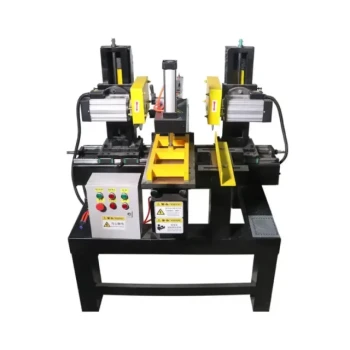
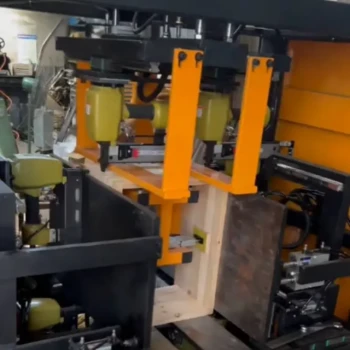
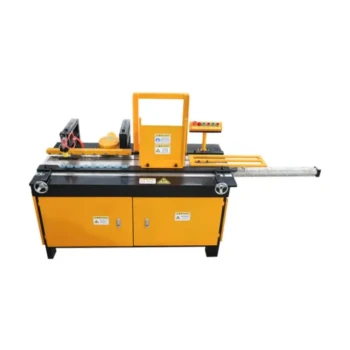
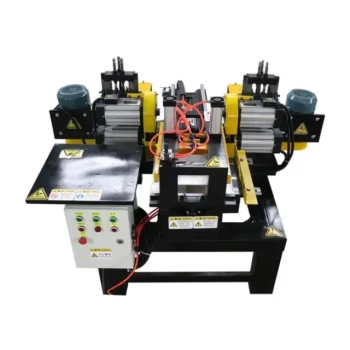
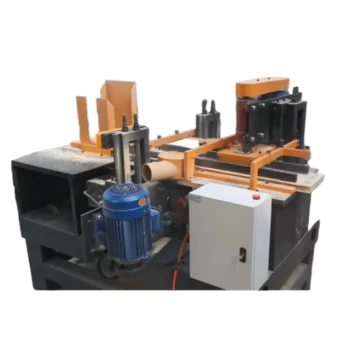
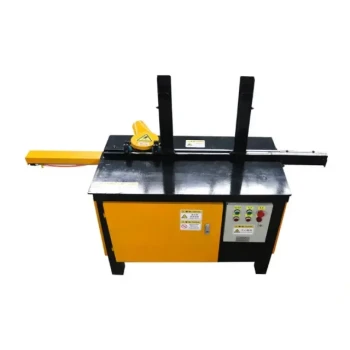
High-performance beehive manufacturing machinery acts as the central leverage point for scaling commercial apiary operations. It fundamentally shifts production from manual variability to industrial precision, directly determining the capacity for large-scale output. By enabling the mass production of standardized components, these systems reduce internal operating costs and provide the supply stability required for managing thousands of colonies.
The core value of this technology lies in interchangeability. By ensuring every hive component is dimensionally identical, apiaries transform beekeeping from a craft-based activity into a standardized industrial process, significantly lowering labor overhead and material waste.
Driving Operational Efficiency Through Standardization
The Power of Universal Interchangeability
For large-scale operations, the inability to swap parts between hives creates a logistical bottleneck. Industrial-grade machinery ensures total consistency in dimensions for bottom boards, supers, and frames.
This means a frame from Hive A will fit perfectly into Hive B. This universality eliminates the time wasted manually adjusting ill-fitting components during critical seasonal windows.
Streamlining Maintenance and Labor
Standardized components allow beekeepers to simplify routine maintenance processes. Because parts are uniform, workers can replace damaged elements rapidly without specialized tools or fitting.
This reduction in labor time per unit is essential for migratory beekeeping. When moving huge numbers of hives to follow seasonal blooms, the reliability of the hardware directly impacts the speed of deployment.
Integration with Downstream Automation
The efficiency gains extend beyond the hive itself. Precision manufacturing ensures that frames and boxes are compatible with subsequent automated equipment.
Technical compatibility with centrifugal extractors and automated filling machines prevents jams and breakdowns. The precision achieved at the manufacturing stage safeguards the efficiency of the entire honey processing line.
Mechanisms of Cost Control
Reducing Acquisition and Logistics Costs
High-performance machinery allows apiaries to process raw timber internally rather than purchasing finished products. This capability removes the price premiums associated with retail markups and finished-product logistics.
By producing customized equipment on-site, apiaries significantly reduce logistics costs. They are no longer transporting bulky, empty boxes, but rather raw materials that are processed only when needed.
Improving Asset Turnover
Machinery enables "just-in-time" production that matches the apiary's operational rhythm. Instead of stockpiling expensive inventory, managers can produce replacements exactly when required.
This improves asset turnover rates. Capital is not tied up in decaying wooden inventory but is utilized to produce assets that are immediately deployed to generate revenue.
The Impact on Biological Assets (Colony Stability)
Enhancing Colony Health and Survival
Operational efficiency is heavily dependent on colony survival rates. High-precision machining guarantees tighter sealing and structural durability.
This precision minimizes parasite risks and helps maintain stable internal temperatures during winter challenges. A dimensionally accurate hive supports the honeybee’s natural nesting behavior, reducing the colony's energy expenditure on hive repair and thermoregulation.
Maximizing Regional Resource Potential
By providing a stable, standardized habitat, apiaries can focus on multiplying colony numbers rather than constant infrastructure repair.
This consistency serves as a core technical guarantee for maximizing pollination services and honey production. Healthy, undisturbed colonies result in higher yields, which lowers the effective cost per pound of honey produced.
Understanding the Trade-offs
While the benefits are clear, adopting high-performance machinery introduces specific challenges that must be managed.
Capital Intensity vs. Operational Savings
The shift to industrial manufacturing requires significant upfront capital investment. The machinery is a fixed cost that must be amortized over a large volume of production to be viable; it is generally unsuitable for small-scale operations where volume cannot justify the expense.
The Requirement for Skilled Operation
Moving from manual carpentry to automated machinery changes the labor requirement. It reduces the need for general manual labor but increases the need for technical operators capable of maintaining high-precision equipment to prevent costly downtime.
Making the Right Choice for Your Goal
To determine how to integrate this technology into your operation, assess your primary objective:
- If your primary focus is Rapid Expansion: Prioritize machinery with high throughput capacity to mass-produce standardized frames and supers, ensuring you never bottleneck colony growth due to equipment shortages.
- If your primary focus is Cost Optimization: Focus on machinery that allows you to process raw timber from scratch, thereby eliminating the margin paid to external manufacturers and reducing shipping volume.
- If your primary focus is Automation Integration: Ensure the machinery offers the highest dimensional tolerance (precision) to guarantee seamless compatibility with your automated extraction and bottling lines.
High-performance manufacturing is not just about building boxes; it is the infrastructure investment that enables a commercial apiary to function as a cohesive, scalable industrial unit.
Summary Table:
| Key Impact Area | Benefit of High-Performance Machinery | Impact on Cost/Efficiency |
|---|---|---|
| Standardization | Universal interchangeability of frames and supers | Drastically reduces labor time and part fitting |
| Supply Chain | Internal raw timber processing & just-in-time production | Eliminates retail markups and lowers inventory costs |
| Automation | Precision tolerances for downstream compatibility | Prevents jams in extractors and filling machines |
| Colony Health | Tighter seals and superior structural durability | Lowers mortality rates and improves honey yields |
| Logistics | Reduced transport volume of raw materials vs. boxes | Significant reduction in shipping and storage overhead |
Transform Your Commercial Apiary with HONESTBEE
At HONESTBEE, we empower commercial apiaries and distributors to scale operations through industrial precision. Our comprehensive wholesale catalog includes everything from high-output hive-making machines and honey-filling lines to specialized beekeeping tools and industry consumables.
Whether you are looking to eliminate supply bottlenecks, reduce labor overhead, or integrate full automation into your honey processing, we provide the technical hardware and cultural merchandise to grow your brand.
Ready to optimize your production? Contact us today for a wholesale consultation!
References
- S. Vinichenko. Stages and methods of formation of marketing strategy of enterprises in the market of beekeeping products. DOI: 10.31548/bioeconomy2020.04.004
This article is also based on technical information from HonestBee Knowledge Base .
Related Products
- High-Efficiency Pneumatic Bee Hive Making Machine for Rapid Box Assembly
- Mini Desktop Bee Hive Frame Forming Making Machine
- Beehive Machine Double End Saw for Precision Hive Component Manufacturing
- Automatic High-Speed Bee Hive Box Stapling Machine
- Beehive Handle and Frame Rest Cutting Machine: Your Specialized Hive Machine
People Also Ask
- How does the introduction of professional beehive-making machinery benefit sustainable beekeeping? Scale Your Apiary
- Why is specialized beehive-making machinery critical for low-defense breeding? Enhance Selection with Precision Tools
- How does the introduction of specialized beehive making machinery contribute to increasing the scale of regional beekeeping industries?
- What is the importance of specialized beehive making machinery in a circular bio-economy? Build Local Sustainability
- Why is specialized beehive-making machinery essential? Scale Your Apiary with Precision Industrial Standards