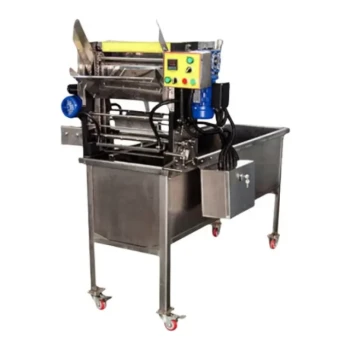
Automatic honey-filling machines primarily enhance commercial value by replacing inconsistent manual labor with high-speed, precise automation. These systems significantly increase production line throughput, ensure exact net weights to minimize product giveaway, and utilize closed-system designs to eliminate environmental contamination. By standardizing the filling process, operations can reduce labor costs while meeting the dual industry requirements of strict hygiene and high efficiency.
By decoupling production speed from manual labor limitations, automated filling solves the "seasonal bottleneck" of honey processing—allowing producers to scale output rapidly while maintaining the strict hygiene standards required for high-value retail and export markets.
Scaling Throughput and Efficiency
The primary driver of commercial value is the ability to move from artisanal processing to industrial-scale throughput.
Handling Seasonal Surges
Honey production is often seasonal, creating pressure to process large volumes quickly. Industrial-grade filling machines enable apiaries to handle these production surges without the bottleneck of manual bottling.
Reducing Labor Overheads
Manual filling is labor-intensive and slow. Automation drastically reduces the dependency on manual workforce for the physical bottling process, resulting in immediate and long-term reductions in labor costs.
Precision and Yield Maximization
Beyond speed, commercial value is generated by protecting the product itself from waste.
Exact Volumetric Control
Manual filling often leads to "overfilling" to ensure minimum weight compliance, which bleeds profit. Automated machines utilize precise metering controls to ensure every unit meets the exact net weight standard, eliminating product giveaway.
Minimizing Raw Material Loss
Valuable honey is often lost to spills or measurement errors during manual transfer. High-precision metering systems prevent overflow and minimize raw material loss, ensuring that virtually all harvested honey is converted into saleable inventory.
Hygiene and Market Access
In the modern food industry, safety is a commercial asset. Automated machines provide the technical compliance necessary to enter premium markets.
Closed-System Contamination Prevention
Primary references highlight that these machines operate as closed systems. This design minimizes the risk of environmental or microbial contamination, which is a frequent liability in open-air manual filling.
Preserving Biochemical Quality
Automated sealing processes prevent moisture absorption and secondary contamination. This allows producers to maintain optimal levels of biochemical indicators, such as Hydroxymethylfurfural (HMF), satisfying the quality requirements of high-end markets.
Standardization for Retail and Export
Global markets require strict adherence to food safety and packaging uniformity. The consistency provided by automation—in both weight and hygiene—is often a prerequisite for entering international export markets and large-scale retail distribution.
Understanding the Trade-offs
While automation offers significant value, it imposes specific operational requirements that must be managed to realize a return on investment.
The Necessity of Standardization
To achieve the efficiency gains described, packaging must be uniform. These machines rely on standardized containers and sealing processes, meaning operations may lose the flexibility to use irregular or varied jar sizes without retooling.
Maintenance of Precision Systems
The "high-precision metering" that saves money requires calibration. To prevent the measurement errors these machines are designed to solve, operators must adhere to strict maintenance schedules for the automated control technology.
Making the Right Choice for Your Goal
- If your primary focus is Profit Margin: Prioritize machines with high-precision metering to eliminate product overfilling and reduce raw material waste.
- If your primary focus is Brand Reputation and Exports: Select machines with verified closed-system hygiene protocols to ensure HMF stability and compliance with international safety standards.
Automation transforms honey processing from a labor-dependent craft into a scalable, standardized, and commercially viable industrial operation.
Summary Table:
| Feature | Commercial Value Impact | Key Benefit |
|---|---|---|
| High-Precision Metering | Reduces Product Giveaway | Maximizes yield and eliminates overfilling waste. |
| Closed-System Design | Enhances Food Safety | Prevents contamination and meets export standards. |
| Automated Throughput | Increases Scalability | Handles seasonal surges without increasing labor costs. |
| Standardized Filling | Improves Brand Consistency | Ensures uniform quality for retail and distribution markets. |
Elevate Your Honey Production with HONESTBEE
Transition from manual labor to industrial-scale efficiency with HONESTBEE. As a specialist provider for commercial apiaries and distributors, we offer a comprehensive range of beekeeping machinery—from advanced honey-filling machines to full-scale hive-making equipment.
Our value to you:
- Precision Engineering: Minimize product loss with our high-accuracy metering systems.
- Complete Solutions: We supply everything from specialized hardware to honey-themed cultural merchandise.
- Wholesale Expertise: Tailored support for large-scale operations and global distributors.
Contact HONESTBEE today to optimize your honey processing line!
References
- Fabrice Réquier, Robin M. Crewe. Learning from Wild Honey Bees. DOI: 10.1016/j.tree.2019.08.002
This article is also based on technical information from HonestBee Knowledge Base .
Related Products
- Automatic Honey Filling and Filtering Machine for Beekeeping Bottle Filling
- Fully Automatic Honey Filling Packaging Machine for Processing Line
- Precision Durable Efficient HONESTBEE Rotary Honey Filling Machine
- Automatic Single-Dose Snap & Squeeze Honey Sachets Packing Machine
- Semi Automatic Small Honey Bottle Filling Machine Honey Filler
People Also Ask
- What process advantages do professional honey filtering and filling machines provide? Optimize Your Organic Honey Output
- How do honey filling and filtering machines increase product value? Turn Raw Honey into Premium Export-Grade Goods
- How do honey filtration and filling machinery contribute to industrialization? Scale Your Commercial Honey Production
- What specific issues do industrial filtration and automated filling machinery address? Ensure Honey Quality & Compliance
- How does the use of professional honey filtration and filling machinery facilitate international honey exports?