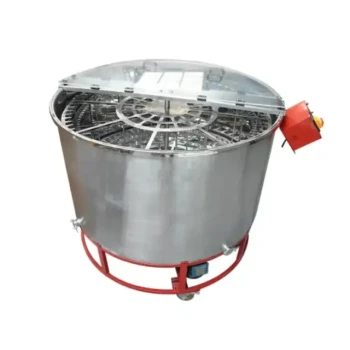
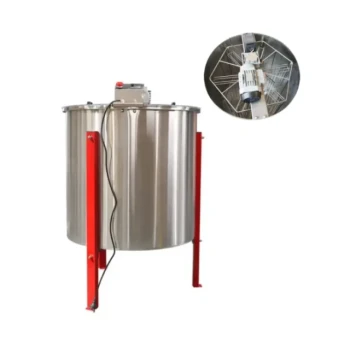
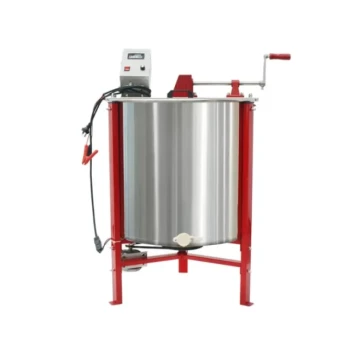
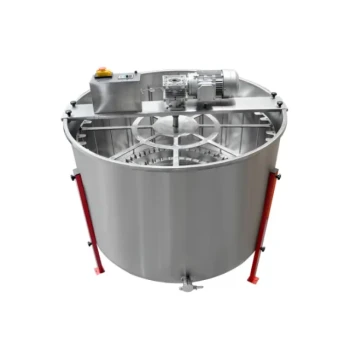
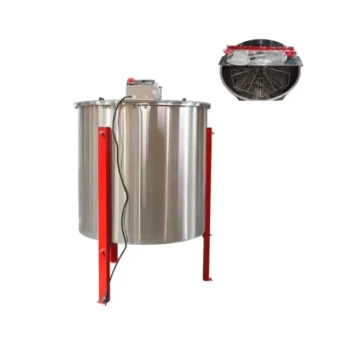
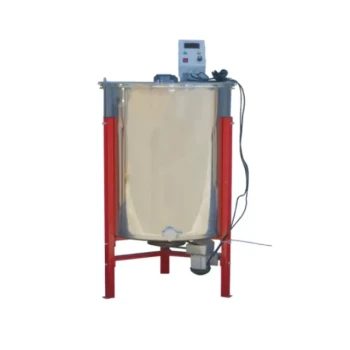
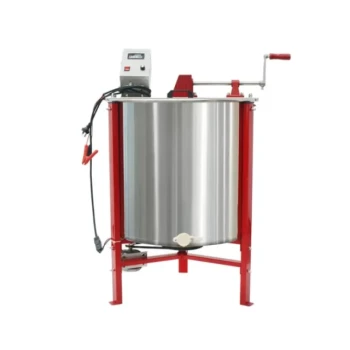
Electric honey extractors utilize motors to automate the spinning process, providing a significant advantage in speed, convenience, and reduced physical labor compared to manual hand-cranked models. They are specifically designed to enhance productivity by allowing beekeepers to process larger volumes of honey with greater efficiency.
The Core Takeaway: Electric extractors transform honey harvesting from a physically demanding chore into a streamlined production line. By automating the spinning cycle, they free the operator to multitask, making them essential for growing apiaries or commercial operations where time and throughput are critical.
Optimizing Harvesting Workflow
The Power of Multitasking
The most distinct advantage of an electric extractor is the ability to decouple the operator from the machine. While a manual extractor requires your hands on the crank at all times, an electric motor runs autonomously.
This allows you to uncap the next batch of frames while the current set is processing. This parallel workflow drastically reduces the total time required to harvest a crop.
Enhancing Throughput for Commercial Needs
For commercial beekeepers or those with many hives, speed is the primary metric of success. Electric models are built to sustain long operation cycles without operator fatigue.
This efficiency allows for scaling operations without a linear increase in labor hours.
Physical Efficiency and Extraction Quality
Reducing Physical Strain
Manual extraction is labor-intensive, particularly during large harvests. The repetitive motion of hand-cranking can be exhausting and physically demanding.
Electric extractors eliminate this physical burden entirely. They are the superior choice for beekeepers with physical limitations or those wishing to conserve energy for other apiary tasks.
Precision and Comb Preservation
Electric models utilize consistent motor-driven centrifugal force to extract honey more thoroughly than inconsistent manual cranking. This often results in a higher overall honey yield per frame.
Furthermore, these units often feature speed controls that allow for a gradual increase in rotation. This precision prevents damage to the honeycombs, allowing the wax structure to be preserved and reused for future seasons.
Scaling Your Operation
High-Volume Capabilities
Manual extractors generally handle a limited number of frames, typically between two and eight. This restricts the volume of honey you can process in a single session.
In contrast, electric extractors are designed for scale, with capacities ranging from two frames up to 100 frames. This capacity is vital for apiaries planning to expand beyond a hobbyist level.
Understanding the Trade-offs
Cost Implications
The primary barrier to entry for electric extractors is the price. They are significantly more expensive than manual models due to the motor and heavier-grade construction, typically stainless steel.
Power Dependency
Unlike manual extractors, which are portable and can be used off-grid, electric models require a reliable power source. This limits where you can set up your harvesting station.
Complexity and Maintenance
While generally robust, the addition of a motor and speed control electronics introduces more potential points of failure than a simple mechanical crank.
Making the Right Choice for Your Goal
Selecting the correct extractor depends entirely on the scale of your apiary and your physical requirements.
- If your primary focus is Scalability: Choose an electric extractor to handle higher frame capacities and streamline the uncapping-spinning workflow.
- If your primary focus is Budget or Portability: Stick to a manual extractor, which is ideal for hobbyists with fewer than eight hives or off-grid setups.
- If your primary focus is Physical Comfort: Invest in an electric model to eliminate the repetitive labor of cranking, regardless of your hive count.
Ultimately, an electric extractor is not just a luxury; it is a productivity tool that trades capital investment for significant time savings.
Summary Table:
| Feature | Electric Honey Extractors | Manual Honey Extractors |
|---|---|---|
| Labor Intensity | Low (Automated motor) | High (Continuous hand-cranking) |
| Workflow | Enables multitasking/uncapping while spinning | Requires dedicated operator |
| Capacity Range | High (2 to 100+ frames) | Low (Typically 2 to 8 frames) |
| Extraction Quality | Consistent centrifugal force; speed control | Variable speed; higher risk of comb damage |
| Best Suitability | Commercial apiaries & scaling operations | Hobbyists & off-grid setups |
Maximize Your Apiary's Productivity with HONESTBEE
Transitioning from manual to electric extraction is a critical step in scaling your honey production. At HONESTBEE, we specialize in supporting commercial apiaries and distributors with high-performance beekeeping machinery. Our comprehensive wholesale catalog includes:
- Industrial Extractors & Honey-Filling Machines: Engineered for durability and high throughput.
- Precision Hardware: From hive-making equipment to specialized honey processing tools.
- Full-Spectrum Supplies: A complete array of essential consumables and cultural merchandise.
Ready to upgrade your workflow and increase your harvest yield? Contact us today to explore our wholesale solutions and discover how HONESTBEE can power your commercial growth.
Related Products
- HONESTBEE 72 Frame Industrial Electric Honey Extractor for Beekeeping
- Commercial Electric 12 Frame Honey Extractor Spinner Motorized Honey Extractor
- 32 Frame Commercial Electric Honey Extractor for Beekeeping and Honey Production
- Electric 4 Frame Tangential Honey Extractor
- electric honey extractor honey centrifuge 3 frame honey extractor stainless steel honey frame extractor
People Also Ask
- What is the importance of balancing honeycomb frames within a honey extractor? Ensure Stability and Protect Machinery
- How is honey separated from the frames after they are uncapped? Efficient Extraction Methods for High Yields
- What are the main benefits of using a honey extractor? Maximize Yields and Protect Your Honeycomb
- What are the recommended methods for removing honey from the honeycomb? Top Extraction Techniques for Maximum Efficiency
- How do manual honey extractors compare to electric honey extractors? Choosing the Right Tool for Your Apiary Growth