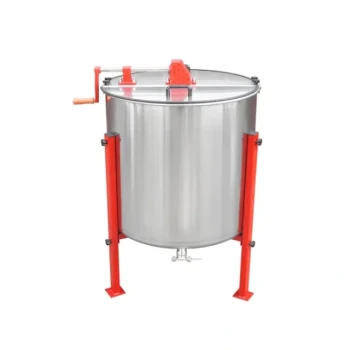
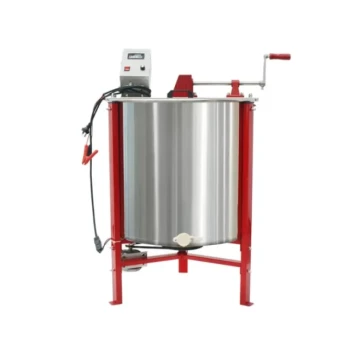
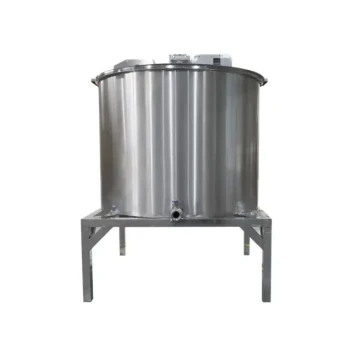
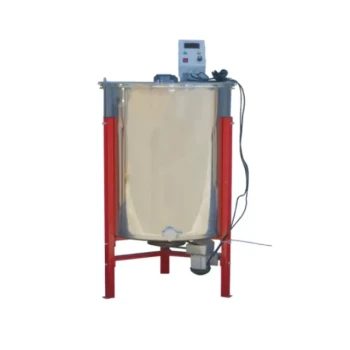
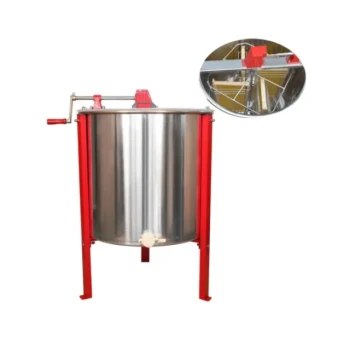
Mechanical honey extraction offers a decisive advantage in quality control by replacing inconsistent manual handling with precision engineering. By utilizing centrifugal force and closed systems to separate honey from combs, these methods significantly reduce human contact and environmental exposure, ensuring the final product maintains higher hygiene standards and lower impurity levels than manually processed honey.
Core Takeaway Mechanical extraction is not merely a tool for speed; it is the primary method for stabilizing honey as a bioactive product. It effectively decouples production volume from quality degradation, allowing producers to achieve commercial scale while preserving the honey's natural enzymes, flavor profile, and nutritional value.
Minimizing Contamination Risks
reducing Human Interaction
Traditional manual extraction often involves squeezing or pressing, which increases the likelihood of introducing pathogens or debris. Mechanical systems primarily use centrifugal force within a contained environment, effectively isolating the honey from human skin and ambient contaminants during the separation process.
Material Safety and Oxidation
Industrial-grade extraction equipment is typically constructed from food-grade stainless steel. This material choice minimizes the risk of oxidation and metal contamination, facilitating compliance with strict organic and high-level quality certification systems.
Eliminating Secondary Contamination
Specialized equipment, particularly for delicate varieties like stingless bee honey, is designed to separate honey without damaging pollen pots or the brood nest. This precision avoids "secondary contamination," where non-honey biological matter is accidentally mixed into the final product during manual handling.
Preserving Biological Integrity
Maintaining Enzymatic Activity
Mechanical extractors are designed to operate efficiently at low temperatures. This is critical for preventing the degradation of heat-sensitive enzymes, which are the primary indicators of honey's medicinal and nutritional value.
Controlling Chemical Indicators
By avoiding the heat and friction often generated by manual processing or improper machinery, modern equipment prevents the elevation of hydroxymethylfurfural (HMF). Maintaining low HMF levels is essential for meeting international quality standards and preserving the honey's "raw" status.
Enhancing Physical Purity and Consistency
Superior Clarity and Filtration
Professional processing equipment utilizes multi-stage filtration and separation cycles to remove beeswax residues and debris. This results in honey with superior clarity and flavor purity, eliminating the cloudiness often associated with manual pressing.
Standardization of Batches
Manual methods result in high variability between harvests. Mechanical processing ensures standardized consistency across batches, ensuring that every unit meets the same physical and sensory specifications required for market competitiveness.
Shelf Life Extension
The thorough removal of impurities does more than improve aesthetics; it removes potential fermentation triggers. By effectively filtering out particles that harbor moisture or yeast, mechanical extraction significantly extends the shelf life of the bottled product.
Understanding the Trade-offs
Maintenance and Sanitation Requirements
While mechanical systems reduce contamination during operation, the equipment itself introduces a new variable: the need for rigorous cleaning. Complex machinery with moving parts requires strict sanitation protocols to prevent cross-contamination between batches, which is less of a factor in simpler, single-use manual setups.
Method Specificity
Not all mechanical methods yield the same results; for example, a mechanical jack press applies direct force, whereas a centrifugal extractor uses spinning physics. While a press increases yield and efficiency, centrifugal extraction is generally superior for preserving the structural integrity of the comb and minimizing the introduction of wax particles into the honey.
Making the Right Choice for Your Goal
Mechanical extraction is the industry standard for producers aiming for high-quality commercial distribution.
- If your primary focus is International Export: Prioritize centrifugal equipment that operates at low temperatures to ensure HMF levels and enzymatic activity meet stringent import regulations.
- If your primary focus is Shelf Stability: Focus on equipment with multi-stage filtration capabilities to maximize the removal of fermentation-causing impurities and moisture.
investing in mechanical extraction is the single most effective step for transitioning from a variable craft product to a standardized, high-value commercial asset.
Summary Table:
| Feature | Manual Extraction | Mechanical Extraction | Quality Impact |
|---|---|---|---|
| Separation Method | Squeezing / Pressing | Centrifugal Force | Preserves comb integrity & reduces wax debris |
| Hygiene Level | High human contact risk | Closed, food-grade systems | Minimizes pathogens and environmental contaminants |
| Chemical Stability | Potential for heat/oxidation | Precision temperature control | Maintains low HMF levels and high enzyme activity |
| Purity & Clarity | Often cloudy with particles | Multi-stage filtration | Superior clarity and longer shelf life |
| Consistency | High batch variability | Standardized processing | Reliable sensory and physical specifications |
Elevate Your Apiary to Commercial Excellence with HONESTBEE
Transitioning from manual craft to high-value commercial production requires precision. HONESTBEE empowers commercial apiaries and distributors with professional-grade solutions designed for scale and purity.
From advanced centrifugal honey extractors and honey-filling machines to specialized hive-making hardware, we supply the full spectrum of beekeeping tools and industry consumables needed to meet international quality standards.
Ready to stabilize your honey quality and maximize market value? Contact our experts today to find your custom equipment solution.
References
- Ashok Kumar Ashok Kumar. Value chain finance to develop the honey sub-sector in India. DOI: 10.3362/1755-1986.2008.028
This article is also based on technical information from HonestBee Knowledge Base .
Related Products
- Commercial Electric 12 Frame Honey Extractor Spinner Motorized Honey Extractor
- 6 Frame Manual Stainless Steel Honey Extractor Beekeeping Equipment
- HONESTBEE 2 Frame Manual Acrylic Honey Extractor Beekeeping Equipment
- Electric 8 Frame Honey Spinner Extractor Equipment for Beekeeping
- Stainless Steel 3 Frame Manual Honey Extractor Spinner for Bee Honey Extraction
People Also Ask
- Who are commercial honey extractors designed for? Scaling Your Industrial Beekeeping Success
- What is a commercial honey extractor? The Essential High-Volume Solution for Large Apiaries
- How is honey extracted commercially? Maximize Your Apiary's Efficiency and Honey Yield
- What are commercial honey extractors used for? Boost Your Apiary's Efficiency & Profitability
- What are the advantages of motorized extractors? Boost Honey Production and Save Time