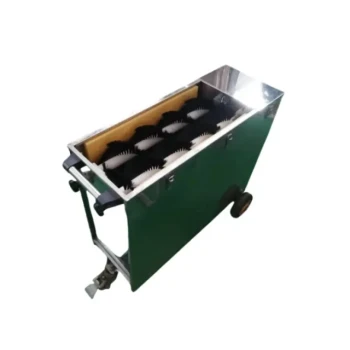
Upgrading to automated beekeeping tools fundamentally shifts your defense strategy from reactive manual labor to proactive, data-driven protection. By implementing automated collection and smart monitoring, you significantly reduce the physical risk to operators while simultaneously increasing the precision of your defense against hornet invasions.
Automation transforms hornet defense by minimizing human exposure to danger and maximizing trap efficiency. It allows for real-time response without compromising honey purity through excessive chemical use.
Enhancing Operator Safety
Reducing Physical Exposure
The most immediate advantage of automation is the physical separation between the beekeeper and the threat.
Automated collection systems handle routine tasks that traditionally required a human presence. This drastically lowers the risk of operators being exposed to aggressive hornet attacks during high-activity periods.
Minimizing Manual Interventions
Standard beekeeping often requires frequent site visits to check traps or hive health.
Intelligent tools reduce the necessity for these constant manual checks. By limiting how often you must physically interact with the hive, you reduce the probability of dangerous encounters.
Optimizing Defense Mechanisms
Real-Time Threat Detection
Intelligent monitoring systems provide a capability that manual observation cannot match: continuous surveillance.
These devices can track the frequency of hornet activity in real-time. This data allows you to understand exactly when an invasion is spiking, rather than relying on periodic estimates.
Integrated Trap Activation
Data is only useful if it leads to action.
Advanced monitoring systems can be integrated directly with trapping devices. When the system detects a rise in hornet activity, it can trigger traps automatically, ensuring defenses are active exactly when they are needed most.
Preserving Product Quality
Eliminating Chemical Reliance
Traditional defenses often fall back on chemical deterrents when manual trapping becomes overwhelming.
The precise process control offered by automation increases the efficiency of physical defenses. This reduces the necessity for chemical treatments to control hornet populations.
Ensuring Honey Purity
The reduction of chemicals has a direct impact on the final product.
By relying on automated mechanical defenses rather than chemical ones, you help preserve the natural purity of the honey. This protects the apiary's reputation and ensures a higher quality product for the market.
Understanding the Trade-offs
Dependence on Power and Connectivity
While automation reduces physical labor, it introduces a reliance on technical infrastructure.
These systems require power sources and often data connectivity to function effectively. A failure in either can leave hives temporarily vulnerable if manual backups are not in place.
Complexity of Maintenance
Moving from manual tools to intelligent systems changes the nature of your maintenance.
Instead of repairing wooden frames, you may need to troubleshoot sensors or software integration. This requires a shift in skills or the availability of technical support.
Making the Right Choice for Your Goal
To decide if this upgrade fits your apiary, evaluate your most pressing constraints:
- If your primary focus is Operator Safety: Prioritize automated collection systems to minimize the frequency of physical site visits during hornet season.
- If your primary focus is Product Quality: Focus on integrated trapping systems to replace chemical treatments and guarantee organic-standard honey purity.
Embracing automation is not just about convenience; it is a strategic move to secure both the safety of your staff and the integrity of your harvest.
Summary Table:
| Feature | Manual Defense | Automated Management |
|---|---|---|
| Operator Safety | High risk of physical stings | Minimal human-hornet contact |
| Response Time | Reactive (only when on-site) | Proactive (real-time detection) |
| Chemical Use | High reliance on pesticides | Low; focuses on mechanical traps |
| Product Purity | Potential chemical residue | High purity; chemical-free |
| Labor Input | Intensive manual monitoring | Data-driven remote oversight |
Secure Your Apiary with HONESTBEE’s Advanced Technology
Protect your commercial beekeeping operations from hornet invasions while scaling your efficiency. HONESTBEE empowers commercial apiaries and distributors with the high-performance tools needed to thrive in challenging environments. From automated hive-making and honey-filling machinery to a full spectrum of specialized beekeeping hardware and consumables, we provide the end-to-end solutions your business requires.
Don't let hornet threats compromise your honey quality or staff safety. Contact HONESTBEE today to learn how our wholesale equipment and smart beekeeping solutions can safeguard your harvest and maximize your output.
References
- Hossam F. Abou‐Shaara, Areej A. Al-Khalaf. Using Maximum Entropy Algorithm to Analyze Current and Future Distribution of the Asian hornet, Vespa velutina, in Europe and North Africa Under Climate Change Conditions. DOI: 10.51963/jers.v24i1.2011
This article is also based on technical information from HonestBee Knowledge Base .
Related Products
- Ergonomic Plastic Frame Spacer Tool for Rapid Hive Management Beekeeping
- HONESTBEE Professional Mini J-Hook Hive Tool for Beekeeping
- HONESTBEE 15-in-1 Beekeeper Multi-Tool with Hammer and Pliers for Beekeeping
- HONESTBEE Classic Pry Bar Hive Tool with High Visibility Finish for Beekeeping
- Stainless Steel J Hook Hive Tool for Beekeeping
People Also Ask
- What specific challenges do beekeeping hive tools address during hive maintenance? Essential Solutions for Apiaries
- How do specialized beehive management tools support high-purity honey production? Master Monofloral Isolation
- How do specialized beehive management tools assist in the routine maintenance of bee colonies? Boost Hive Efficiency
- What additional equipment might be useful for beekeeping? Boost Hive Health & Efficiency
- How do spring inspections for honeybee starvation symptoms guide apiary management? Optimize Colony Survival & Growth