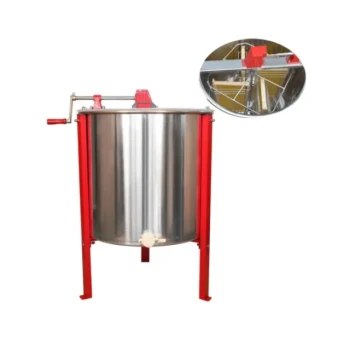
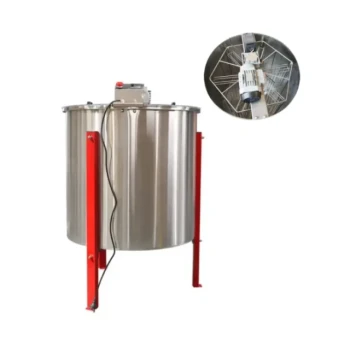
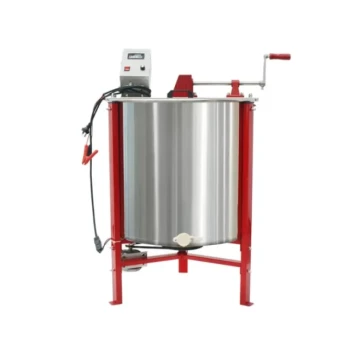
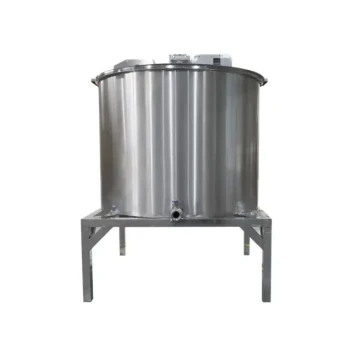
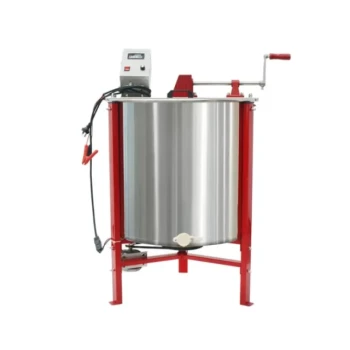
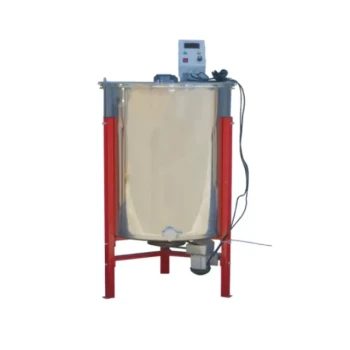
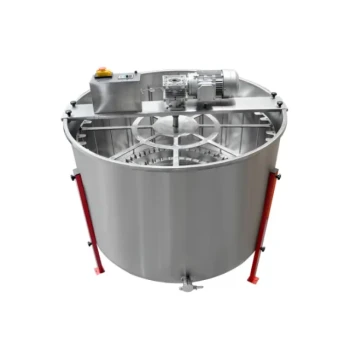
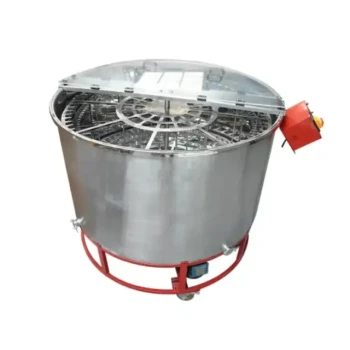
Mobile honey extraction units offer decisive logistical advantages for beekeepers operating in rugged, high-altitude terrain. By bringing processing capabilities directly to the harvest site, such as cedar forests, these units eliminate the delay between harvesting and extraction, ensuring the immediate preservation of raw materials.
Core Takeaway By decentralizing the production process, mobile extraction units bridge the gap between remote collection sites and finished products. This significantly shortens the logistics cycle, allowing for the flexible exploitation of ephemeral honey sources like cedar honeydew while maintaining freshness.
Optimizing Logistics in Rugged Terrain
Flexibility Across Altitudes
In mountainous regions, nectar flows and insect secretions occur at different elevations at different times. Mobile units allow beekeepers to move flexibly across altitudes to follow these sources.
This is particularly critical for plants like Cedrus libani (Cedar of Lebanon), which grow in specific high-altitude zones. Beekeepers can position their processing hub exactly where the production is peaking.
Shortening the Supply Chain
Traditional methods require transporting heavy, raw honeycombs from the mountain down to a central facility. Mobile units shorten the logistics cycle by processing raw material into a finished or semi-finished product on-site.
This reduction in transport time minimizes the risk of spoilage or fermentation, which can occur when raw honey is held too long in transit.
Maximizing Specialised Honey Sources
Immediate Processing of Secretions
Cedar forest honey often relies on insect secretions (honeydew) rather than floral nectar. Mobile units facilitate the immediate development of these unique honey sources.
Because these secretions can change in viscosity or quality rapidly, processing them immediately in the field ensures a higher quality yield than waiting for transport to a distant factory.
Accessing Remote Locations
High-quality cedar forests are often located in remote or mountainous areas lacking infrastructure.
Mobile units act as self-contained factories, allowing producers to operate efficiently in areas that would otherwise be economically unviable due to transport costs.
Understanding the Trade-offs
While mobile units are excellent for flexibility, they differ significantly from the stationary industrial machinery used in high-volume flatlands.
Capacity Limitations
Mobile units prioritize portability over volume. Unlike industrial honey extraction machinery, which provides the high throughput necessary for large-scale operations, mobile units are generally suited for small-to-medium batches.
Environmental Control Challenges
Stationary industrial systems utilize sealed designs to strictly prevent environmental and antibiotic cross-contamination.
When operating mobile units in the field, operators must be hyper-vigilant to maintain hygiene standards comparable to these sealed factory environments, as the risk of environmental exposure is naturally higher outdoors.
Making the Right Choice for Your Operation
For producers deciding between mobile field processing and centralizing operations, consider your primary operational constraints.
- If your primary focus is accessing remote, high-altitude terroir: Prioritize mobile extraction units to minimize transport time and capture fleeting resources like cedar honeydew.
- If your primary focus is maximum daily throughput for export: Rely on stationary industrial lines with automated filling to ensure consistent sealing and compliance with international standards.
Mobile extraction empowers producers to capture the unique value of high-altitude biodiversity without sacrificing the freshness of the harvest.
Summary Table:
| Feature | Mobile Extraction Units | Stationary Industrial Lines |
|---|---|---|
| Primary Environment | Remote, High-Altitude (e.g., Cedar Forests) | Centralized Factories / Flatlands |
| Logistics | Process on-site; shortens supply chain | Requires transporting raw combs |
| Capacity | Small-to-medium batch processing | High-volume industrial throughput |
| Main Advantage | Flexibility & immediate processing | Sealed hygiene & automated efficiency |
| Best For | Capturing ephemeral honeydew & wild nectar | Large-scale export & mass production |
Elevate Your Honey Production with HONESTBEE
Whether you are navigating the rugged terrain of cedar forests or scaling up a commercial facility, HONESTBEE is your professional partner for high-performance beekeeping technology.
We provide a comprehensive wholesale range designed for commercial apiaries and distributors, including:
- Specialized Machinery: High-throughput honey-filling machines and precision hive-making equipment.
- Full Spectrum Tools: From advanced extraction units to essential beekeeping hardware.
- Industry Consumables: A complete inventory of supplies to keep your operation running smoothly.
Maximize your yield and preserve the unique terroir of your honey. Contact us today to discover how our tailored equipment solutions can streamline your logistics and grow your business.
References
- Sabri Ünal, Esra Nurten Yer. SOME FOREST TREES FOR HONEYDEW HONEY PRODUCTION IN TURKEY. DOI: 10.15372/sjfs20170409
This article is also based on technical information from HonestBee Knowledge Base .
Related Products
- Stainless Steel 3 Frame Manual Honey Extractor Spinner for Bee Honey Extraction
- Manual Hand Crank 4 Frame Honey Extractor Centrifuge for Beekeeping
- Plastic Hand Crank 2 Frame Honey Extractor Low Price
- HONESTBEE 4 Frame Manual Self Reversing Honey Extractor for Beekeeping
- HONESTBEE 3-Frame Manual Acrylic Honey Extractor
People Also Ask
- Which type of honey extractor is generally more durable? Focus on Material & Build Quality for Longevity
- What are the disadvantages of a manual honey extractor? Overcome Efficiency Bottlenecks in Your Apiary
- What is a manual honey extractor? The Essential Guide to Cost-Effective Beekeeping for Beginners
- Why are manual extractors popular among beginner beekeepers? A Guide to Starting Simple & Saving Money
- What are the primary advantages of utilizing a manual honey extractor? Cost-Effective & Gentle Harvesting