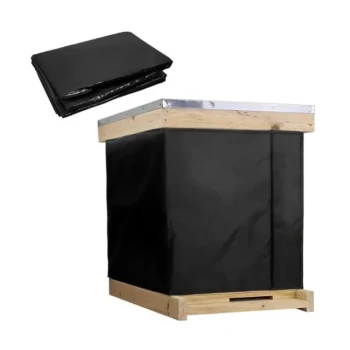
Outdoor overwintering with reinforced insulation offers distinct economic and biological advantages over utilizing dedicated indoor overwintering rooms. This method significantly reduces the capital investment required for storage facilities and eliminates the labor costs associated with transporting hives. Biologically, it allows colonies to naturally synchronize with the environment, promoting better health and an earlier start to the production season.
By replacing climate-controlled warehousing with high-performance insulation, apiaries can lower operational overhead while allowing colonies to naturally regulate hygiene and initiate spring foraging sooner.
The Economic Impact on Operations
Reducing Capital Expenditure
Constructing and maintaining dedicated indoor overwintering rooms requires significant upfront capital. By utilizing outdoor overwintering, you eliminate the need for these specialized storage facilities.
Lowering Labor Costs
Indoor overwintering requires the logistical heavy lifting of transporting hives into storage in the fall and back out in the spring. Keeping hives outdoors removes this labor-intensive step, streamlining your seasonal workflow.
Colony Health and Spring Readiness
The Critical Role of Cleansing Flights
Colonies kept indoors are isolated from external temperature changes. In contrast, outdoor colonies can perceive rising spring temperatures immediately.
This awareness allows bees to perform "cleansing flights"—essential defecation flights outside the hive—as soon as the weather permits. Timely cleansing flights are critical for reducing the incidence of intestinal diseases, specifically Nosema.
Accelerating Spring Foraging
Because outdoor colonies are already acclimated to the environment and have managed their hygiene earlier, they are better positioned for productivity.
These colonies can begin foraging and collection work earlier than their counterparts that must be moved out of indoor storage and re-acclimated. This head start can be vital for capitalizing on early nectar flows.
Understanding the Trade-offs
Reliance on Insulation Quality
The success of this method hinges entirely on the quality of the reinforced insulation materials. Standard equipment is insufficient; without high-performance insulation, outdoor colonies are vulnerable to extreme cold snaps that indoor rooms easily mitigate.
Exposure vs. Control
Indoor rooms offer total control over the environment, ensuring stability regardless of erratic weather. Outdoor overwintering trades this control for natural synchronization. While beneficial for spring startup, it requires trust in your insulation strategy to handle winter volatility.
Making the Right Choice for Your Goal
To determine the best approach for your apiary, consider your specific operational constraints and biological targets.
- If your primary focus is maximizing profit margins: Adopt outdoor overwintering to eliminate the capital and labor costs associated with building and stocking indoor facilities.
- If your primary focus is early season productivity: Utilize outdoor setups to allow for natural cleansing flights and immediate mobilization for spring foraging.
By combining high-performance materials with outdoor placement, you effectively balance operational efficiency with the biological needs of the hive.
Summary Table:
| Feature | Outdoor (Reinforced Insulation) | Indoor Overwintering Room |
|---|---|---|
| Capital Investment | Low (No building required) | High (Facility construction costs) |
| Labor Requirement | Minimal (No hive transport) | High (Manual hive relocation) |
| Disease Control | Higher (Early cleansing flights) | Lower (Delayed hygiene flights) |
| Spring Start-up | Early (Natural synchronization) | Delayed (Re-acclimation period) |
| Climate Control | Dependent on insulation quality | Precision climate control |
| Primary Benefit | Operational efficiency & early flow | Total environmental stability |
Elevate Your Apiary's Efficiency with HONESTBEE
Transitioning to outdoor overwintering requires more than just a strategy—it requires the right hardware. At HONESTBEE, we specialize in supporting commercial apiaries and distributors with the high-performance tools and machinery needed to scale operations effectively. From specialized hive-making and honey-filling machines to a full spectrum of professional beekeeping equipment and consumables, we provide the industrial-grade solutions you need to maximize your profit margins.
Ready to upgrade your infrastructure or restock your wholesale inventory? Contact us today to learn how our comprehensive equipment portfolio can streamline your honey production and overwintering success.
References
- M. A. Mollaev, Z. Kh. Gemyeva. SOME FEATURES OF WINTERING OF CARPATHIAN AND GRAY MOUNTAIN CAUCASIAN BREEDS OF BEES ON THE TERRITORY OF KABARDINO-BALKARIA. DOI: 10.18470/1992-1098-2013-3-133-136
This article is also based on technical information from HonestBee Knowledge Base .
Related Products
- Professional Insulated Winter Hive Wrap for Beekeeping
- Inner Beehive Cover for Beekeeping Bee Hive Inner Cover
- Professional Insulated Plastic Bee Hives
- Economy Polyester Beekeeping Jacket with Veil and Hat
- Professional Beekeeper Suit with Square Folding Cotton Veil
People Also Ask
- What are the steps to properly wrap a beehive for winter? Ensure Your Colony Survives the Cold
- When is the best time to wrap a beehive for winter? A Guide to Perfect Winterization Timing
- How do professional insulation wraps provide protection for bee colonies? Optimize Winter Survival & Energy Efficiency
- What are the technical benefits of using winter wraps for beehive insulation? Boost Colony Survival & Hive Health
- What are the benefits of using insulated covers for hives? Ensure Colony Survival and Health