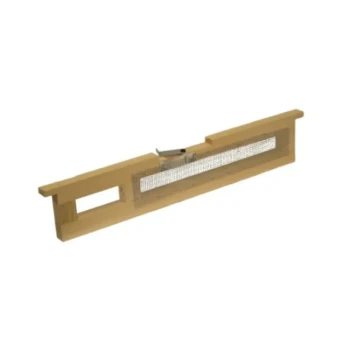
The removable horizontal bar structure fundamentally transforms queen rearing frames from static equipment into modular management tools. This design allows technicians to manipulate, inspect, or harvest specific rows of grafted larvae without removing or disturbing the entire frame, significantly reducing physical interference during critical development stages.
The core advantage of this system is modular precision: it maximizes production density and data tracking capabilities while minimizing the stress and vibration that can damage sensitive developing queens.
The Advantages of Modular Management
Minimizing Physical Disturbance
The most critical period in queen rearing is shortly after grafting. By using removable bars, you avoid the need to pull the entire heavy frame to check acceptance. This protects the remaining larvae from unnecessary vibration, temperature fluctuations, and physical shock.
Streamlined Observation and Classification
Removable bars allow for granular management of different batches. Technicians can isolate specific groups of larvae to track acceptance rates and development stages independently. This facilitates accurate statistical tracking, allowing breeders to identify which breeder queens or grafting technicians are performing best.
Optimizing Commercial Efficiency
High-Density Production
As highlighted in advanced commercial setups, these frames often utilize a double-bar structure. This configuration allows for a higher density of queen cell strips within a single colony. By verticalizing the layout, you optimize the internal hive space without expanding the equipment footprint.
Efficient Resource Allocation
Concentrating queen cells on removable bars improves how nursing resources are used. Nurse bees can be focused on specific high-density zones, ensuring royal jelly is distributed efficiently. This is essential for large-scale commercial operations where maximizing yield per colony is a financial necessity.
Operational Considerations
Balancing Density and Nutrition
While removable bars allow for higher density, this creates a risk of overstocking. Simply fitting more cups on a frame does not guarantee quality queens if the nurse bee population is insufficient. You must ensure the nurse-to-larva ratio remains high enough to feed the increased number of cells.
Handling Complexity
Moving from a solid frame to a multi-part component introduces more moving parts. Bars must be secured firmly to prevent accidental dislodging during hive manipulations. Technicians must be trained to handle the lighter bars with extreme care, as they lack the stabilizing weight of a full frame.
Making the Right Choice for Your Goal
Whether you are a hobbyist or a commercial breeder, the utility of this structure depends on your specific objectives.
- If your primary focus is breeding quality: Utilize the removable bars to minimize inspection disturbances and strictly track the success rates of different genetic lines.
- If your primary focus is commercial volume: Leverage the double-bar capability to maximize the number of cells per colony, ensuring your nurse bee population is bolstered to match the density.
The removable bar structure ultimately bridges the gap between biological safety for the queen and operational efficiency for the beekeeper.
Summary Table:
| Feature | Key Benefit | Impact on Queen Rearing |
|---|---|---|
| Modular Design | Individual Bar Manipulation | Reduces vibration and stress on developing larvae |
| Dual-Bar Layout | High-Density Production | Maximizes cell count per colony without extra equipment |
| Isolated Tracking | Granular Data Collection | Allows precise monitoring of acceptance rates and genetics |
| Focused Nursing | Optimized Resource Allocation | Ensures concentrated distribution of royal jelly by nurse bees |
| Vertical Utility | Space Efficiency | Optimizes internal hive footprint for commercial operations |
Scale Your Queen Rearing Operations with HONESTBEE
At HONESTBEE, we understand that precision and efficiency are the pillars of successful commercial beekeeping. Whether you are managing a large-scale commercial apiary or operating as a specialized distributor, our comprehensive wholesale solutions are designed to elevate your productivity.
We provide a full spectrum of industry-leading equipment, including:
- Advanced Queen Rearing Tools: From modular frames to grafting machinery.
- Industrial Machinery: Professional hive-making and high-speed honey-filling machines.
- Essential Consumables: Durable hardware and quality supplies for daily operations.
- Cultural Merchandise: Unique honey-themed products to diversify your portfolio.
Ready to maximize your yield and streamline your workflow? Contact HONESTBEE Today to discover how our premium beekeeping tools and machinery can transform your business.
References
- H. Fathy, Minako Hamada. Impact of Different Workers Population in Queenless Rearing Colonies on the Quality of Produced Apis mellifera carnica Queen in Manzala Region. DOI: 10.21608/jppp.2019.53637
This article is also based on technical information from HonestBee Knowledge Base .
Related Products
- JZBZ Langstroth Queen Rearing Frame for Beekeeping
- Professional Wooden Requeening Frame for Beekeeping
- Premium Nicot Style Cell Bar Holder and Queen Cell Cup Holder System
- Long Langstroth Style Horizontal Top Bar Hive for Wholesale
- Professional Bee Frame Machine for Side Bar Shaping
People Also Ask
- Why use finishing colonies for queen cell capping? Secrets to Superior Queen Quality and Performance
- How do queen rearing frames and grafting needles function together? Master the Doolittle Method for High-Quality Queens
- What is the purpose of queen rearing frames? Master Controlled Queen Production for Your Apiary
- What are the functions of queen rearing frames and artificial queen cells? Master Bee Genetic Improvement
- What roles do professional queen rearing frames and artificial queen cells play? Scaling Your Queen Bee Production