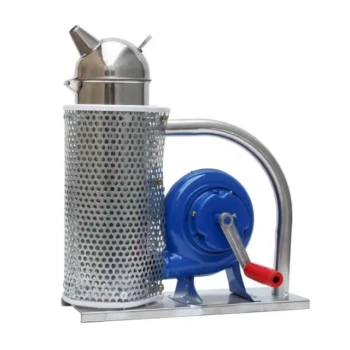
The primary fire safety advantage of industrial-grade beekeeping smokers is the mechanical isolation of the fuel source. By utilizing a closed combustion chamber, these devices generate cool smoke while preventing the escape of live sparks or embers, a common hazard associated with traditional open-air smoldering methods.
By replacing open combustion with a contained system, industrial smokers eliminate the variable of wind-blown sparks, making them the only viable hardware solution for apiary management in fire-prone wilderness areas.
The Mechanics of Hazard Reduction
Closed Combustion Chambers
Traditional smoke-generating methods often rely on piling open smoldering materials, such as dry leaves or dung, near the hive. This approach leaves the burning fuel exposed to the elements.
In contrast, industrial-grade smokers encase the fuel within a dedicated metal canister. This physical barrier ensures that the burning material remains isolated from the surrounding environment, significantly lowering the risk of accidental contact with dry vegetation.
Prevention of Spark Emission
The critical danger in traditional apiary management is the release of airborne embers. Wind can easily carry sparks from an open smolder pile into nearby brush.
Industrial smokers differ by filtering the output. They are designed to emit only cool smoke rather than flame or heavy particulate matter. This containment ensures that even if the fuel inside is burning vigorously, the output remains safe and spark-free.
Operational Control and Environmental Safety
Precision Smoke Application
Open smoldering creates a generalized cloud of smoke that is difficult to direct. This lack of control often forces beekeepers to use larger fires to ensure the smoke reaches the hive.
Professional smokers utilize a bellows system to drive smoke through a nozzle. This allows for precise smoke control, enabling the beekeeper to apply smoke only where necessary. By reducing the total volume of combustion required, the overall thermal footprint of the operation is minimized.
The Importance of "Cool Smoke"
While the primary reference highlights fire safety, the supplementary data notes that cool smoke is essential for bee biology. Hot smoke can injure bees; cool smoke effectively masks alarm pheromones without causing harm.
From a safety perspective, maintaining a "cool" output is proof of proper fuel combustion management. If a smoker is emitting hot smoke, it indicates a risk of flare-ups; a properly functioning industrial smoker maintains a temperature safe for both the colony and the surrounding wilderness.
Understanding the Trade-offs
Equipment Maintenance
While safer, industrial smokers are not maintenance-free. To maintain their fire-safety advantages, the combustion chamber and nozzle must be cleaned of creosote buildup regularly. Failure to clean the device can restrict airflow, potentially causing the fuel to burn hotter than intended.
Fuel Management
The "closed" nature of the device requires careful fuel monitoring. Because the fire is hidden, a beekeeper must ensure the fuel is smoldering correctly and not extinguished, which could lead to re-lighting attempts that temporarily increase fire risk.
Making the Right Choice for Your Apiary
To determine if an upgrade to industrial hardware is necessary, evaluate your specific operational environment.
- If your primary focus is Wildfire Prevention: Prioritize industrial smokers with robust combustion chambers to ensure zero spark emission in dry or wilderness areas.
- If your primary focus is Colony Productivity: Utilize the "cool smoke" capability of professional smokers to allow for frequent, low-stress inspections that reduce bee mortality.
The transition to industrial-grade smokers represents a shift from relying on chance to relying on engineering, securing both the safety of the environment and the longevity of the apiary.
Summary Table:
| Feature | Traditional Smoldering | Industrial-Grade Smokers | Fire Safety Benefit |
|---|---|---|---|
| Combustion Type | Open/Exposed | Closed Chamber | Prevents fuel escape and wind-blown ignition. |
| Spark Control | High risk of embers | Internal filtering | Eliminates airborne sparks in fire-prone areas. |
| Temperature | Variable/Hot | Regulated "Cool Smoke" | Protects bee biology and prevents flare-ups. |
| Application | Generalized cloud | Bellows-driven nozzle | Minimizes thermal footprint and fuel usage. |
| Reliability | Weather-dependent | Mechanical isolation | Safe operation in high-wind or dry wilderness. |
Secure Your Apiary with Professional-Grade Hardware
At HONESTBEE, we understand that for commercial apiaries and distributors, equipment safety is the foundation of a productive season. Our industrial-grade smokers are engineered to provide the precise, cool smoke necessary for colony health while meeting the rigorous fire-safety standards required in wilderness management.
Beyond smokers, HONESTBEE provides a comprehensive wholesale portfolio, including:
- Advanced Machinery: Hive-making and honey-filling machines to scale your operations.
- Beekeeping Tools: A full spectrum of durable hardware and essential industry consumables.
- Cultural Merchandise: Honey-themed goods to diversify your retail offerings.
Partner with a supplier that prioritizes engineering over chance.
Contact HONESTBEE Today to Discuss Your Wholesale Requirements
References
- Katie D. Ricketts, Charlie M. Shackleton. Integrating livelihoods and forest conservation through beekeeping in northern KwaZulu-Natal. DOI: 10.1080/0376835x.2019.1698408
This article is also based on technical information from HonestBee Knowledge Base .
Related Products
- Professional Bee Smoker with Elongated Spout and Durable Bellows for Beekeeping
- Miniature Stainless Steel Bee Smoker for Beekeeping
- Stainless Steel Honey Bee Smoker Hive and Honeycomb Smoker for Beekeeping
- Heavy-Duty Bee Smoker with Durable Plastic Bellows for Beekeeping
- Electric Bee Smoker European Style Bee Hive Smoker for Beekeeping
People Also Ask
- What roles do bee smokers and precision tools play in honey harvesting? Master Safety and Quality Control
- Why is the use of professional bee smokers and specialized fuel essential? Protect Honey Purity & Colony Safety
- Why is a professional bee smoker considered an essential tool for hive management and safety? Master Colony Control.
- What is the mechanism by which a professional bee smoker assists in colony management? Boost Hive Safety and Efficiency
- How do professional bee smokers facilitate bee management? Enhancing Forest Beekeeping Safety and Efficiency