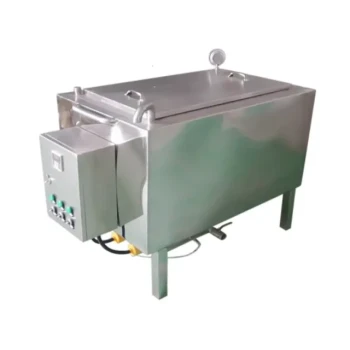
Beeswax processing equipment and bee feed preparation machinery serve as the critical infrastructure for achieving resource autonomy in modern apiaries. The primary function of wax processing gear is to recycle old honeycombs into clean, reusable wax, promoting a circular economy. Simultaneously, feed preparation machinery creates standardized supplementary nutrition to sustain colonies during environmental dearths, ensuring survival when natural foraging is impossible.
Core Takeaway These technologies transform an apiary from a passive operation into a resilient, closed-loop system. By converting waste into commodities and ensuring nutritional consistency, they reduce reliance on external supply chains and protect colonies against extreme weather volatility.
The Functions of Beeswax Processing Equipment
Enabling Resource Circularity
The fundamental purpose of this machinery is to process and recycle wax from old honeycombs. In traditional settings, old combs are often discarded as waste due to the difficulty of separating wax from impurities. Processing equipment reverses this, allowing the apiary to recover its own resources rather than constantly purchasing new foundation.
Achieving High Purity Standards
Specialized equipment utilizes precise temperature-controlled melting and multi-stage filtration systems. This technology separates high-purity beeswax from propolis, cocoon casings, and other debris found in old combs. The result is a clean product suitable for high-value applications, rather than a raw, unusable byproduct.
Economic Maximization of Hive Resources
By employing professional processing tools, beekeepers transform what was once a production byproduct into a high-value commodity. This maximizes the economic utilization of all hive resources, turning a potential disposal cost into a revenue stream or a direct input for new hive foundations.
The Functions of Bee Feed Preparation Machinery
Buffering Against Environmental Risks
The primary strategic function of this machinery is to protect the colony against non-foraging seasons or extreme weather events. When natural nectar flows stop due to drought or winter, this equipment allows the beekeeper to rapidly produce large volumes of feed to prevent colony starvation.
Ensuring Nutritional Consistency
Bee feed machinery is designed to produce high-standard supplementary feed. Unlike manual mixing, which can lead to inconsistencies, machinery ensures that colonies receive a uniform, nutritionally adequate diet. This is critical for maintaining colony strength during periods of stress.
Reducing External Dependence
By producing feed in-house, beekeepers significantly reduce their reliance on external suppliers. This enhances the apiary's operational resilience, ensuring that the health of the bees is not dictated by market availability or shipping delays of commercial feed products.
Understanding the Trade-offs
Capital Investment vs. Operational Efficiency
While these machines reduce labor intensity and waste, they represent a significant upfront capital investment. Beekeepers must weigh the initial cost against the long-term savings generated by not purchasing wax foundation or commercial feed.
Maintenance and Skill Requirements
Moving from manual methods to industrial-grade machinery requires a shift in skill sets. Operators must manage equipment maintenance, hygiene standards, and temperature calibration to ensure the machinery functions correctly without degrading the quality of the wax or feed.
Making the Right Choice for Your Goal
To determine how to integrate this equipment into your operation, assess your primary objectives:
- If your primary focus is Economic Sustainability: Prioritize beeswax processing equipment to turn waste byproducts into saleable commodities and reduce overhead costs on new foundations.
- If your primary focus is Colony Survival: Prioritize feed preparation machinery to ensure you can rapidly deploy high-quality nutrition during climate anomalies or resource dearths.
True sustainability in beekeeping comes from controlling the lifecycle of your resources—converting waste into assets and preparation into protection.
Summary Table:
| Equipment Type | Primary Function | Key Benefit |
|---|---|---|
| Beeswax Processing | Recycles old honeycombs into clean wax | Enables circular economy and reduces foundation costs |
| Feed Preparation | Creates standardized supplementary nutrition | Buffers against environmental risks and starvation |
| Filtration Systems | Removes impurities from raw hive materials | Ensures high-purity wax suitable for high-value sale |
| Mixing Machinery | Uniform blending of supplements | Guarantees nutritional consistency for colony health |
Elevate Your Apiary with Industrial-Grade Solutions
Transitioning to a resilient, closed-loop system requires more than just tools—it requires the right infrastructure. HONESTBEE empowers commercial apiaries and distributors with high-performance machinery designed for professional scale. From specialized hive-making and honey-filling machines to advanced processing equipment, we provide the full spectrum of hardware and consumables needed to maximize your productivity.
Why partner with HONESTBEE?
- Wholesale Excellence: Comprehensive equipment portfolios tailored for large-scale operations.
- Operational Autonomy: Reduce external dependence and convert hive waste into high-value commodities.
- Industry Expertise: We supply everything from heavy machinery to honey-themed cultural merchandise.
Ready to transform your beekeeping business? Contact us today to explore our wholesale offerings!
References
- Kaltrinë Bislimi. Determinants of family entrepreneurship in the beekeeping sector. DOI: 10.1108/jfbm-07-2020-0070
This article is also based on technical information from HonestBee Knowledge Base .
Related Products
- Electric Flatting and Embossing Machine with Tray for Beekeeping
- Manual Beeswax Flat Sheet Machine for Beeswax Processing
- Beeswax Machine Press Embosser Wax Foundation Mold Printer Bee Hive Equipment Making Sheet
- Fully Automatic Beeswax Embossing Machine Foundation Mill
- Electric Beeswax Foundation Machine With Operating Tray and Wax Foundation Roller
People Also Ask
- What are the advantages of implementing a pulley and belt drive system in beeswax foundation machinery? Master Quality.
- What are the primary technical challenges faced by beeswax foundation production machinery? Tackling Lipophilic Residues
- How does the beeswax flatting and embossing machine prepare the wax for processing? Achieve Perfectly Uniform Wax Sheets
- What is the purpose of the beeswax flatting and embossing machine? Boost Hive Efficiency & Honey Production
- What are the sequential stages of operation for a beeswax flatting and embossing machine? Master High-Quality Wax Sheets