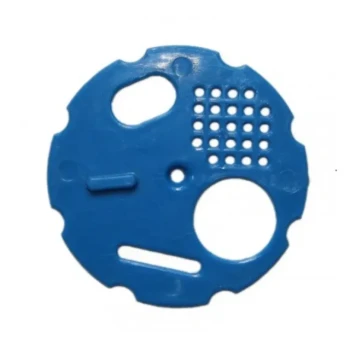
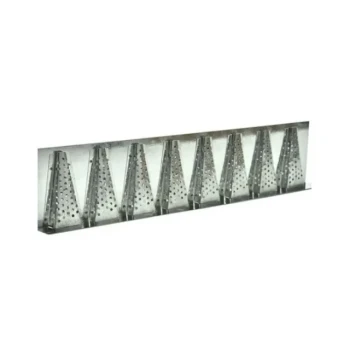
Entrance blocks serve a critical dual purpose in beekeeping: colony defense and environmental regulation. Primarily, they restrict the hive's opening to make it significantly harder for intruders to enter, while simultaneously minimizing heat loss to help the colony maintain its internal temperature.
Core Insight: An entrance block is essentially a force multiplier for your bees; it allows a smaller number of guard bees to defend the hive effectively while passively conserving the colony’s energy reserves during cold weather.
The Mechanics of Hive Defense
Deterring Robbers and Intruders
The primary function of an entrance block is security. By narrowing the wide expanse of the hive entrance, the block creates a "choke point."
This reduces the area that guard bees must patrol. It makes it much more difficult for "robber bees" from other colonies to sneak in and steal honey.
It also acts as a physical barrier against larger predators, such as wasps and yellow jackets.
Supporting Vulnerable Colonies
New or weak colonies are particularly susceptible to invasion. A small colony simply does not have the population density to defend a full-width entrance.
Installing an entrance block—often called an entrance reducer—is standard practice for growing hives. It balances the entrance size with the current population of the colony.
Excluding Pests
Blocks also function as a barrier against non-insect pests, specifically mice.
Mice look for warm, dry places to nest during winter. An open hive entrance is an invitation for them to enter and destroy comb.
Regulating the Internal Environment
Minimizing Heat Loss
Temperature control is the second major function of the entrance block. In cold months, the colony clusters together to generate warmth.
A wide-open entrance creates a draft, pulling precious heat out of the hive.
By reducing the opening, you limit airflow. This helps the bees maintain a high internal temperature with less energy expenditure.
Managing Ventilation
While heat retention is vital in winter, airflow is needed year-round to manage humidity.
Entrance blocks allow for regulated ventilation. They permit enough air exchange for the bees to breathe and for moisture to escape, without exposing the colony to the full brunt of the wind.
Understanding the Trade-offs
Material Limitations
While wooden entrance blocks act as mouse guards, they are not infallible. Mice are capable of chewing through wood if motivated enough.
If mouse pressure is high in your area, a metal mouse guard is technically superior to a standard wooden reducer for pest exclusion.
Ventilation vs. Overheating
The block restricts air intake. If left on the smallest setting during a hot summer nectar flow, it can lead to congestion and overheating.
Beekeepers must monitor the temperature. A strong colony in July needs a wide entrance; a struggling colony in October needs a restricted one.
Making the Right Choice for Your Goal
Using an entrance block is about matching the equipment to the season and the colony's strength.
- If your primary focus is overwintering: Install the block on the smallest setting to maximize heat retention and prevent mice from nesting.
- If your primary focus is establishing a new package or nucleus: Use the reducer to help the small population defend their resources until they grow stronger.
- If your primary focus is peak summer production: Remove the block or use the largest setting to prevent traffic jams and ensure maximum ventilation.
The entrance block is a simple tool, but using it correctly is often the difference between a colony that struggles and one that thrives.
Summary Table:
| Function | Primary Benefit | Best Time to Use |
|---|---|---|
| Defense | Creates a choke point against robber bees & wasps | New colonies or low-nectar seasons |
| Pest Control | Acts as a physical barrier against mice | Late autumn and throughout winter |
| Temperature | Reduces drafts and conserves colony heat | During cold months and overwintering |
| Ventilation | Regulates humidity while preventing heat loss | Year-round, adjusted for seasonal temperature |
Scale Your Beekeeping Success with HONESTBEE
At HONESTBEE, we understand that the right tools are the foundation of a productive apiary. Whether you are a commercial beekeeper managing thousands of hives or a distributor supplying the industry, we provide the high-quality hardware you need to succeed.
From durable entrance blocks and hive components to advanced honey-filling machines and specialized hive-making equipment, our comprehensive wholesale portfolio is designed to enhance your operational efficiency and colony health.
Partner with HONESTBEE today to access premium beekeeping tools and essential industry consumables.
Contact Our Expert Team Now to discuss how we can support your business growth.
Related Products
- Beehive Entrance Discs Plastic Bee Entrance Disc for Bee Hives
- Steel Round Disc Entrance Reducer for Flexzion Bee Hive Nuc Box Gate
- Multi-Functional Rotary Hive Entrance Disc for Beekeeping
- Professional Reversible Beehive Hive Entrance
- Multi-Functional Sliding Hive Entrance for Beekeeping
People Also Ask
- What is the best entrance for a bee hive? Maximize Colony Health & Honey Production
- What happens if you block the entrance to a bee hive? Avoid This Dangerous Mistake
- How does entrance configuration vary seasonally for beekeepers? A Guide to Year-Round Hive Health
- Why adjust beehive entrance size for humidity? Boost Honey Ripening and Varroa Control in Commercial Apiaries
- How big should a beehive entrance be? Optimize for Colony Health & Honey Production