The key difference is scale: European honeybees (Apis mellifera) can produce approximately 35–40 kg of honey per colony annually, while stingless bee colonies typically produce around 2 kg per hive per year. Apis mellifera therefore suits high-volume commercial production with standardized Langstroth hives and centrifugal extraction equipment. Stingless bees require compact, specialized hives and gentler extraction and packaging systems, but their honey can command a premium price.
Apis mellifera is optimized for volume and operational efficiency; stingless bees are optimized for differentiated, high-value production. The right equipment depends on whether the business prioritizes throughput, premium positioning, or a combination of both.
How Honey Yield Differs
European Honeybees Deliver Commercial-Scale Volumes
A well-managed Apis mellifera colony may produce approximately 35–40 kg of honey per year. Actual yields vary with forage availability, climate, colony strength, management quality, and seasonal conditions.
The relatively high yield makes Apis mellifera suitable for commercial apiaries, wholesale supply, private-label honey, and large-scale distribution.
Stingless Bees Produce Smaller Annual Quantities
Stingless bee colonies, including species such as Melipona, typically produce approximately 2 kg of honey per hive per year. Their smaller colonies and different storage behavior limit total harvest volume compared with Apis mellifera.
This lower yield is usually offset by product differentiation. Stingless bee honey is often positioned as a specialty product with premium pricing, particularly where consumers value its distinctive flavor, natural origin, and reported bioactive properties.
Yield Is Not the Only Commercial Metric
Comparing only kilograms can make stingless bee production appear unattractive. However, profitability also depends on price per kilogram, processing costs, colony multiplication, market access, and product positioning.
For distributors and resellers, stingless bee honey may complement rather than replace conventional honey. It can occupy a premium segment while Apis mellifera supplies the volume market.
Equipment Requirements for Apis Mellifera
Standardized Langstroth Hives
Commercial Apis mellifera operations generally use standard wooden Langstroth hives with movable frames. Standard dimensions, including the approximately 8 mm bee-space principle, help prevent crushed bees and unwanted cross-comb construction.
Standardization allows suppliers to offer compatible hive bodies, brood boxes, honey supers, frames, foundations, covers, and bottom boards across large apiaries.
Movable Frames Simplify Colony Management
Movable frames allow beekeepers to inspect brood, monitor colony health, add supers during nectar flows, and harvest honey without destroying the nest structure.
This modular design is particularly valuable for migratory operations and commercial apiaries that need repeatable handling procedures across many colonies.
Centrifugal Extraction Supports High Throughput
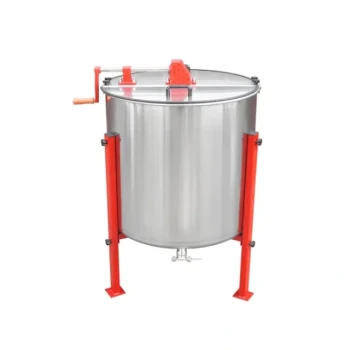
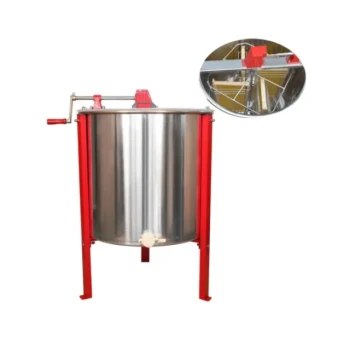
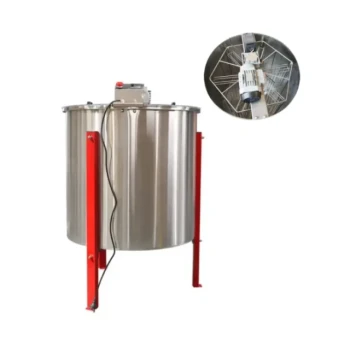
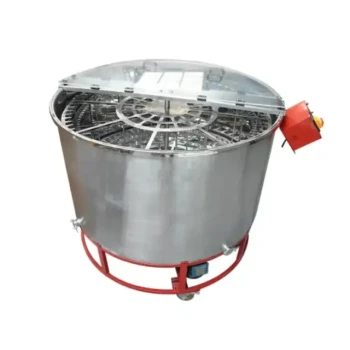
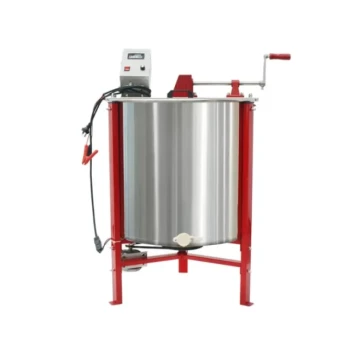
Because Apis mellifera stores honey in flat, parallel combs, operators can uncap the comb and use centrifugal honey extractors. Larger businesses can add powered uncapping equipment, honey pumps, settling tanks, filters, bottling lines, and other automated machinery.
This equipment supports efficient order fulfillment and consistent processing for wholesalers, distributors, and private-label buyers.
Equipment Requirements for Stingless Bees
Specialized Compact Hives
Stingless bees store honey and pollen in round wax pots inside dark cavities, rather than in standard, flat honeycomb frames. Their nests also use sticky propolis to seal entrances and regulate the cavity.
Commercial meliponiculture therefore uses specialized modular wooden boxes, vertical or terraced hives, sectional log systems, and compact micro-hives. These designs should provide well-sealed compartments while preserving access for inspection and harvesting.
Hive Materials Must Suit the Nesting Environment
Bamboo, coconut shell, and appropriately designed wooden hives can provide insulation and breathability suited to smaller stingless bee colonies. Sheltered hive structures are also useful for protecting colonies from excessive heat, rain, and environmental disturbance.
The priority is not compatibility with standard Apis frames. It is the ability to reproduce the protected cavity conditions that support pot-based nesting.
Harvesting Requires Gentle Methods
Stingless bee honey is commonly collected by scooping, draining, or gently pressing the honey pots. Standard centrifugal extractors designed for Apis combs are generally unsuitable because there is no equivalent frame-based honeycomb to spin.
Processing equipment should therefore emphasize gentle pressing, controlled draining, fine filtration, and sanitary transfer rather than high-speed centrifugal extraction.
Moisture Control Is More Important
Stingless bee honey typically has higher moisture content than conventional Apis honey. Excess moisture increases the risk of fermentation and spoilage, making moisture testing and controlled handling important for commercial processors.
Suitable equipment may include moisture-control or dehumidification systems, gentle filtration units, sanitary storage tanks, and filling machinery designed for a more fluid, pollen-rich product.
Packaging Must Protect Product Quality
Stingless bee honey should be bottled using hygienic filling equipment that minimizes contamination and unnecessary exposure to air. Packaging and storage conditions should be selected based on measured moisture content, shelf-life requirements, and applicable food regulations.
Claims about medicinal or antibacterial benefits should be supported by appropriate testing and comply with the regulations of the target market.
Understanding the Trade-offs
Apis Mellifera Offers Efficiency, but Requires More Infrastructure
The major advantage of Apis mellifera is throughput. Standard hives and extraction machinery reduce handling time and make it easier to scale production.
The trade-off is a larger infrastructure commitment. Commercial operators need more space, transport capacity, standardized replacement components, extraction equipment, and trained staff capable of handling stinging colonies.
Stingless Bees Reduce Sting Risk, but Not Management Complexity
Stingless bees lack functional stings, which can make routine handling more accessible in some settings. Their colonies can also forage across a broad range of plant sizes and may remain productive where floral resources are limited.
However, they are not simply smaller versions of Apis mellifera. Their nesting structure, propolis behavior, honey pots, moisture profile, and harvesting methods require species-appropriate equipment and management knowledge.
Premium Pricing Does Not Guarantee Higher Profit
A higher selling price can compensate for lower yield, but only when the market recognizes the product's distinction. Specialized hives, slower harvesting, moisture management, testing, and careful packaging can increase unit costs.
Distributors should evaluate margin per saleable kilogram, not retail price alone. Reliable quality control and credible product documentation are essential when selling premium honey through professional channels.
Standardization Differs Between the Two Systems
Apis mellifera benefits from widely standardized hive components and processing machinery. This simplifies procurement, replacement, training, and cross-site operational consistency.
Stingless bee equipment is more dependent on species, local climate, hive design, and producer practices. A distributor may need to maintain a broader range of modular hive formats and processing accessories.
Making the Right Choice for Your Goal
The best system depends on the intended market, production scale, and available processing capabilities.
- If your primary focus is high-volume honey production: Choose Apis mellifera with standardized Langstroth hives, movable frames, honey supers, and centrifugal extraction equipment.
- If your primary focus is premium specialty honey: Choose stingless bees with compact modular hives, gentle honey-pot extraction tools, moisture control, fine filtration, and sanitary filling equipment.
- If your primary focus is wholesale and distribution efficiency: Build the supply chain around standardized Apis mellifera equipment and compatible replacement components.
- If your primary focus is product differentiation: Add stingless bee hives and processing systems as a specialized product line, supported by quality testing and compliant product claims.
- If your primary focus is one-stop commercial sourcing: Offer complete equipment packages for each bee type, including hives, frames or hive modules, extraction tools, filtration, storage, filling, and packaging components.
Choose Apis mellifera for scalable volume and stingless bees for specialized value, then align equipment, processing, and supply planning with that commercial objective.
Summary Table:
| Aspect | Apis mellifera (European honeybee) | Stingless bees (e.g., Melipona) |
|---|---|---|
| Annual Honey Yield per Colony | 35–40 kg | ~2 kg |
| Hive Type | Standard Langstroth hives | Compact, specialized modular hives |
| Honey Storage | Flat parallel combs | Round wax pots |
| Extraction Equipment | Centrifugal extractors, pumps, bottling lines | Gentle pressing/draining, fine filtration, moisture control |
| Suitability | High-volume commercial production | Premium specialty product |
| Primary Advantage | High throughput, standardized infrastructure | No stings, premium pricing potential |
For detailed insights and equipment solutions, read on.
Optimize Your Apiary Equipment with HONESTBEE
Whether you focus on high-volume Apis mellifera production or premium stingless bee honey, HONESTBEE provides a full-spectrum of beekeeping tools, machinery, and consumables. We cater to commercial apiaries, distributors, and B2B resellers—offering rapid response, dedicated service, and ultra-fast delivery. Standardize your operations with our Langstroth hives and centrifugal extractors, or explore specialized stingless bee hives and gentle processing systems. Maximize your profit margins, benefit from OEM/ODM support, and ensure supply reliability. Contact us today for tailored solutions and quotes!
Related Products
- Stainless Steel 3 Frame Manual Honey Extractor Spinner for Bee Honey Extraction
- 6 Frame Manual Stainless Steel Honey Extractor Beekeeping Equipment
- Stainless Steel Manual 8 Frame Radial Honey Extractor Machine for Beehives
- HONESTBEE 4 Frame Manual Self Reversing Honey Extractor for Beekeeping
- 2 Frame Stainless Steel Manual Honey Spinner Extractor for Beekeeping
People Also Ask
- Which type of honey extractor is generally more durable? Focus on Material & Build Quality for Longevity
- What are the disadvantages of a manual honey extractor? Overcome Efficiency Bottlenecks in Your Apiary
- What is a manual honey extractor? The Essential Guide to Cost-Effective Beekeeping for Beginners
- Why are manual extractors popular among beginner beekeepers? A Guide to Starting Simple & Saving Money
- What are the primary advantages of utilizing a manual honey extractor? Cost-Effective & Gentle Harvesting