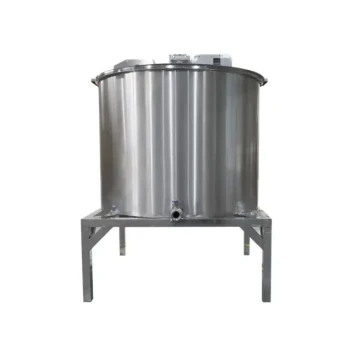
To achieve market-ready potency and purity, the primary technical objectives of industrial solvent extraction in propolis production are to maximize the leaching of bioactive compounds—specifically flavonoids, phenolic acids, and terpenoids—while simultaneously removing inactive materials like beeswax and resins. This equipment ensures that crude raw propolis is converted into standardized ethanol extracts (EEP) or aqueous solutions that meet strict commercial requirements for active ingredient concentrations and biological safety.
Core Takeaway: Industrial extraction equipment acts as the bridge between raw hive material and high-value commercial products. By precisely controlling physical parameters, it ensures a consistent, potent, and purified supply of propolis extracts that are essential for global distribution and pharmaceutical-grade applications.
Maximizing Bioactive Yield and Potency
Optimized Leaching of Core Compounds
The fundamental goal is to recover the highest possible concentration of therapeutic substances like flavonoids, phenolic acids, and terpenoids. Industrial equipment utilizes precise circulation ratios and contact times to ensure these compounds are fully leached from the complex resinous structure of raw propolis.
Preservation of Heat-Sensitive Ingredients
Many of the 149+ complex compounds found in propolis are sensitive to thermal degradation. Advanced extraction setups use high-speed physical shear forces and controlled temperature settings to accelerate dissolution without compromising the integrity of anti-inflammatory and antioxidant agents.
Enhanced Bioavailability
Through standardized processing, the equipment transforms crude materials into forms more easily absorbed by the human body, such as concentrated liquid drops or fine powders. This technical transition is what allows distributors to market products effectively for immune support and medical applications.
Standardization Across Geographic Variations
Mitigating Raw Material Volatility
Propolis composition varies drastically based on the geographical origin of the bee colony. Industrial-grade equipment provides the standardized control necessary to ensure the final extract maintains consistent levels of key markers, such as caffeic acid phenethyl ester (CAPE), regardless of the source material.
Managing Toxicity and Safety Profiles
Standardization isn't just about potency; it is about safety. Precise control over solvent ratios and extraction times allows manufacturers to maintain consistent LD50 values and biological activity levels, which is a critical requirement for B2B resellers dealing with international regulatory standards.
Consistent Commercial Specifications
By automating the extraction process, manufacturers can guarantee a standardized hydroalcoholic solution. This allows wholesalers to offer a reliable product portfolio where every batch meets the exact percentage of active ingredients promised to the end-user.
Purification and Impurity Removal
Separation of Inactive Resins and Beeswax
Raw propolis is naturally high in beeswax, volatile oils, and insoluble resins that lack therapeutic value. Industrial solvent extraction is designed to efficiently separate these impurities, resulting in a refined extract that is clear, stable, and highly concentrated.
Clarification and Filtering
Beyond simple extraction, these systems include mechanisms for refining the solution. This ensures the final product is free from hive debris and particulates, making it suitable for high-end applications like medical dressings or food preservation coatings.
Understanding the Trade-offs
Extraction Speed vs. Component Integrity
While increasing heat can speed up the extraction process, it risks damaging the most delicate bioactive compounds. Manufacturers must often choose between rapid throughput and "cold-process" methods that use physical shear force to maintain the highest quality, though at a higher energy or time cost.
Solvent Purity and Cost Efficiency
Using high-purity ethanol ensures a cleaner extract and better yield of flavonoids, but it increases production costs. For distributors, the trade-off is between premium-grade extracts that command higher market prices and more economical options that may have slightly lower bioactive concentrations.
Making the Right Choice for Your Goal
As a distributor or wholesaler, selecting the right propolis extract depends on your specific market positioning and the needs of your client base.
- If your primary focus is Pharmaceutical or Medical Grade Supply: Prioritize extracts produced via standardized equipment that guarantees high CAPE levels and consistent LD50 safety values.
- If your primary focus is High-Volume Retail Distribution: Look for suppliers with one-stop sourcing capabilities and ultra-fast delivery, ensuring the equipment used can produce standardized EEP at scale.
- If your primary focus is Clean-Label and Natural Health: Seek out extracts produced through low-temperature, physical shear-force extraction to ensure the full spectrum of heat-sensitive compounds is preserved.
Standardized industrial extraction is the only way to transform raw propolis into a reliable, high-performance commodity for the global market.
Summary Table:
| Technical Objective | Process Action | Commercial Value |
|---|---|---|
| Bioactive Maximization | Optimized leaching of flavonoids & acids | Higher potency & pharmaceutical-grade quality |
| Potency Standardization | Mitigating raw material volatility | Consistent batch quality for global distribution |
| Impurity Removal | Separation of beeswax and inactive resins | Refined, clear, and stable final products |
| Thermal Preservation | Controlled temperatures & shear forces | Protection of sensitive anti-inflammatory agents |
| Safety Management | Precise solvent ratios & LD50 control | Full compliance with B2B regulatory standards |
Scale Your Propolis Production with HONESTBEE Expertise
At HONESTBEE, we understand that for distributors and B2B resellers, profit margins depend on supply reliability and product excellence. We provide a one-stop sourcing solution for commercial apiaries, offering a comprehensive portfolio from high-efficiency extraction and honey-filling machinery to specialized hive-making hardware and premium consumables.
Why partner with HONESTBEE?
- Deep Industry Expertise: Navigate technical extraction challenges with our professional guidance.
- Rapid Fulfillment: Minimize downtime with our ultra-fast delivery and efficient order processing.
- Premium Trading Services: Dedicated customer support tailored to the needs of high-volume wholesalers.
Ready to enhance your product lineup and streamline your supply chain? Contact our expert team today to explore our wholesale offerings and industrial equipment solutions.
References
- Edson Gerônimo, Giuliana Zardeto. Própolis, uma revisão de suas ações biológicas e benefícios para a saúde. DOI: 10.51473/rcmos.v1i2.2025.1702
This article is also based on technical information from HonestBee Knowledge Base .
Related Products
- 8 Frame and 10 Frame Propolis Trap Collector Screen for Propolis Collection
- Heavy Duty Stainless Steel Frame Cleaner with Plastic Handle
- Professional Stainless Steel Frame Cleaner with Ergonomic Wood Handle
- HONESTBEE 72 Frame Industrial Electric Honey Extractor for Beekeeping
- HONESTBEE 2 Frame Manual Acrylic Honey Extractor Beekeeping Equipment
People Also Ask
- Why is a specific wooden frame required when installing a propolis screen? Optimize Your Propolis Harvest Efficiency
- What are the advantages of using propolis collector screens? Elevate Your Harvest to Pharmaceutical Purity
- How does the mesh size of a propolis collection screen influence the efficiency of propolis harvesting? Optimize Yields!
- How do commercial-grade plastic screens compare to custom fine-mesh screens? Maximize Your Propolis Yield & ROI
- What are the technical advantages of using specialized propolis collection screens? Maximize Purity and Efficiency