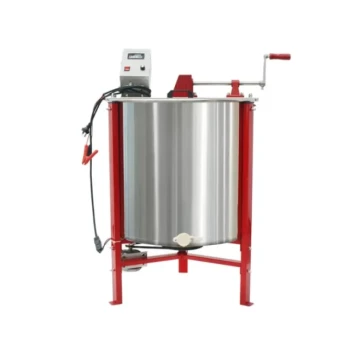
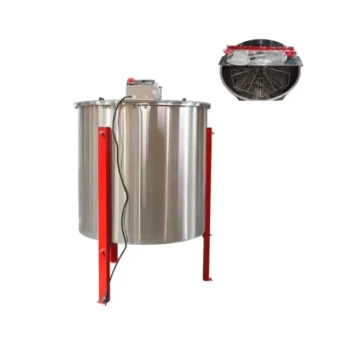
Centrifuges and oscillatory mixing equipment serve as critical catalysts in the phytochemical screening of stingless bee honey, primarily by accelerating the interaction between the viscous honey matrix and extraction solvents. These devices utilize high-frequency shear or centrifugal force to facilitate rapid phase transfer, a necessary step for isolating active ingredients like flavonoids and terpenoids from the honey sample.
Core Takeaway The primary role of this equipment is to overcome the physical resistance of honey, driving a more efficient phase transfer with solvents like chloroform or ethanol. This mechanical acceleration ensures a higher yield of secondary metabolites and guarantees the chemical uniformity required for reliable color reaction testing.
Accelerating the Extraction Process
The Mechanics of Phase Transfer
Honey is a viscous, complex matrix that resists simple mixing. Oscillatory mixing equipment provides the high-frequency shear needed to break down this matrix.
This mechanical agitation forces the honey into intimate contact with extraction solvents, such as chloroform or ethanol.
Leveraging Centrifugal Force
Centrifuges apply force to separate components based on density, but in this context, they also accelerate the movement of active compounds from the honey phase into the solvent phase.
This acceleration is far superior to passive diffusion or manual mixing, significantly reducing the time required for sample preparation.
Maximizing Compound Recovery
Targeting Secondary Metabolites
The ultimate goal of using this equipment is to improve the extraction efficiency of specific bioactive compounds.
By increasing the surface area interaction between the sample and the solvent, researchers can isolate higher concentrations of flavonoids, saponins, and terpenoids.
Enhancing Detection Sensitivity
Without the mechanical force provided by these devices, these active ingredients might remain trapped within the honey's sugar matrix.
Efficient extraction ensures that even trace amounts of these metabolites are available for subsequent analysis, preventing false negatives during screening.
Ensuring Analytical Reliability
Uniform Component Distribution
Beyond simple extraction, these tools ensure that the chemical components are evenly distributed throughout the solution.
Homogeneity is vital for qualitative screening, particularly when relying on chemical color reactions to identify specific compounds.
Improving Test Consistency
If the solution is not uniform, color reactions may be patchy or inconsistent, leading to ambiguous results.
The use of automated mixing ensures that the reaction medium is standardized, thereby enhancing the reliability and reproducibility of the final detection results.
Understanding the Trade-offs
Equipment vs. Sample Integrity
While high-frequency shear improves efficiency, it introduces physical stress to the sample.
Excessive shear or prolonged centrifugation can generate heat. In the context of biological samples like honey, heat management is critical to prevent the degradation of heat-sensitive enzymes or volatile compounds.
The Importance of Upstream Collection
The effectiveness of this equipment is also dependent on the quality of the raw sample.
As noted in field protocols, using medical-grade sterile syringes for collection prevents contamination from environmental microorganisms. If the initial sample is compromised during collection, even the best centrifugation technique cannot yield accurate phytochemical data.
Making the Right Choice for Your Goal
To optimize your phytochemical screening of stingless bee honey, align your equipment usage with your specific analytical objectives:
- If your primary focus is Extraction Yield: Prioritize high-frequency oscillatory mixing to maximize the transfer of flavonoids and saponins into your solvent of choice.
- If your primary focus is Reproducibility: Rely on precise centrifugation settings to ensure uniform distribution, which is critical for consistent chemical color reactions.
Ultimately, the use of mechanical acceleration transforms the extraction process from a passive, variable step into a controlled, high-efficiency phase of your analysis.
Summary Table:
| Equipment Type | Primary Mechanism | Key Benefit in Honey Screening |
|---|---|---|
| Centrifuges | Centrifugal force & density separation | Rapid phase transfer & accelerated compound isolation |
| Oscillatory Mixing | High-frequency shear | Breaks honey viscosity for intimate solvent contact |
| Extraction Solvents | Chemical affinity (Chloroform/Ethanol) | Dissolves target flavonoids, saponins, and terpenoids |
| Standardization | Automated mechanical agitation | Ensures chemical uniformity for consistent color reactions |
Elevate Your Beekeeping Operation with HONESTBEE
At HONESTBEE, we understand that high-quality stingless bee honey starts with precision and ends with professional-grade equipment. Whether you are a commercial apiary or a global distributor, we provide the comprehensive wholesale solutions you need to scale your success.
Our value to you includes:
- Advanced Machinery: From industrial honey-filling machines to specialized hive-making equipment.
- High-Quality Tools: A full spectrum of beekeeping hardware and essential industry consumables.
- Cultural Merchandise: Unique honey-themed products to expand your brand's reach.
Ready to enhance your yield and streamline your production? Contact us today to explore our wholesale catalog and see how our expertise can support your growth.
References
- Saat Egra, Netty Maria Naıbaho. ANTIOXIDANT ACTIVITIES AND PHYTOCHEMICAL COMPOSITION OF STINGLESS BEE (Heterotrigona itama) HONEY COLLECTED FROM Calliandra calothyrsus PLANTATION IN EAST KALIMANTAN, INDONESIA. DOI: 10.31467/uluaricilik.1539158
This article is also based on technical information from HonestBee Knowledge Base .
Related Products
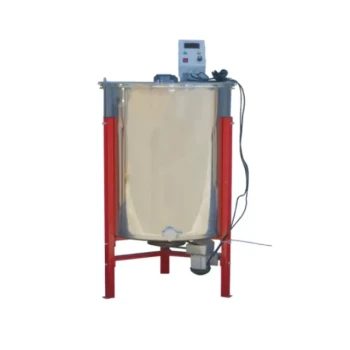
- electric honey extractor honey centrifuge 3 frame honey extractor stainless steel honey frame extractor
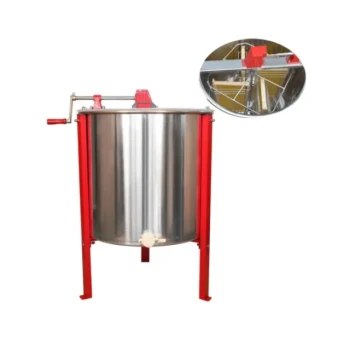
- Manual Hand Crank 4 Frame Honey Extractor Centrifuge for Beekeeping
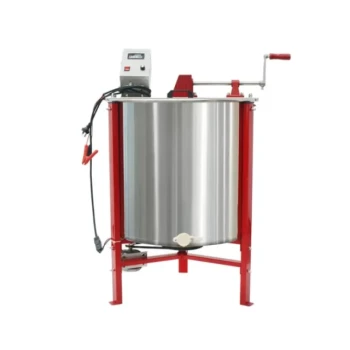
- Professional 4 Frame Self Reversing Electric Honey Extractor for Beekeeping
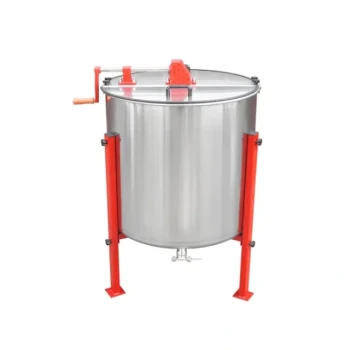
- Stainless Steel 3 Frame Manual Honey Extractor Spinner for Bee Honey Extraction
- Professional Stainless Steel Honey Filtering Machine with Water Bath Heating for Beekeeping
People Also Ask
- What are the characteristics of electric honey extractors? Boost Your Apiary Efficiency with Automated Technology
- What are the disadvantages of using an electric honey extractor? Weighing Cost, Power, and Comb Safety
- What are the advantages of an electric honey extractor? Boost Efficiency and Scale Your Honey Production
- What are the technical advantages of electric honey extractors? Maximize Yield and Protect Your Bee Colony
- How does an electric honey extractor affect the quality of honey? Preserve Flavor & Purity with Precision Extraction