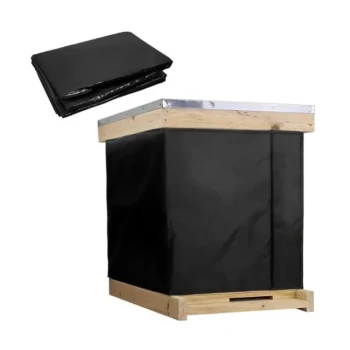
Successful overwintering relies on specific hive configuration and adequate food stores. You must ensure the colony is housed in either two hive bodies or a single body with a honey super, weighing at least 100 pounds by late fall to ensure survival.
Survival through winter depends on the colony's ability to access ample food stores within the hive. The critical requirements are a minimum hive weight of 100 pounds and a barrier-free path for the queen to move upward into honey reserves.
Optimizing Hive Configuration
Structural Setup
To physically accommodate the colony and their resources, you should use one of two specific configurations.
The most common setup involves using two full hive bodies. Alternatively, you may use one hive body topped with at least one honey super.
Ensuring Queen Mobility
If you choose the configuration using a single hive body and a honey super, you must remove the queen excluder.
The queen must be able to travel freely with the cluster. If the excluder remains, the bees may move up into the honey stores while the queen remains trapped below, leading to her death.
Managing Food Stores and Weight
The Critical Weight Threshold
Food is the fuel that keeps the colony warm. By late fall, your colony must meet a specific weight requirement to survive the winter duration.
The target weight for the entire colony setup is at least 100 pounds.
Corrective Feeding Strategy
If your hive falls below this 100-pound threshold, you must intervene immediately with supplemental feeding.
Feed the colony a heavy syrup mixture. This syrup must be mixed at a ratio of two parts sugar to one part water to provide the necessary density of carbohydrates.
Common Pitfalls to Avoid
The Danger of Excluders
The most overlooked risk in winter preparation is leaving the queen excluder in place when using honey supers.
While useful in summer, an excluder in winter acts as a death sentence for the queen. As the heat cluster moves upward to consume honey, the queen will be left behind and freeze if she cannot pass through the excluder.
Inadequate Nutrition Density
Using a light syrup (such as 1:1) in late fall is a mistake.
The colony requires dense energy storage for winter. You must strictly adhere to the 2:1 sugar-to-water ratio to ensure the feed effectively mimics the heavy stores they need for long-term survival.
Ensuring Colony Survival
To secure your colony for the season, assess your setup against these specific goals:
- If your primary focus is Hive Architecture: Ensure the colony is in two hive bodies or remove the queen excluder if using a super.
- If your primary focus is Resource Management: Weigh the hive in late fall and feed 2:1 syrup if it is under 100 pounds.
Proper preparation in the fall is the definitive factor in whether your bees will emerge viable in the spring.
Summary Table:
| Requirement Category | Specification/Target | Critical Action |
|---|---|---|
| Minimum Weight | 100+ lbs by late fall | Weigh hives and supplement if under target |
| Hive Configuration | 2 Hive Bodies OR 1 Body + Super | Ensure vertical space for cluster movement |
| Queen Access | No Queen Excluder | Remove excluder to prevent queen isolation |
| Winter Feed | 2:1 Sugar to Water Ratio | Use heavy syrup for dense energy storage |
| Feeding Timing | Late Fall | Intervene before temperatures drop too low |
Secure Your Apiary’s Success with HONESTBEE
Transitioning colonies through winter requires precision, and HONESTBEE is here to support commercial apiaries and distributors with the professional tools needed for seasonal success. From high-capacity honey-filling machines to durable hive-making equipment, we provide the comprehensive hardware and consumables required to maintain a thriving beekeeping operation.
Whether you are scaling your honey production or supplying local beekeepers, our wholesale portfolio offers unmatched value and industrial reliability. Contact us today to discuss your equipment needs and bulk orders—let’s grow your beekeeping business together.
Related Products
- Professional Insulated Winter Hive Wrap for Beekeeping
- Langstroth Honey Bee Box Hive Boxes for Different Depths
- High-Performance Langstroth Bee Hives for Global Professional Beekeeping
- HONESTBEE Collapsible Tiered Bee Swarm Catcher for Beekeeping
People Also Ask
- What are the steps to properly wrap a beehive for winter? Ensure Your Colony Survives the Cold
- When is the best time to wrap a beehive for winter? A Guide to Perfect Winterization Timing
- How do professional insulation wraps provide protection for bee colonies? Optimize Winter Survival & Energy Efficiency
- What are the technical benefits of using winter wraps for beehive insulation? Boost Colony Survival & Hive Health
- What are the benefits of using insulated covers for hives? Ensure Colony Survival and Health