Building your own beekeeping equipment requires strict adherence to dimensional standards. To succeed, you must construct equipment to precise measurements and possess a deep understanding of "bee space." While large, simple components like hive bodies and covers are often economical to build, complex parts like frames are generally too difficult and time-consuming to manufacture effectively yourself.
Success in DIY beekeeping equipment relies on balancing material costs with woodworking precision. The most critical factor is maintaining accurate "bee space" to prevent hive mismanagement, meaning you should replicate established plans rather than improvising designs.
The Non-Negotiable Rules of Construction
Understanding "Bee Space"
The most critical concept to master is bee space. This is the specific gap required for bees to move freely between combs and hive parts without filling the void with propolis or burr comb.
If your construction fails to respect this precise biological requirement, the equipment may become unusable or impossible to inspect.
Adhering to Standard Dimensions
Your equipment must be built to standard sizes. This ensures interoperability between your DIY components and any commercial equipment you may purchase in the future.
Deviating from standard sizing creates a "lock-in" effect, forcing you to custom-build every single replacement part forever.
Utilizing Proven Patterns
Do not attempt to design a hive from scratch. You should use readily available construction plans or use an existing commercial piece of equipment as a physical template.
Using a proven pattern minimizes the risk of structural failure or dimensional errors that violate bee space.
Evaluating What to Build vs. What to Buy
Components Worth Building
Many beekeepers find it economically viable to construct their own covers, hive bodies, and bottom boards.
These components are structurally simple, consisting mostly of flat cuts and basic joinery. If you have access to affordable materials, these offer the best return on your labor.
The Difficulty of Frames
Unless you have specialized machinery, frames are generally not worth making yourself.
Frames require intricate cuts and precise assembly that are difficult and time-consuming to replicate by hand. Given the low cost of mass-produced frames, the effort required to build them rarely justifies the savings.
Common Pitfalls and Trade-offs
The Hidden Cost of Equipment
Before starting, you must objectively assess the cost of materials relative to the price of finished goods.
Lumber prices fluctuate; if high-quality wood is expensive in your area, the savings from DIY construction may be negligible compared to buying budget commercial grade hives.
The Necessity of Skill and Tools
Your success is directly tied to your woodworking skills and access to proper tools.
A poorly constructed hive with gaps or uneven joints will expose bees to weather and pests. If you lack the tools to make square, precise cuts, purchasing equipment is the safer option for the colony.
Making the Right Choice for Your Goal
Before cutting wood, determine your primary motivation for building.
- If your primary focus is economy: Focus your efforts on building hive bodies, bottom boards, and covers, as these offer the highest savings.
- If your primary focus is efficiency: Purchase your frames commercially to avoid the most time-consuming and difficult aspect of hive construction.
- If your primary focus is quality: rigorous adherence to standard plans and "bee space" is required to ensure your gear functions as well as factory-made items.
Build only what you can construct with precision, as a poorly built hive is a liability to the bees inside it.
Summary Table:
| Component | Difficulty Level | Build vs. Buy Recommendation | Key Consideration |
|---|---|---|---|
| Hive Bodies | Moderate | Recommended (Build) | Must ensure square joints and standard sizing. |
| Covers/Bottoms | Low | Highly Recommended (Build) | Simple flat cuts; great for cost savings. |
| Frames | High | Recommended (Buy) | Complex cuts; difficult to maintain precision manually. |
| Hardware/Excluders | N/A | Highly Recommended (Buy) | Specialized materials require industrial machinery. |
Scale Your Apiary Operations with HONESTBEE
While DIY projects are great for hobbyists, commercial apiaries and distributors require the precision and scale that only professional manufacturing can provide. HONESTBEE is your strategic partner, offering a comprehensive wholesale catalog including everything from high-precision beekeeping tools and hive-making machinery to honey-filling equipment and cultural merchandise.
Why partner with us?
- Precision Engineering: Our equipment guarantees perfect "bee space" and standard interoperability.
- Efficiency at Scale: Eliminate the labor bottleneck of DIY construction with our bulk supply solutions.
- Full Spectrum Support: We cater to all your needs, from industrial hardware to essential consumables.
Ready to elevate your beekeeping business? Contact us today to discuss our wholesale offerings and how we can support your growth!
Related Products
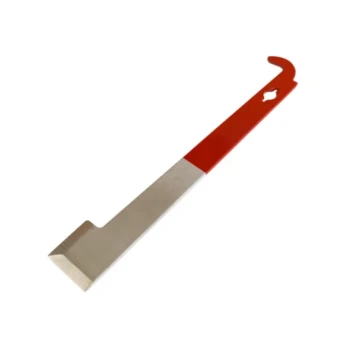
- Stainless Steel J Hook Hive Tool for Beekeeping
- HONESTBEE 15-in-1 Beekeeper Multi-Tool with Hammer and Pliers for Beekeeping
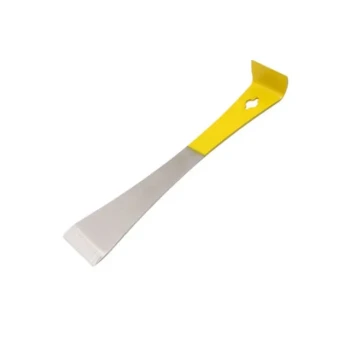
- HONESTBEE Classic Pry Bar Hive Tool with High Visibility Finish for Beekeeping
- Multi-Function Plier-Style Frame Grip Hive Tool
- Stainless Steel Queen Grafting Tool for Beekeeping and Bee Queen Grafting
People Also Ask
- What specific challenges do beekeeping hive tools address during hive maintenance? Essential Solutions for Apiaries
- What is a J-hook hive tool and why is it favored by some beekeepers? Master Gentle Frame Handling
- What are the features of a J-hook hive tool? Effortlessly Lift Frames with Superior Leverage
- What is the purpose of the J-hook hive tool? Effortlessly Lift Frames with Superior Leverage
- How is a J-hook hive tool designed and what is its primary use? Master Effortless Hive Inspections