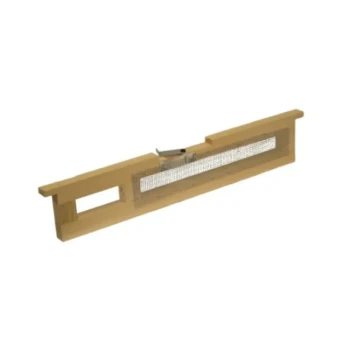
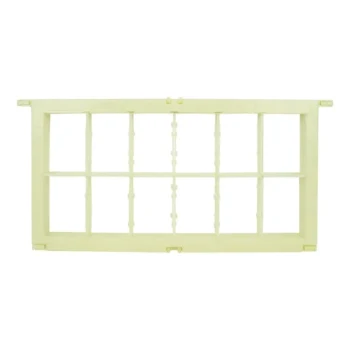
Specialized breeding cages and wax foundation frames serve as the primary mechanisms for maximizing experimental precision in honeybee research. These tools function in tandem to strictly control the timing of egg-laying and the physical structure of the developmental environment, virtually eliminating variables that could skew biological data.
Experimental validity in honeybee research relies on removing environmental noise; this hardware combination ensures that both experimental and control groups share an identical genetic background and precise developmental timeline.
The Role of Specialized Breeding Cages
Precision Control of Larval Age
The primary function of the breeding cage is temporal restriction. By confining the queen bee to a specific area for a set duration, researchers force egg-laying to occur within a strictly defined window.
Synchronization of Development
This restriction guarantees that all resulting larvae are of a known, uniform age. This synchronization is critical for comparative studies, such as aging mechanisms, where even minor differences in developmental stages can invalidate results.
Establishing Genetic Baselines
Using these cages allows for the creation of distinct experimental groups (e.g., queen larvae) and control groups (e.g., worker larvae) derived from the same egg-laying event. This ensures the samples share a highly consistent genetic background, reducing genetic variability as a confounding factor.
The Function of Wax Foundation Frames
Creating a Standardized Environment
Wax foundation frames provide a uniform physical template for the colony. This forces the bees to construct honeycombs in a consistent, orderly manner, ensuring that every egg develops in a spatially identical environment.
Eliminating Structural Variables
Without a foundation, bees may build irregular comb structures. By standardizing the comb architecture, researchers remove physical environmental interference that could affect larval growth rates or behavior.
Mechanical Reinforcement
As noted in supplementary contexts, these frames often include embedded metal wires. This reinforcement significantly increases the mechanical strength of the comb.
Protection During Handling
The added structural integrity is vital for experimental logistics. It allows the valuable samples to withstand mechanical vibrations during colony transport or handling without compromising the hive's structure.
Understanding the Trade-offs
Impact on Natural Behavior
While these tools offer high precision, they impose artificial constraints on the colony. Restricting a queen to a cage is a stressor that deviates from natural behavior, which must be accounted for in behavioral studies.
operational Intensity
Implementing this level of standardization requires rigorous scheduling and manual intervention. It demands significantly more labor than standard apiary management to ensure the timing windows are respected perfectly.
Making the Right Choice for Your Goal
To maximize the value of these tools, align their usage with your specific research outcomes.
- If your primary focus is biological precision: Prioritize the use of breeding cages to synchronize larval age, ensuring your data reflects biological reality rather than developmental variance.
- If your primary focus is sample integrity: Rely on wired wax foundation frames to prevent structural failure during the transport of colonies between the field and the laboratory.
Precision in the hive translates directly to accuracy in the data.
Summary Table:
| Tool | Primary Function | Key Experimental Benefit |
|---|---|---|
| Specialized Breeding Cages | Temporal restriction of queen bee | Ensures synchronized larval age and genetic consistency. |
| Wax Foundation Frames | Environmental & structural template | Provides uniform comb architecture and mechanical durability. |
| Wired Reinforcement | Mechanical strengthening | Protects samples from vibration and damage during transport. |
Scale Your Commercial Beekeeping Success with HONESTBEE
Are you looking to enhance your operation's efficiency or expand your distribution catalog? HONESTBEE caters specifically to commercial apiaries and distributors with a comprehensive wholesale offering designed for industry leaders.
We provide a full spectrum of professional beekeeping tools, specialized machinery, and essential consumables. Our portfolio includes:
- Advanced Hardware: Precision hive-making and high-speed honey-filling machines.
- Breeding Essentials: High-quality frames, cages, and standardized cultivation tools.
- Cultural Merchandise: Unique honey-themed retail products to diversify your brand.
Partner with us to access premium equipment at scale and streamline your supply chain.
Contact our wholesale team today to discuss your requirements!
References
- Hongfang Wang, Baohua Xu. The Comparison of Antioxidant Performance, Immune Performance, IIS Activity and Gut Microbiota Composition between Queen and Worker Bees Revealed the Mechanism of Different Lifespan of Female Casts in the Honeybee. DOI: 10.3390/insects13090772
This article is also based on technical information from HonestBee Knowledge Base .
Related Products
- Assembled Wooden Bee Frames with Beeswax Foundation Ready to Use by HONESTBEE
- HONESTBEE Wired and Assembled Wooden Bee Frames Foundation for a Thriving Hive
- Assembled Wooden Bee Frames with Plastic Foundation for Durability and Convenience by HONESTBEE
- Automatic Heat Preservation 6 Frame Pro Nuc Box for Honey Bee Queen Mating
- Twin Queen Styrofoam Honey Bee Nucs Mating and Breeding Box
People Also Ask
- Under what circumstances should bee frames be destroyed? Protect Your Apiary from American Foulbrood
- How should frames be rearranged as a bee colony grows? Master Hive Expansion and Nest Management
- Do bee frames need foundation? Choose the Right Approach for Your Apiary
- Can beekeepers switch between wooden and plastic frames? Optimize Your Hive's Performance
- What are bee frames and how are they sized? A Professional Guide to Standardization & Material Choice