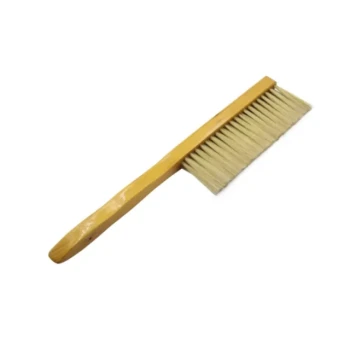
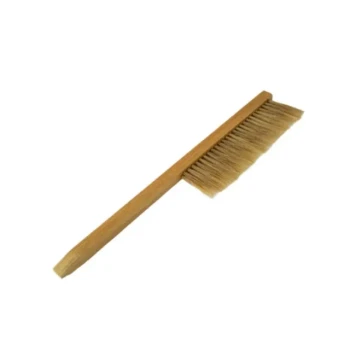
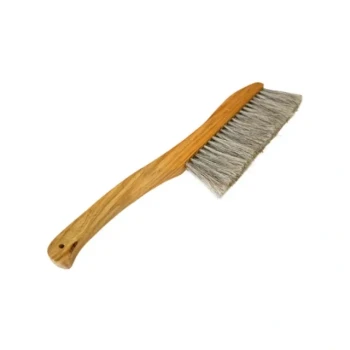
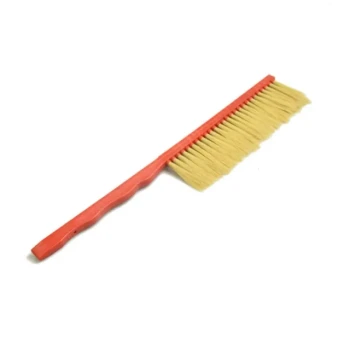
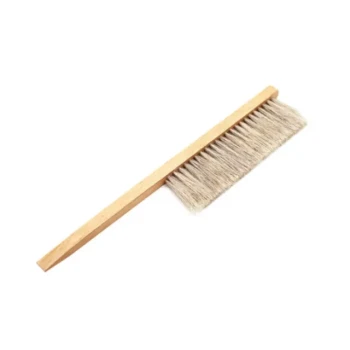
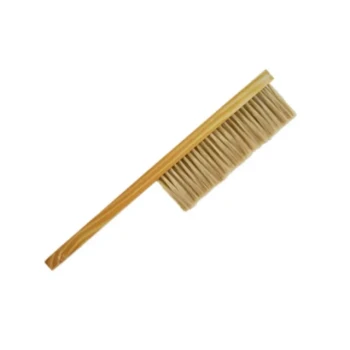
The integrity of a honey bee parasite survey relies heavily on two specific tools: the bee brush and the sealed sampling bottle. The bee brush is used to mechanically gather live adult worker bees from hive frames or entrances with minimal physical stress to the insect. The sealed sampling bottle functions as a preservation chamber, preventing the loss of parasites during transit and maintaining the sample's original condition for accurate laboratory diagnosis.
Success in parasite sampling requires a balance of gentle extraction and rigorous containment; the brush ensures the former by protecting the bees, while the bottle ensures the latter by trapping parasites like Varroa mites that might otherwise dislodge and be lost.
The Role of the Bee Brush
The bee brush is the primary tool for the physical collection of the sample. Its design addresses the need to handle live insects without causing damage that could skew results or incite the hive.
Gentle Collection of Live Specimens
The primary function of the brush is to sweep adult worker bees off of wax frames or from hive entrances.
Unlike shaking a frame, which can be violent, the brush allows for a controlled, gentle transfer of bees into a collection funnel or pan.
Minimizing Colony Disruption
Disruption affects the behavior of the colony and the safety of the sampler.
By using a brush, you reduce the vibration and shock to the hive, preventing an aggressive defense response from the guard bees.
The Function of the Sealed Sampling Bottle
Once the bees are collected, the sealed sampling bottle becomes the most critical component for data integrity. It acts as both a containment vessel and a preservation environment.
Preventing Parasite Loss (Distribution Maintenance)
Parasites such as Varroa mites or bee lice are external and mobile.
If bees are transported in porous containers, these parasites can fall off the host and be lost.
The sealed bottle ensures that any parasite that dislodges from the bee remains in the liquid, maintaining the original distribution of the sample for an accurate count.
Chemical and Physical Isolation
The bottle is typically filled with a preservation liquid, such as ethanol.
A high-quality seal prevents this volatile liquid from evaporating, which is vital for preserving the biological integrity of the tissue.
Furthermore, the seal provides physical isolation, ensuring there is no cross-contamination between samples taken from different hives.
Critical Factors for Sample Integrity
While these tools are standard, their effectiveness relies on specific conditions. Understanding these variables prevents common sampling errors.
The Necessity of Leak-Proof Seals
A bottle that is merely "closed" is insufficient; it must be leak-proof.
If the preservation liquid leaks, the bees and parasites may dry out, making morphological identification or counting impossible.
Temperature Control
The bottle alone does not stop biological decay; it must often be paired with temperature management.
To preserve DNA integrity and inhibit tissue decay, samples in sealed bottles should ideally be maintained at 4 °C.
Ensuring Diagnostic Accuracy
To derive meaningful data from your sampling efforts, you must use these tools with specific goals in mind.
- If your primary focus is Colony Welfare: Use the bee brush with slow, deliberate strokes to prevent crushing bees and releasing alarm pheromones.
- If your primary focus is Quantitative Accuracy: Ensure the sampling bottle is completely sealed immediately after collection to capture every mite that might detach from a host bee.
- If your primary focus is Genetic Analysis: Combine the sealed bottle with cold storage (4 °C) to prevent DNA degradation during transport.
Reliable data begins in the field; the correct use of the brush and bottle ensures that the sample arriving at the lab is a true representation of the hive's health.
Summary Table:
| Tool | Primary Function | Key Benefit to Sampling |
|---|---|---|
| Bee Brush | Gentle extraction of live worker bees from frames | Minimizes bee stress and prevents aggressive hive defense |
| Sealed Bottle | Containment and preservation of bees/parasites | Prevents loss of mobile parasites like Varroa mites |
| Preservation Liquid | Chemical isolation within the bottle | Maintains biological integrity and prevents cross-contamination |
Elevate Your Apiary Management with HONESTBEE
Precision in sampling is the foundation of a healthy colony. As a leading partner for commercial apiaries and distributors, HONESTBEE provides the professional-grade tools you need to maintain peak productivity.
Our comprehensive wholesale selection includes everything from high-durability bee brushes and leak-proof sampling kits to industrial-scale honey-filling machines and specialized hive-making equipment. Whether you are looking to equip a large-scale operation or supply the latest beekeeping innovations to your market, we deliver the quality and reliability your business demands.
Ready to scale your success? Contact us today to discuss our wholesale offerings and discover how our expertise in beekeeping machinery and consumables can support your growth.
References
- Tadele NEGA, Amebaye Kinubeh. Prevalence of parasitic honeybee diseases, pests and predators in North Gondar zone.. DOI: 10.36380/scil.2019.ojafr28
This article is also based on technical information from HonestBee Knowledge Base .
Related Products
- Wooden Bee Brush with Triple Row Artificial Fiber for Beekeeping
- Classic Wooden Bee Brush with Double-Row Boar Bristles
- Premium Triple-Row Horsehair Bee Brush
- Plastic Handle Single Row Artificial Fiber Bee Brush
- Wooden Bee Brush with Double-Row Horsehair Bristles
People Also Ask
- What is the specific function of a bee brush? Ensure Pure Harvests and Colony Welfare During Honey Extraction
- What are the key characteristics of the bristles on a bee brush? Master Gentle and Efficient Bee Removal
- What is the purpose of using a bee brush during the inspection of hive components? Safe & Precise Hive Management
- What problem does a bee brush solve? Protect Your Colony with Gentle Precision Tools
- Why is a bee brush necessary when extracting honeybee hive frames that contain larvae? Protect Your Brood and Colony