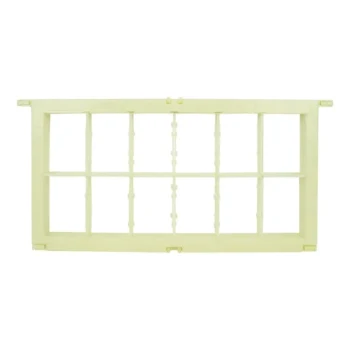
The primary technical advantage of a frame equipped with a 5x5 cm grid is the ability to standardize and quantify brood measurement. This tool facilitates the digital decomposition of irregular brood areas, converting organic shapes into precise statistical data. By replacing visual estimation with a fixed metric, you eliminate subjectivity and randomness, ensuring that comparisons—such as the effect of larval age on brood size—are scientifically valid.
The 5x5 cm grid acts as a definitive calibration tool that removes human bias from colony assessment. It transforms the brood area from a subjective visual estimate into a quantifiable dataset, enabling the precise isolation of variables affecting colony health.
Moving Beyond Visual Estimation
Handling Irregular Brood Patterns
Honeybee brood areas are rarely perfectly rectangular or circular. A standardized grid allows you to perform digital decomposition of these irregular shapes. By breaking the area down into fixed 5x5 cm units, you can calculate the total surface area with high precision, regardless of how scattered or asymmetrical the laying pattern may be.
Eliminating Subjectivity
Traditional methods often rely on the beekeeper's "eye" or rough percentages, which introduces significant human error and randomness. The grid removes this variable entirely. It forces the assessment to be based on physical coordinates rather than perception, ensuring that two different observers would record the exact same data.
The Value of Statistical Accuracy
Conducting Objective Comparisons
To understand how specific factors influence a colony, you need consistent metrics. The grid provides the objective data required to compare variables accurately. For example, when analyzing whether 1-day-old or 3-day-old larvae result in a larger total brood area, the grid ensures the difference is measured mathematically, not estimated.
Ensuring Data Integrity
In scientific studies or advanced breeding programs, "close enough" is insufficient. The use of a grid generates precise statistical measurements. This rigor allows for the creation of reliable datasets that can stand up to peer review or serve as a solid foundation for breeding decisions.
Understanding the Trade-offs
Operational Complexity
While highly accurate, using a grid often requires a digital step to fully utilize the "digital decomposition" capability. This implies the need for photography and potentially software analysis, which adds a layer of complexity compared to a simple visual inspection.
Time Investment vs. Accuracy
Implementing a grid system is slower than a rapid visual check. It is a tool designed for depth of analysis, not speed. If your goal is a quick "health check" of a commercial apiary, the precision of the grid may yield diminishing returns relative to the time required to set up and analyze the frames.
Making the Right Choice for Your Goal
To determine if this method suits your operation, consider your primary objective:
- If your primary focus is scientific research or genetic breeding: Adopt the grid system to ensure your data on variables like larval age impact is statistically significant and reproducible.
- If your primary focus is rapid commercial management: Rely on visual estimation for general health checks, reserving the grid for diagnosing specific colonies that show irregular performance.
Precision is the enemy of randomness; using a standardized grid ensures your conclusions are based on facts, not estimates.
Summary Table:
| Feature | Visual Estimation | 5x5 cm Grid Assessment |
|---|---|---|
| Accuracy | Subjective / Rough Estimate | Objective / Mathematical Precision |
| Data Format | Qualitative (e.g., "good," "fair") | Quantitative (sq. cm, statistical data) |
| Consistency | High variability between observers | Highly reproducible across different users |
| Best Use Case | Rapid commercial health checks | Scientific research & genetic breeding |
| Complexity | Low / Instant | Moderate / Requires digital analysis |
Maximize Your Apiary Productivity with HONESTBEE
Precise data is the backbone of successful commercial beekeeping and genetic breeding. At HONESTBEE, we empower commercial apiaries and global distributors with the professional-grade tools needed to transform colony management into a science.
From advanced hive-making and honey-filling machinery to a full spectrum of beekeeping hardware and essential consumables, we provide the comprehensive wholesale solutions your business requires. Whether you are scaling an industrial honey production line or curating a premium catalog of beekeeping equipment, our expertise ensures you stay ahead of the competition.
Ready to elevate your beekeeping operations? Contact us today to explore our wholesale offerings and discover how our high-performance equipment can optimize your yields.
References
- Ali Mahbobi, Ahmad Malakzadegan. The Effects of Age of Grafted Larvae and of Supplemental Feeding on Performance of Iranian Honey Bee Colonies (Apis Mellifera Meda). DOI: 10.2478/jas-2014-0011
This article is also based on technical information from HonestBee Knowledge Base .
Related Products
- JZBZ Langstroth Queen Rearing Frame for Beekeeping
- Professional Wooden Requeening Frame for Beekeeping
- Wooden Bee Hive Frames for Beekeeping and Wholesale
- Assembled Wooden Bee Frames with Plastic Foundation for Durability and Convenience by HONESTBEE
- Plastic Bee Frame Beekeeping Hive Frames for Wholesale
People Also Ask
- Why use finishing colonies for queen cell capping? Secrets to Superior Queen Quality and Performance
- How do queen rearing frames and grafting needles function together? Master the Doolittle Method for High-Quality Queens
- What is the purpose of queen rearing frames? Master Controlled Queen Production for Your Apiary
- What are the functions of queen rearing frames and artificial queen cells? Master Bee Genetic Improvement
- What roles do professional queen rearing frames and artificial queen cells play? Scaling Your Queen Bee Production