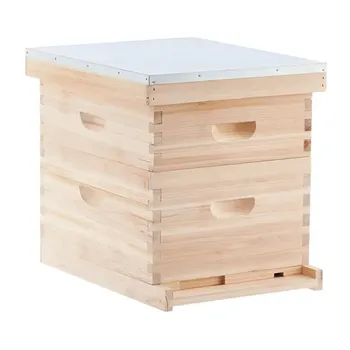
Double-body standard beehives are the industrial benchmark for managing high-strength colonies because they provide the critical volume required for populations exceeding 18 to 20 frames. This structural design allows for advanced space management, enabling beekeepers to maximize honey production while systematically suppressing the colony's natural urge to swarm due to overcrowding.
The technical superiority of double-body hives lies in their ability to modularize colony growth, allowing for a 2.3x increase in income through higher honey yields and improved labor efficiency. By providing a scalable, standardized environment, these hives transform traditional beekeeping into a high-yield, industrial process.
Maximizing Population Capacity and Biological Efficiency
Accommodating High-Growth Cycles
Double-body hives provide the essential internal volume required during peak summer growth when colony populations rapidly expand. While a single body limits growth, the double-body configuration comfortably houses 18 to 20 standard frames, ensuring the queen has ample space for brood rearing.
Strategic Frame Manipulation
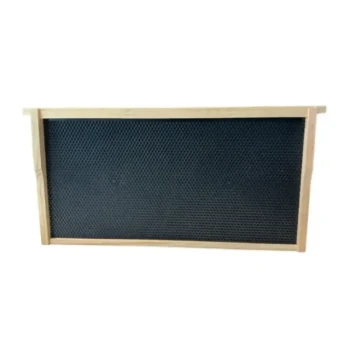
The vertical structure allows for flexible frame adjustments, such as inserting frames with wax foundations ahead of major honey flows. This technical maneuver redirects the energy of young worker bees toward wax secretion and comb building, optimizing the colony’s biological output.
Precision Resource Allocation
By utilizing a multi-body system, beekeepers can scientifically assess the ratio of sealed brood to open brood. This data-driven approach enables the precise quantification of colony strength and informs decisions regarding protein feeding and supplemental resources.
Advanced Swarm Control and Colony Stability
Mitigating Overcrowding Risks
Overcrowding is the primary trigger for natural swarming, which can deplete a colony's workforce right before a harvest. The double-body design serves as a versatile platform for anti-swarming operations, providing the physical space necessary to dissipate the "swarming fever" within high-strength colonies.
Enhancing Thermal and Air Regulation
The standardized multi-layered structure facilitates better airflow and temperature regulation within the hive. This controlled environment is crucial for maintaining colony health and honey quality, especially in regions with high nectar potential and variable climates.
Non-Destructive Management
Modern standardized designs prioritize non-destructive honey harvesting, protecting the integrity of the colony. This ensures that the bees can resume production immediately after extraction, maintaining the momentum of high-strength colonies throughout the season.
Operational Scalability for B2B Success
Reducing Labor Intensity
Standardized beehives utilize uniform physical specifications that simplify daily inspection and maintenance. For large-scale operations, this consistency is vital for reducing labor costs and minimizing management-related losses.
Industrial-Grade Standardization
For distributors and wholesalers, providing standardized equipment is key to supporting industrialized beekeeping. These units are designed for rapid deployment, efficient transport during seasonal migration, and seamless integration into existing apiary workflows.
Global Sourcing and Reliability
Partnering with a provider that offers a comprehensive product portfolio ensures that all components—from frames to bodies—fit with high precision. This technical consistency is the foundation for achieving stable production and high-purity honey yields at scale.
Understanding the Trade-offs
Increased Physical Weight
The primary disadvantage of double-body systems is the significant weight of the upper stories when filled with honey. This requires either mechanical lifting assistance or a physically capable workforce, which can increase the complexity of site management.
Management Complexity
High-strength colonies in double-body hives require a higher level of expertise to manage effectively. Inexperienced operators may find it challenging to monitor the queen across two levels or to properly balance the brood nest, potentially leading to chilled brood if expanded too early.
Transportation Logistics
While standardized for palletization, the increased height of double-body hives can affect load stability during migration. Distributors must ensure that the hives feature secure locking mechanisms or robust strapping points to prevent shifting during ultra-fast delivery or long-distance transport.
Making the Right Choice for Your Goal
As a distributor or wholesaler, selecting the right equipment depends on the specific operational scale and technical proficiency of your end-user base.
- If your primary focus is maximizing commercial honey yield: Prioritize double-body standardized hives to support the high-population colonies (18-20 frames) that drive industrial-scale production.
- If your primary focus is ease of transport and migration: Invest in standardized modular components that allow for secure stacking and rapid loading to ensure efficient order fulfillment and colony safety.
- If your primary focus is long-term client retention: Offer a full-spectrum product portfolio with deep professional expertise to help your customers transition from traditional log hives to high-efficiency, modern equipment.
The adoption of double-body standard hives is the most effective technical path for scaling apiary operations and securing high-yield, high-purity honey production.
Summary Table:
| Technical Feature | Advantage for High-Strength Colonies |
|---|---|
| 18-20 Frame Volume | Prevents overcrowding and naturally suppresses the swarming urge. |
| Vertical Modular Design | Allows for flexible frame manipulation and a 2.3x increase in honey yield. |
| Multi-Body Structure | Facilitates better thermal regulation and air quality for colony health. |
| Standardized Specs | Simplifies industrial-scale management and reduces labor intensity. |
Partner with HONESTBEE to Scale Your Commercial Beekeeping Business
As a global leader in beekeeping equipment, HONESTBEE empowers distributors, wholesalers, and B2B resellers with one-stop sourcing for high-performance double-body hives, honey-filling machines, and essential consumables.
- Maximize Profit Margins: Benefit from our industrial-grade manufacturing and wholesale pricing designed for bulk resellers.
- Full-Spectrum Portfolio: Access everything from specialized hive-making machinery to honey-themed cultural merchandise.
- Reliable Supply Chain: Ensure your clients never face shortages with our ultra-fast delivery and efficient order fulfillment.
- Professional Expertise: Leverage our deep industry knowledge and rapid response times to solve complex technical and logistics challenges.
Ready to enhance your competitive edge? Contact HONESTBEE Today to secure your supply of premium beekeeping technology.
References
- Maksim A. Sharov. THE EFFICIENCY OF THE IMPROVED ANTI-SWARMING METHOD OF FAR-EASTERN BEE BREEDING IN THE CLIMATES OF THE PRIMORSKY REGION. DOI: 10.22450/1999-6837-2020-4-121-124
This article is also based on technical information from HonestBee Knowledge Base .
Related Products
- High-Performance Langstroth Bee Hives for Global Professional Beekeeping
- Professional Dual Action Queen Excluder Scraper for Beekeeping
- Professional Insulated Plastic Bee Hives
- Langstroth Solid Bottom Board for Beekeeping
- Wholesales Dadant Size Wooden Bee Hives for Beekeeping
People Also Ask
- How do Langstroth hives compare to Top Bar hives for beekeeping? Choose the Best for Your Apiary
- 8-Frame vs 10-Frame Langstroth Hives: Which Is Right for Your Beekeeping?
- What structural differences should commercial apiary operators consider when selecting between Langstroth hives and Top Bar hives for standardized honey production? Langstroth for standardized honey production
- Why is the adoption of modern movable-frame hives, such as Langstroth hives, advantageous over traditional hive equipment for commercial apiaries? Key Benefits for Scalable Beekeeping
- What are the structural and yield differences between traditional primitive beehives and modern standard wooden hives (such as Langstroth hives) for commercial honey producers? Discover why modern hives boost yield and efficiency.