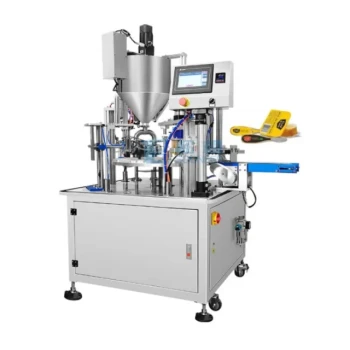
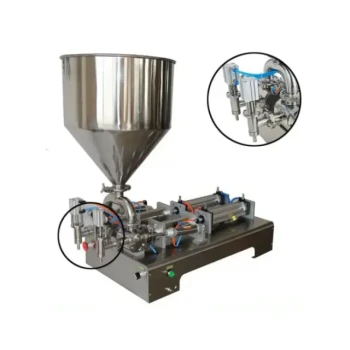
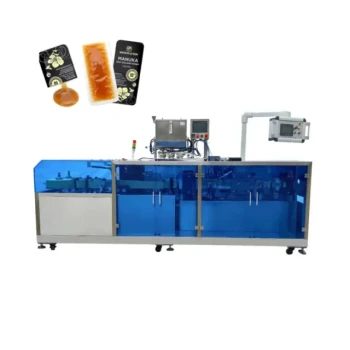
Industrial-grade honey filling machines serve as the technological bridge between raw agricultural production and high-value retail markets. By utilizing high-precision quantitative control systems, these machines ensure strict adherence to label specifications while minimizing the material waste inherent in manual processing. Furthermore, their automated environments enforce rigorous hygiene standards, delivering the packaging integrity required to enter premium domestic supermarkets and international export channels.
Core Takeaway Market expansion relies on standardization and safety, not just volume. Industrial filling technology converts bulk honey into a "branded commodity" by guaranteeing precise net weights, eliminating contamination risks, and ensuring the shelf-stability required by modern supply chains.
Achieving Regulatory Compliance through Precision
To enter formal retail channels, your product must strictly match its label claims. Industrial machines replace estimation with engineering certainty.
High-Precision Quantitative Control
Modern machines utilize advanced piston-style or weighing-based filling systems. These systems calibrate the fill volume to the exact gram, ensuring that the net content of every jar complies with legal label specifications.
Minimizing Material Loss
Manual filling often results in overfilling to avoid underweight penalties, leading to significant "giveaway" loss over thousands of units. Automated precision eliminates this buffer, maximizing the yield from your raw material inventory.
Elevating Food Safety Standards
High-end markets and export regulators demand proof of hygiene. Automation shifts the process from an artisanal activity to a sterile industrial operation.
Eliminating Secondary Contamination
The primary barrier to market expansion is often biological risk. Automated filling creates a closed loop that minimizes human contact with the product. This significantly reduces the risk of secondary contamination from pathogens or foreign debris during the bottling process.
Ensuring Sealing Integrity
Industrial machines integrate automatic capping functions immediately after filling. This rapid sealing prevents exposure to airborne contaminants and moisture, which is critical for preventing fermentation and extending the product's shelf life for long-distance transport.
Advanced Nozzle Technology
Professional equipment features no-drip filling nozzles. This technical feature prevents honey residue on the bottle neck/rim, ensuring an airtight seal and preventing the microbial growth that occurs on sticky, exposed surfaces.
Technical Consistency as a Branding Tool
Retailers require products that look identical on the shelf. Technical consistency is the foundation of consumer trust and brand reputation.
Uniform Product Specifications
Industrial machinery guarantees that every unit is visually and physically identical. This standardization is a prerequisite for stocking fees and agreements with major distributors, who cannot accept variable, "farm-gate" style packaging.
Transitioning to Premium Markets
By stabilizing the physical product, you transform honey from a low-cost bulk raw material into a high-value consumer good. The machinery provides the technical assurance needed to defend a premium price point in competitive environments.
Understanding the Trade-offs
While automation opens new markets, it introduces new technical management responsibilities.
Viscosity and Temperature Sensitivity
Honey viscosity changes drastically with temperature. Industrial fillers require precise temperature control and calibration. If the honey is too cold, it strains the piston systems; if too hot, it may degrade product quality (HMF levels).
Maintenance Rigor
The sticky nature of honey makes equipment maintenance critical. Unlike water-based fillers, honey machines require rigorous Clean-In-Place (CIP) protocols to prevent crystallization in the nozzles, which can seize mechanical parts or affect fill accuracy.
Flexibility vs. Speed
High-speed industrial machines often favor a specific bottle shape or size. Switching between different container formats (e.g., from jars to squeeze bottles) often requires downtime for re-tooling and recalibration, which can impact production agility for smaller, diverse batches.
Making the Right Choice for Your Goal
Selecting the right equipment depends on which market barrier you are trying to break.
- If your primary focus is International Export: Prioritize machines with advanced sealing and sterilization features to ensure the shelf-life stability required for global logistics.
- If your primary focus is High-End Retail: Focus on machines with high-precision dosing and no-drip nozzles to ensure the flawless visual presentation and label accuracy luxury consumers expect.
The shift to industrial filling is not just an upgrade in speed; it is the technical validation required to turn a local harvest into a global brand.
Summary Table:
| Technical Feature | Benefit for Market Expansion | Business Impact |
|---|---|---|
| Quantitative Control | Accurate net weights per label | Compliance with retail & export laws |
| Closed-Loop System | Minimized human contact | Superior food safety & reduced contamination |
| No-Drip Nozzles | Clean bottle necks and rims | Airtight sealing & extended shelf life |
| Automated Capping | Instant, secure sealing | Prevention of fermentation & moisture ingress |
| Visual Uniformity | Identical product presentation | Enhanced consumer trust & brand premium |
Scale Your Honey Production with HONESTBEE
Transitioning from manual bottling to industrial-grade automation is the definitive step toward securing contracts with major distributors and international retailers. At HONESTBEE, we empower commercial apiaries and distributors with the technical infrastructure needed to dominate the market.
Our comprehensive range of honey-filling machines, hive-making equipment, and industrial beekeeping tools ensures your operation meets the highest standards of precision and hygiene. Whether you are looking for specialized machinery or essential industry consumables, our experts are ready to provide the solution that maximizes your yield and protects your brand integrity.
Ready to transform your local harvest into a global brand? Contact HONESTBEE Today to Discuss Your Wholesale Equipment Needs
References
- Alexis Mizero, Dick Chune Midamba. Evaluation of the determinants of honey producers' market outlet choices in Huye District, Southern Province of Rwanda. DOI: 10.1007/s44279-024-00130-2
This article is also based on technical information from HonestBee Knowledge Base .
Related Products
- Precision Durable Efficient HONESTBEE Rotary Honey Filling Machine
- Commercial Rotary Honey Filling Machine for Production
- Fully Automatic Honey Filling Packaging Machine for Processing Line
- Precision Automated Packaging Turntable Honey Spoon Filling Sealing Packing Machine
- Automatic Honey Filling and Filtering Machine for Beekeeping Bottle Filling
People Also Ask
- How do honey filling machines work? Achieve Precision & Speed for Your Apiary
- What quality control role does professional honey filling equipment perform? Ensure Consistency and Product Stability
- What are the common types of bottling machines used for honey? Choosing the Right Solution for Your Apiary
- What is a key feature of the new generation of the honey filling machine? The Advanced Electronic Control Unit
- How do high-precision honey filling machines ensure quality? Optimize Your Commercial Production with HONESTBEE