Effective honey residue analysis demands a rigorous multi-point sampling strategy to account for the product's natural physical inconsistency. To obtain valid data, you must collect samples at the initial, middle, and final stages of the industrial filling process, rather than relying on a single static sample from a storage tank.
Core Insight: By strictly sampling at three temporal points—start, middle, and end—you neutralize analytical errors caused by honey’s physical heterogeneity. This approach ensures your detection data reflects the true average residue levels for the entire batch, which is critical when evaluating the impact of treatments like formic or oxalic acid.
Overcoming Physical Heterogeneity
The Risk of Non-Uniformity
Honey is rarely physically uniform throughout a large batch. Variations in viscosity and settling can lead to stratification of residues.
Relying on a single sample point creates a high risk of analytical error. It fails to capture the variance present across the full volume of the product.
The Temporal Sampling Protocol
To counter this, the sampling design must be temporal rather than spatial.
You must draw samples specifically at the initial, middle, and final stages of the filling operation. This spans the entire production run, capturing the natural variability of the batch as it flows through the system.
Achieving Representative Averages
The ultimate goal of this design is to generate a representative average.
By analyzing samples from these three distinct phases, you calculate a precise evaluation of the total batch quality. This is the only way to accurately measure how chemical treatments, such as formic acid or oxalic acid, are distributed throughout the final product.
Leveraging Industrial Hardware
Preventing Secondary Contamination
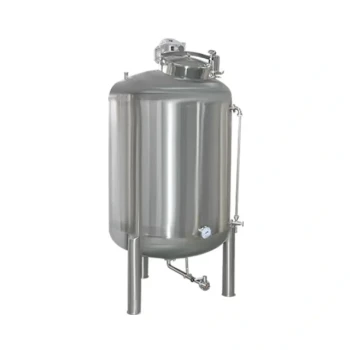
The validity of residue analysis depends on the purity of the sample. Industrial filling tanks utilize fully enclosed, automated designs.
This sealed environment eliminates the variable of secondary contamination from environmental bacteria or microorganisms. It ensures that the residues detected are from the honey itself, not introduced during the packaging process.
Consistency Through Automation
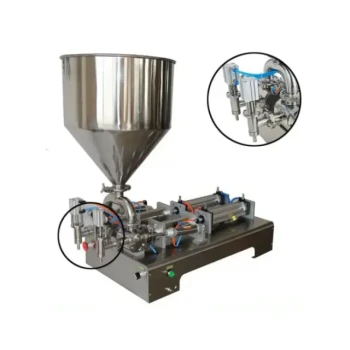
Industrial systems employ precise quantitative control systems.
These controls ensure consistent volume and flow, which standardizes the conditions under which samples are drawn. This mechanical consistency supports the standardization required for hygienic packaging and rigorous testing.
Understanding the Constraints
Increased Analytical Load
Implementing a multi-point design inherently increases the volume of analysis required.
Laboratories must process three times the number of samples per batch compared to a single-point method. This increases the time and cost associated with releasing a batch to market.
Hardware Dependency
This specific sampling methodology relies on industrial-scale machinery.
It assumes the presence of high-throughput, continuous-flow filling systems. Small-scale or manual operations may struggle to replicate the consistent flow required to accurately define "initial," "middle," and "final" processing stages without interrupting the batch.
Making the Right Choice for Your Goal
To optimize your sampling strategy based on your specific operational needs:
- If your primary focus is Data Accuracy: Implement the three-point (initial, middle, final) protocol to eliminate errors caused by batch heterogeneity.
- If your primary focus is Export Compliance: Utilize sealed industrial filling systems to prevent cross-contamination and meet the stringent hygiene standards of international markets.
True precision in residue analysis comes from acknowledging that honey is a dynamic, non-uniform product and sampling it accordingly.
Summary Table:
| Sampling Consideration | Technical Requirement | Strategic Benefit |
|---|---|---|
| Sampling Frequency | Initial, Middle, and Final stages | Neutralizes errors from physical heterogeneity/stratification |
| Hardware Environment | Fully enclosed automated filling tanks | Prevents secondary contamination from microbes or environment |
| Data Methodology | Temporal averaging of three points | Provides a representative residue level for the entire batch |
| Process Control | Precise quantitative flow systems | Standardizes sampling conditions for repeatable testing results |
Elevate Your Apiary Operations with HONESTBEE
Precision in honey analysis starts with the right industrial infrastructure. HONESTBEE empowers commercial apiaries and distributors with high-performance beekeeping machinery designed for accuracy and hygiene.
Whether you need advanced honey-filling machines to standardize your sampling protocols, specialized hive-making hardware, or a consistent supply of beekeeping consumables, we provide the end-to-end solutions your business demands. Our expertise ensures your honey meets the highest quality and export standards while maximizing production efficiency.
Ready to scale your production with professional-grade tools?
Contact HONESTBEE Today to Discuss Your Wholesale Needs
References
- Stefan Bogdanov, Peter Fluri. Determination of residues in honey after treatmentswith formic and oxalic acid under field conditions. DOI: 10.1051/apido:2002029
This article is also based on technical information from HonestBee Knowledge Base .
Related Products
- Stainless Steel Honey Storage Tank with Lid for Honey
- Heavy Duty Stainless Steel Honey Processing Machine Decrystallizing Tank
- Professional Honey Storage Tank with Agitation System
- Stainless Steel Uncapping Tank with Stand and Strainer
- Stainless Steel Honey Storage and Settling Tank with Double Strainer
People Also Ask
- What economic role do honey storage tanks play? Boost Your Revenue Through Strategic Inventory Management
- What roles do industrial honey storage tanks and filtration meshes play in processing? Ensure Purity & Consistency
- What is the purpose of a honey storage tank? Streamline Your Honey Processing for Quality & Efficiency
- What are honey storage tanks used for? Essential Features for Quality Preservation and Profit
- How do large honey storage tanks and gravity fall filling systems improve honey packaging efficiency and safety?