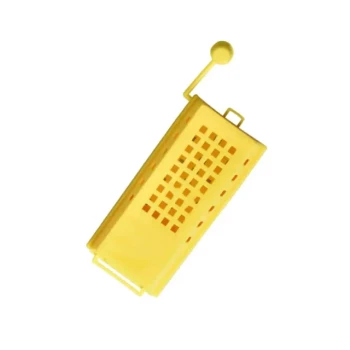
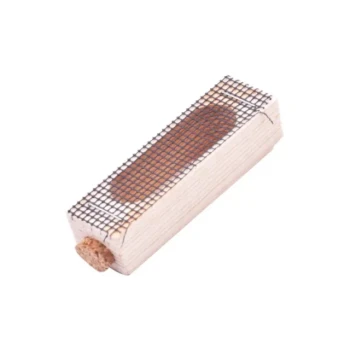
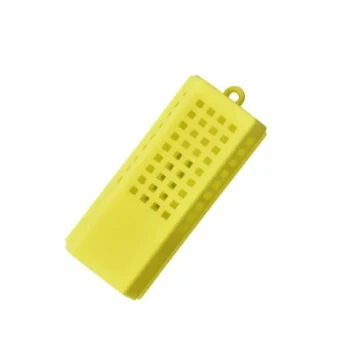
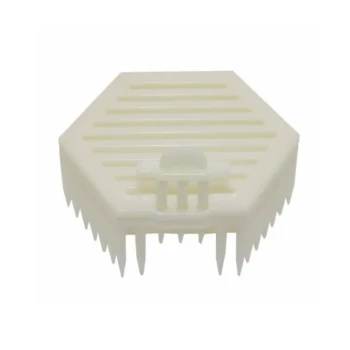
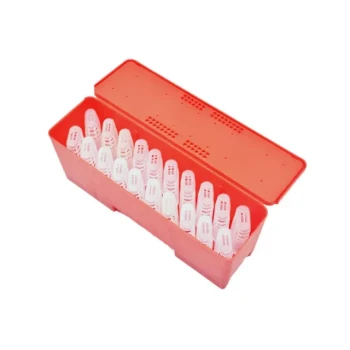
Professional queen cages require a technical design that balances structural integrity with biological life support. To be effective, these cages must feature robust ventilation, shock-absorbing materials to resist physical stress, and an internal layout that accommodates both an energy source (sugar candy) and a retinue of attendant bees.
The professional queen cage functions as a miniature social balancing system, leveraging attendant bees and specific materials to preserve the queen's sperm viability and ensure high acceptance rates upon introduction.
The Physical Architecture of the Cage
Robust Ventilation Systems
The cage must incorporate robust ventilation mechanisms. This ensures adequate airflow to prevent overheating and suffocation, which are primary risks during logistics operations.
Structural Protection Against Stress
The external material must provide significant structural protection against physical stress. This rigidity buffers the queen from the mechanical vibrations and crushing forces common during long-distance transport.
Vibration Damping
Internal components should be designed to minimize the transmission of shock. Reducing mechanical vibration is critical to preventing physical injury to the queen and maintaining her physiological potential.
The Biological Support System
Accommodation for Attendant Bees
The internal volume must be sufficient to house a specific number of attendant worker bees. These bees are not passive passengers; they form a "miniature social balancing system" essential for the queen's survival.
Facilitating Trophallaxis and Pheromones
The design must allow for close interaction between the queen and her attendants. The workers provide nutrition through trophallaxis (mouth-to-mouth feeding) and assist in maintaining essential pheromone levels on the queen's body surface.
Integrated Energy Source
A dedicated compartment for an energy source, typically sugar candy, is a non-negotiable requirement. This candy provides immediate nutrition and helps buffer against temperature fluctuations within the microclimate of the cage.
Understanding the Trade-offs
Ventilation vs. Desiccation
While ventilation is critical, excessive airflow can dry out the sugar candy and dehydrate the bees. The design must achieve a precise balance where air circulates freely without rapidly stripping moisture from the environment.
Compactness vs. Social Regulation
There is often a push to minimize cage size for logistics efficiency. However, reducing space too aggressively compromises the "social regulation" provided by the attendants. If the cage is too small to fit the necessary retinue, the queen's stress levels rise, negatively impacting sperm viability in the spermatheca.
Making the Right Choice for Your Logistics
When selecting or designing queen cages, your technical priorities should align with the specific challenges of your supply chain.
- If your primary focus is Long-Distance Transport: Prioritize cages with ample space for attendant bees and sugar candy to maintain the social regulation necessary to preserve sperm viability.
- If your primary focus is Colony Acceptance: Ensure the cage offers superior structural protection and pheromone distribution, as a physically uninjured and well-groomed queen has significantly higher acceptance rates.
The quality of the transport cage is the single biggest variable in preserving the queen's vitality from the apiary to the new colony.
Summary Table:
| Feature Category | Design Requirement | Functional Benefit |
|---|---|---|
| Physical Structure | Robust Ventilation | Prevents overheating and ensures constant airflow |
| Protection | Vibration Damping | Minimizes mechanical stress and prevents physical injury |
| Biological Support | Attendant Bee Space | Maintains social regulation and pheromone levels |
| Nutrition | Integrated Candy Compartment | Provides constant energy and buffers microclimate humidity |
| Material | Shock-Absorbing Rigid Shell | Resists crushing forces during long-distance transport |
Secure Your Queen's Vitality with HONESTBEE Solutions
At HONESTBEE, we understand that the quality of your queen cage determines the success of your colony. As a premier partner for commercial apiaries and distributors, we provide professional-grade beekeeping tools and logistics equipment engineered for survival. From specialized hive-making machinery to precision-designed queen transport systems, our comprehensive wholesale portfolio is built to preserve your bees' physiological potential.
Ready to upgrade your queen logistics? Contact us today to explore our full spectrum of beekeeping hardware and essential industry consumables. Let us help you ensure high acceptance rates and superior sperm viability across your entire apiary.
References
- Tamara Hribernik, Aleš Gregorc. Understanding Honey Bee (Apis mellifera) Colony Losses: A Multifactorial Perspective. DOI: 10.18690/agricsci.22.1-2.4
This article is also based on technical information from HonestBee Knowledge Base .
Related Products
- Durable Galvanized Steel Spring Queen Bee Cage
- Professional Queen Cage with Sliding Gate and Feeder Plug
- Classic Wooden and Mesh California Queen Cage
- Professional Queen Bee Introduction and Transport Cage
- Professional Multi-Functional Queen Bee Cage
People Also Ask
- Why are specialized queen bee cages used for the banking of mated queen bees? Maximize Commercial Apiary Storage Efficiency
- What is the mechanism of action for using temporary queen bee cages? Master Successful Queen Introduction
- What is the step-by-step process for installing a queen bee's cage onto a frame? Ensure Hive Acceptance Safely
- What is the optimal placement for a queen bee cage? Essential Strategies for Successful Re-queening
- What are the advantages and disadvantages of introducing a queen bee by embedding the cage? Boost Your Queen Acceptance