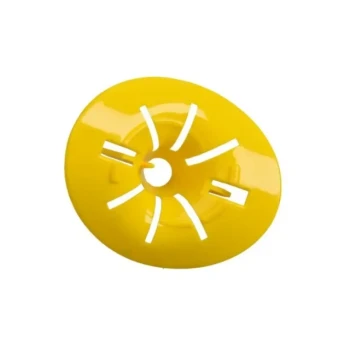
The technical configuration of a pollen trap relies on two specific components: a fine wire mesh that acts as a selective filter, and a sliding collecting tray designed for rapid, non-intrusive retrieval. The mesh ensures that only pollen grains fall into the collection area, barring bees and large debris, while the tray facilitates the daily workflow of counting and weighing samples without disrupting the hive.
The wire mesh and collecting tray function as an integrated system of filtration and storage: the mesh guarantees sample purity by physically separating the bees from the pollen, while the sliding tray ensures operational efficiency by allowing technicians to access data without dismantling the device.
The Mechanics of Filtration and Security
The fine wire mesh is not simply a cover; it functions as a calibrated sieve that defines the purity of your sample. Its placement above the tray is critical for two specific technical reasons.
Precise Particle Selectivity
The mesh is engineered with a specific aperture size. This design allows detached pollen grains to pass through freely, utilizing gravity to deposit them into the storage area below.
Biological Exclusion
Simultaneously, the mesh acts as a physical security barrier. It is sized specifically to prevent bees from passing through the apertures.
This prevents the colony from accessing the storage area to reclaim the collected pollen. Furthermore, this barrier serves a sanitation role by blocking large debris, preventing it from contaminating the pollen sample.
Optimizing Data Collection and Maintenance
The sliding wooden collecting tray is the operational component of the trap. It transforms the device from a passive barrier into an active data collection tool.
Facilitating Non-Intrusive Access
The sliding mechanism allows for independent operation. Technicians can remove and empty the tray to collect samples without needing to move the hive or disassemble the trap housing.
This isolation is vital for maintaining a consistent counting and weighing schedule.
Ensuring Sample Purity
The tray serves as a dedicated storage container. By isolating the pollen immediately after it falls through the mesh, the tray preserves the integrity of the sample.
This segregation simplifies the process of counting and weighing, ensuring that the data collected reflects only the relevant biological material.
Operational Considerations and Limitations
While this system is efficient, understanding the mechanical limitations is necessary for long-term reliability.
Mesh Obstruction Risks
Because the mesh is designed to block large debris, it is susceptible to accumulation on the upper surface.
If debris blocks the apertures, pollen cannot fall into the tray. This requires regular inspection to ensure the "sieve" function remains active.
Tray Mechanics
The reference notes the use of a wooden collecting tray. While effective for storage, the sliding action relies on friction.
Operators must ensure the wood remains in good condition to prevent sticking or jamming during the retrieval process.
Maximizing Trap Efficiency
To get the most out of your pollen trap, you must view the mesh and tray as dependent variables in your data collection process.
- If your primary focus is sample purity: Prioritize the integrity of the fine wire mesh to ensure it is effectively excluding bees and large organic debris from the final sample.
- If your primary focus is workflow efficiency: Leverage the sliding collecting tray to perform frequent, low-impact extractions for daily counting and weighing.
The effectiveness of a pollen trap ultimately depends on the synergy between precise filtration above and accessible, secure storage below.
Summary Table:
| Component | Primary Technical Function | Key Benefit to Operation |
|---|---|---|
| Fine Wire Mesh | Calibrated filtration & biological exclusion | Ensures sample purity by blocking bees and large debris. |
| Sliding Tray | Non-intrusive storage & retrieval | Allows rapid data collection (counting/weighing) without hive disruption. |
| Integrated System | Automated separation and isolation | Minimizes contamination and protects yield from colony reclamation. |
Maximize Your Pollen Harvest Efficiency with HONESTBEE
At HONESTBEE, we understand that for commercial apiaries and distributors, precision is everything. Our comprehensive wholesale range includes high-performance pollen traps, hive-making machinery, and honey-processing equipment designed to streamline your workflow and protect your yields.
Whether you are looking for specialized hardware or essential industry consumables, our expert-engineered solutions bring unparalleled durability and efficiency to your beekeeping business. Contact us today to explore our full catalog and wholesale offerings—let’s grow your apiary together!
References
- H. Mahfouz. Studies on Seasonal Variation of Pollen Collected by Honeybee in North Sinai Governorate. DOI: 10.21608/jppp.2016.51749
This article is also based on technical information from HonestBee Knowledge Base .
Related Products
- Removable Plastic Pollen Trap With Ventilated Tray for Bees Pollen Collector
- 30 cm Plastic Entrance Hole Bee Pollen Trap and Collector
- Plastic Bee Pollen Trap Strips Comb Catcher Collector
- 8 Frame and 10 Frame Propolis Trap Collector Screen for Propolis Collection
- Professional Bucket Style Wasp and Moth Pheromone Trap
People Also Ask
- What are the design principles and advantages of pollen traps in the collection of bee pollen? Boost Your Apiary Yield
- What is the function of professional pollen traps in evaluating honey plants? Quantifying Pollination and Crop Potential
- What functions do pollen traps serve for bee bread production? Optimize Your Raw Material Collection
- What maintenance and pest prevention measures should be taken for pollen traps? Protect Your Hive and Harvest Quality
- How does the use of pollen traps in honeybee hives enhance crop fertilization? Boost Your Yield Through Induced Activity