Inspect before you extract or redistribute frames. The most important biosecurity precaution is to inspect every colony for American Foulbrood (AFB), European Foulbrood (EFB), and other brood diseases before harvesting supers or reusing empty extracted frames. Frames, tools, and equipment from a suspect or affected hive must be isolated rather than moved through the extraction workflow, because extraction can spread contamination across the apiary.
Treat each hive’s equipment as potentially separate until the colony has been cleared. Inspection, segregation, prompt cleaning, controlled frame movement, and rapid reporting of serious disease are the core controls for preventing cross-contamination.
Control Contamination Before Frames Enter the Honey Room
Inspect colonies before harvesting
Inspect brood areas for signs of AFB and EFB before removing supers. This inspection should occur before frames enter shared extraction equipment or are placed into a pool for redistribution.
Do not assume that a healthy-looking honey super is safe if it came from a colony with suspected brood disease. Disease status must guide whether the super, frames, and associated equipment can be moved.
Separate suspect and cleared equipment
Create a clear separation between approved, suspect, and affected equipment. Frames from a suspect colony should never be mixed with frames from cleared colonies during staging, extraction, storage, or redistribution.
Use dedicated racks, containers, or clearly marked holding areas to prevent accidental transfer by staff, tools, or transport equipment.
Control equipment entering the operation
Exercise caution with used hive equipment, imported bees, and second-hand tools. These may introduce AFB, EFB, small hive beetles, or parasitic mites into an otherwise healthy operation.
Equipment and colonies acquired from another operation or region should be inspected and, where applicable, certified free of notifiable diseases before entering the apiary or extraction process.
Build Biosecurity Into the Extraction Sequence
Keep the workflow one-directional
Organize the process from full supers to uncapping, extraction, straining, and bottling, without bringing contaminated or unverified material back into the clean workflow.
A practical sequence is:
- Stage full supers from cleared colonies.
- Remove bees using a soft bee brush.
- Uncap cells with knives, rollers, or automated uncapping equipment.
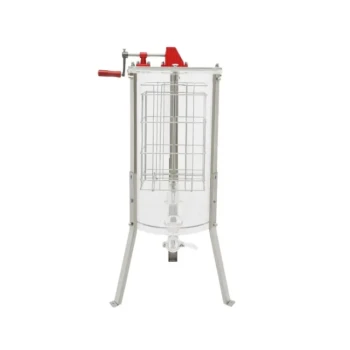
- Extract honey with a centrifugal extractor.
- Strain honey through a fine mesh strainer.
- Transfer honey into clean, food-grade buckets or storage tanks.
- Place empty frames in a controlled temporary storage area.
This structure reduces unnecessary movement and makes it easier to identify where a contamination event could have occurred.
Manage empty frames deliberately
Empty extracted frames should be promptly returned only to appropriate, cleared colonies. Do not place pooled frames into healthy hives if their source colony has not been inspected and cleared.
Prompt return also helps reduce exposed honey odors that can trigger robbing and fighting between colonies. Entrance reducers should be installed before extraction where appropriate to help limit defensive or robbing activity.
Clean tools and machinery immediately
Wash extraction machinery, uncapping tools, strainers, utensils, and food-contact surfaces with clean water immediately after use to remove residual honey and odors.
Cleaning should occur between processing groups when there is a risk that equipment has contacted suspect material. Pay particular attention to extractor baskets, frame supports, uncapping trays, drains, and areas where wax or honey accumulates.
Use food-grade equipment and containers
All surfaces, tools, racks, buckets, and storage tanks used in honey handling should be made from certified food-grade materials.
This protects product quality and reduces the risk of physical contamination or chemical leaching while supporting a consistent, professional workflow for commercial processing.
Protect Stored Comb and the Honey Room
Prevent small hive beetle access
Unprotected comb, honey, and pollen can support small hive beetle development outside an active colony. Beetle eggs can hatch in one to three days, after which larvae feed on stored comb and hive products.
Keep the honey room and storage areas controlled, clean, and protected from adult beetles. Stored comb and empty equipment must be secured so beetles cannot access it and lay eggs.
Control exposed honey and wax
Do not leave extracted frames, cappings, spills, or honey residues exposed. These materials can attract pests and increase robbing pressure around the facility and apiary.
Use closed or protected storage for frames and promptly remove residues from equipment and work surfaces.
Maintain traceability
Record the source colony or apiary for each super or frame batch. Traceability allows managers to identify which equipment was processed together and to stop further movement if a disease concern is later discovered.
For distributors, wholesalers, and resellers, batch-level records also support faster customer communication and more reliable quarantine decisions.
Respond Correctly to Suspected Disease
Freeze movement when AFB is suspected
If American Foulbrood or another serious notifiable disease is detected, stop moving affected colonies and hive hardware immediately.
Do not extract, redistribute, or return suspect frames to other colonies while awaiting formal inspection. Regulatory requirements may include immediate reporting to official authorities and a strict movement freeze.
Avoid “diluting” contamination
Mixing frames from a suspect colony with frames from healthy colonies does not make the material safe. It expands the potential exposure area and makes later tracing substantially more difficult.
When in doubt, isolate the material and obtain qualified inspection or regulatory guidance before proceeding.
Understanding the Trade-offs
Speed versus disease control
Rapid extraction improves throughput and can support efficient order fulfillment, but moving frames quickly without inspection creates a much larger outbreak risk.
A short inspection and segregation step is usually less costly than contaminating multiple colonies, frames, and extraction batches.
Shared equipment versus operational simplicity
A shared extractor, uncapping station, or rack is efficient, but it creates a common pathway for contamination. The control is not necessarily to duplicate every machine; it is to enforce source verification, batch separation, and immediate cleaning.
Cleaning versus true biosecurity
Washing equipment removes residual honey and odors, but cleaning cannot replace colony inspection or responsible disease reporting. Biosecurity begins with deciding what is allowed into the workflow.
Convenience versus traceability
Pooling frames may simplify handling, but it weakens the ability to identify the source of a problem. Keeping batches identifiable provides better protection for apiaries, inventory, and downstream business partners.
How to Apply This to Your Apiary or Processing Operation
Use the following controls as a practical minimum for a professional extraction program:
- If your primary focus is preventing hive-to-hive disease spread: Inspect colonies for AFB and EFB before harvesting, segregate suspect frames, and return empty frames only to cleared colonies.
- If your primary focus is efficient commercial processing: Use a one-directional workflow with food-grade staging, extraction, straining, storage, and documented batch separation.
- If your primary focus is protecting stored inventory: Secure empty comb and equipment, control access to the honey room, and prevent small hive beetles from reaching stored honey, pollen, or comb.
- If your primary focus is regulatory compliance: Freeze movement of suspect colonies and hardware and report serious notifiable disease, especially suspected AFB, to the appropriate authorities.
- If your primary focus is reliable sourcing and resale: Inspect and document used equipment, imported bees, and external inventory before introducing them into the apiary or processing system.
A disciplined extraction workflow protects both colony health and the reliability of every honey batch moving through the operation.
Summary Table:
| Precaution | Implementation |
|---|---|
| Inspect colonies | Check for AFB/EFB before harvesting |
| Separate equipment | Keep suspect and cleared gear apart |
| One-directional workflow | Move from full supers to bottling without backtracking |
| Clean tools immediately | Wash extractor, uncapper, etc. after each use |
| Use food-grade materials | Ensure all equipment is certified food-grade |
| Control pests | Secure stored comb to prevent small hive beetles |
| Maintain traceability | Record source colony for each batch |
| Freeze movement on disease | Stop handling if AFB is suspected and report |
Protect your apiary and honey batches from cross-contamination with HONESTBEE's premium beekeeping equipment and expert guidance. Our full-spectrum product range includes food-grade extractors, uncapping tools, and storage solutions designed to support a biosecure workflow. As a trusted partner for commercial apiaries and distributors, we offer rapid response, dedicated service, and efficient delivery to keep your operation running smoothly. Contact us today to learn how we can help you implement these biosecurity measures and optimize your honey extraction process.
Related Products
- Stainless Steel 3 Frame Manual Honey Extractor Spinner for Bee Honey Extraction
- Manual Hand Crank 4 Frame Honey Extractor Centrifuge for Beekeeping
- HONESTBEE 2 Frame Manual Acrylic Honey Extractor Beekeeping Equipment
- HONESTBEE 3-Frame Manual Acrylic Honey Extractor
- Plastic Hand Crank 2 Frame Honey Extractor Low Price
People Also Ask
- Which type of honey extractor is generally more durable? Focus on Material & Build Quality for Longevity
- What are the disadvantages of a manual honey extractor? Overcome Efficiency Bottlenecks in Your Apiary
- What is a manual honey extractor? The Essential Guide to Cost-Effective Beekeeping for Beginners
- Why are manual extractors popular among beginner beekeepers? A Guide to Starting Simple & Saving Money
- What are the primary advantages of utilizing a manual honey extractor? Cost-Effective & Gentle Harvesting