The residue containing wax and honey after extraction is a recoverable asset, not waste. This mixture can be processed primarily through two methods: cold water washing, which dissolves the honey to leave the wax intact, or thermal separation using a double boiler, which melts the mixture to separate components by density. Once refined, the resulting beeswax becomes a versatile material for hive maintenance, foundation sheets, or commercial products like candles and cosmetics.
Maximizing the return on your extraction process requires viewing wax residue as a raw material rather than a byproduct. By effectively separating the wax from the honey, you create a secondary resource stream that lowers operational costs and opens new avenues for product diversification.
Methods of Separation
To utilize the residue, you must first separate the wax from the honey. There are two primary techniques to achieve this, each relying on different physical principles.
Cold Water Washing
This method focuses on preservation. By washing the mixture in cold water, you dissolve the honey content without altering the physical structure of the wax.
Once the honey is washed away, the remaining wax is dried. This approach is useful when you want to handle the wax in its solid state before rendering or further processing.
Thermal Separation (Double Boiler)
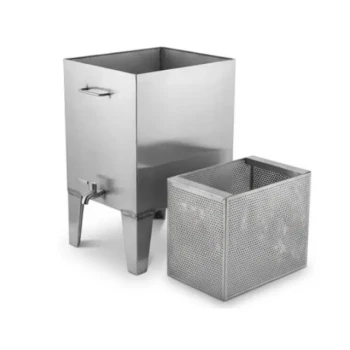
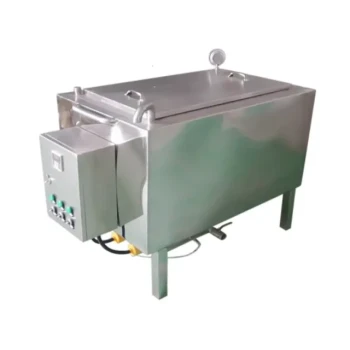
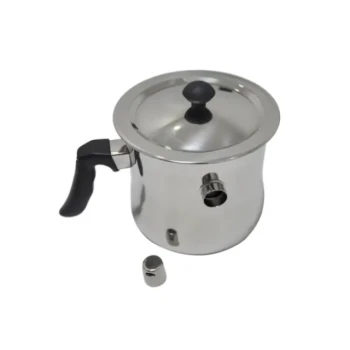
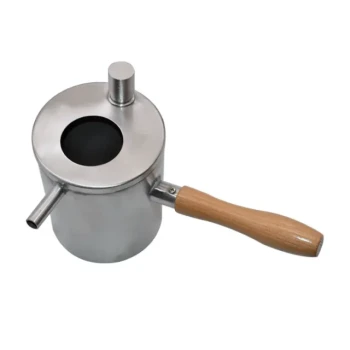
This method utilizes density stratification. You place the entire mixture into a double boiler to melt it down gently.
As the mixture cools, physics takes over: the denser honey sinks to the bottom, while the lighter liquid wax floats to the top. A distinct layer of impurities (often called slumgum) will form in between these two layers.
Once fully cooled and hardened, the wax block can be lifted off the top, leaving the honey and impurities behind.
Biological Pre-Cleaning
Before utilizing the mechanical methods above, you can employ the bees themselves. Placing extracted cappings in an area accessible to the bees allows them to clean off the bulk of the excess honey.
This reduces the stickiness of the material, making the subsequent rinsing or rendering processes significantly cleaner and more efficient.
Refining and Utilization
Once separated, the beeswax is a high-value commodity. Its application depends on the level of refinement you achieve.
Hive Management and Maintenance
The most direct use for recovered wax is reinvestment into the apiary. The separated wax can be used to coat hive equipment, protecting wooden ware from the elements and extending its lifespan.
Additionally, the wax can be rendered and cleaned to manufacture new foundation sheets for beehive frames, reducing the need to purchase external supplies.
Commercial Product Fabrication
For higher economic returns, the wax can be refined further for consumer goods. The residue is the raw material for candles, lip balms, and soaps.
If you process large quantities, the wax can simply be poured into molds (like bread pans) to create beeswax bricks. These bricks can be sold as raw materials to supply companies or other crafters.
Understanding the Trade-offs
While processing residue is beneficial, it involves specific operational considerations.
Heat Sensitivity
When using the thermal separation method, temperature control is vital. Overheating can darken the wax and degrade the quality of any recovered honey. A double boiler is essential to moderate the heat source; direct flame should never be applied to beeswax.
Purity and Filtering
The separation process rarely produces perfectly clean wax immediately. To achieve cosmetic-grade quality, the melted wax usually requires straining through cheesecloth or calico to remove fine particulate matter and bee parts.
The "middle layer" of impurities found during thermal separation must be scraped off the bottom of the hardened wax block to ensure a clean final product.
Making the Right Choice for Your Goal
How you process the residue should depend on your intended end-use for the wax.
- If your primary focus is Equipment Maintenance: Use the thermal separation method to quickly isolate the wax, which can then be immediately used to coat and preserve wooden hive parts.
- If your primary focus is Value-Added Products: Implement a multi-step process involving bee cleaning, washing, and fine filtering through calico to ensure the high purity required for cosmetics or candles.
- If your primary focus is Operational Efficiency: Allow the bees to clean the cappings first to minimize the labor and mess involved in the washing or melting stages.
The most successful beekeepers treat wax recovery not as a cleanup chore, but as the first step in manufacturing a secondary product line.
Summary Table:
| Method | Process Principle | Primary Use Case | Key Advantage |
|---|---|---|---|
| Cold Water Washing | Honey dissolution | Solid wax preservation | Keeps wax structure intact without heat |
| Thermal Separation | Density stratification | Bulk wax recovery | Easy separation of honey, wax, and impurities |
| Biological Cleaning | Natural bee foraging | Pre-processing cleanup | Reduces stickiness and manual labor |
| Refining & Filtering | Fine mesh straining | Cosmetic-grade production | Removes fine particulates for high-end products |
Maximize Your Apiary’s Revenue with HONESTBEE
Don't let valuable beeswax go to waste. HONESTBEE specializes in empowering commercial apiaries and distributors with the professional-grade tools needed to convert extraction byproducts into profitable assets. From high-efficiency honey-filling machines to specialized hive-making equipment, we provide the full spectrum of beekeeping hardware and essential consumables required for large-scale success.
Why Partner with HONESTBEE?
- Wholesale Excellence: Comprehensive inventory for distributors and commercial operations.
- End-to-End Solutions: We supply everything from heavy machinery to honey-themed cultural merchandise.
- Operational Efficiency: Our tools are designed to lower costs and diversify your product lines.
Ready to scale your beekeeping business? Contact our expert team today to explore our wholesale offerings!
Related Products
- Steam Beeswax Melter Wax Warmer for Wax Processing
- Electric Commercial Beeswax Melter for Factory Use
- Manual Beeswax Flat Sheet Machine for Beeswax Processing
- Electric Beeswax Flat Sheet Machine with Operating Tray for Wax Processing
- Fully Automatic Beeswax Embossing Machine Foundation Mill
People Also Ask
- How does a steam wax melter work? A Fast, Efficient Method for High-Quality Wax
- How does a professional steam wax melter optimize the recovery of beeswax? Maximize Yield & Hygiene for Your Apiary
- What are the steps to use a steam wax melter? Master Safe & Efficient Wax Rendering
- How do steam wax melters function in the disinfection of apiary equipment? Achieve Chemical-Free Organic Sterilization
- How do you operate a steam wax melter? Master Efficient Wax Extraction and Frame Sterilization