Interspecific robbing is primarily a nectar-dearth problem: when natural forage is scarce, stronger or larger colonies—such as Apis mellifera—may invade weaker colonies, including Apis cerana, to take stored honey. The risk increases when colony strength is uneven, entrances are too large, hive components have gaps, or honey and syrup are exposed during inspections. Entrance reducers, anti-robbing guards, robbing screens, and controlled ventilation hardware give resident bees a smaller, defensible access point.
The central protection principle is simple: reduce the number of places an invading bee can enter until the resident colony can effectively guard the entrance. Hardware works best when combined with tight hive construction, rapid inspections, and strict control of exposed food sources.
Why Interspecific Robbing Happens
Nectar scarcity creates the pressure
Robbing is most likely during a nectar dearth, when colonies cannot collect enough fresh forage to meet their needs. Stored honey then becomes an attractive, concentrated food source.
Strong colonies have more workers available for scouting, attacking, and transporting honey. Weaker colonies may lack enough guard bees to defend a wide entrance.
Colony strength is uneven
The basic pattern is an imbalance between an invading colony and a defending colony. Larger or stronger species and colonies can overwhelm smaller or weaker colonies, particularly when the target has limited worker numbers or reduced defensive capacity.
Once robbing begins, the activity can escalate rapidly because the scent of exposed honey attracts additional bees.
Hive access points are too open
A full-width entrance, multiple entrances, or unprotected cracks and crevices can create more access points than the resident bees can defend. Upper entrances may also allow robbers to bypass the main guard line.
Poorly fitted hive bodies, covers, floors, and supers therefore increase vulnerability. Robbing prevention starts with maintaining a tightly built hive envelope.
Apiary management exposes food
Open honey, leaking combs, and exposed sugar syrup can attract robbing bees from nearby colonies. Long inspections during a food shortage have the same effect, especially when frames containing honey remain outside the hive.
For commercial operators, consistent work procedures are as important as the hardware itself.
How Robbing Damages a Colony
Honey reserves are depleted
Mass robbing can remove a colony’s stored food quickly. This leaves the resident bees without the reserves required to survive a prolonged nectar shortage.
The immediate loss is not limited to marketable honey; it can also compromise the colony’s ability to feed brood and maintain normal activity.
Brood and the queen become vulnerable
Invaders may disrupt the brood area, injure or kill developing bees, and create severe stress within the colony. Continued pressure can contribute to queen loss, colony collapse, or absconding.
A colony that survives the initial attack may still be weakened enough to become vulnerable to further pests and disease pressure.
Weak colonies can become persistent targets
Once a colony has been identified as easy to enter, repeated attacks may follow. This makes early entrance control more effective than waiting until large numbers of robbing bees are already present.
Deploying Hive Hardware for Physical Protection
Install an entrance reducer first
An entrance reducer narrows the opening to a manageable entrance, often down to a single bee space when robbing pressure is high. This lets resident guard bees concentrate at one point rather than attempting to defend a broad opening.
The reducer should be fitted securely so that robbing bees cannot enter around its edges. It must still permit normal traffic and should be monitored for congestion.
Add an anti-robbing guard or robbing screen
An anti-robbing guard changes the entry path so that resident bees can find the hive entrance while incoming robbers struggle to locate or access it. A robbing screen is particularly useful for smaller, weaker, or recently established colonies.
For distributors and apiary suppliers, these products complement standard reducers because they address different levels of robbing pressure: basic restriction for prevention and screened entry for active or severe threats.
Close upper entrances during robbing risk
When robbing is occurring, upper entrances should generally be closed to create a single, controllable defensive point. Multiple openings divide the colony’s guard force and can provide alternative routes into the hive.
This is a hardware decision that should be made alongside the colony’s strength, ventilation needs, and local temperature conditions.
Preserve ventilation without creating an entry route
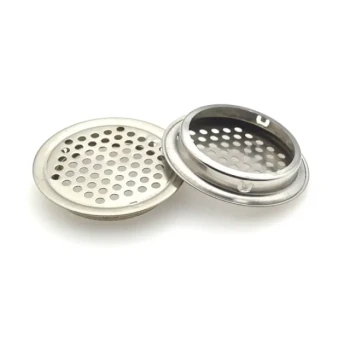
Closing an upper entrance should not mean trapping excessive heat or moisture inside the hive. Where airflow is needed, use a screened inner cover or an eke with screened ventilation ports.
The screen should allow air movement while preventing robbing bees and other pests from using the ventilation opening as an access point.
Maintain precise component fit
Reducers, guards, screens, covers, floors, and hive bodies should fit closely. Cracks and crevices undermine entrance control by creating unguarded pathways.
For B2B buyers, this makes dimensional consistency, material durability, and compatibility across hive models important purchasing criteria—not merely accessory features.
A Practical Hardware Deployment Sequence
Start before robbing becomes severe
During a known nectar dearth, reduce entrances on colonies that are weak, newly established, queenless, or otherwise unable to field strong guard forces. Proactive restriction is generally easier than responding after robbers have discovered the hive.
The correct hardware should be available as part of the apiary’s standard seasonal inventory.
Escalate protection according to colony condition
A practical sequence is:
- Inspect the hive exterior for cracks, leaks, and additional entrances.
- Reduce the main entrance to a defensible opening.
- Close upper entrances if they are not essential.
- Install a robbing screen on smaller or actively targeted colonies.
- Use screened ventilation hardware where airflow is required.
- Monitor traffic and colony stress after installation.
Hardware should support the bees’ defensive behavior, not restrict normal movement so severely that congestion or overheating develops.
Reduce disturbance during inspections
Inspections should be completed quickly during food shortages. Honey frames, syrup containers, and damaged comb should not be left exposed in the apiary.
Entrance hardware cannot compensate for an open honey source that continuously attracts robbers.
Keep the hive structure sealed
Tightly fitted hive components reduce the number of points that must be defended. This is especially important for commercial apiaries where standardized equipment can simplify inspection, maintenance, and replacement.
A one-stop equipment program that includes reducers, guards, screens, screened covers, and replacement hive components helps operators respond consistently across different colony sizes.
Understanding the Trade-offs
Smaller entrances can restrict traffic
An entrance reduced too far may create congestion, particularly in a strong colony or during heavy foraging. Operators should match the opening to colony strength and observe whether bees can move freely.
The objective is defensibility, not the smallest possible opening in every situation.
Ventilation and security must be balanced
Closing upper entrances improves control but may reduce airflow. Screened ventilation products provide a better compromise than leaving an unprotected opening available to robbers.
Equipment selection should therefore consider climate, hive design, colony population, and the duration of the dearth.
Screens require correct installation
A robbing screen is effective only when it is properly fitted and its intended entry path remains usable by resident bees. Gaps around the screen can defeat the barrier, while poor positioning may confuse or obstruct the colony.
Suppliers should provide clear installation guidance and ensure hardware is compatible with the customer’s hive format.
Not every threat is interspecific robbing
Wasps and hornets can also attack hive entrances, but they are predators rather than competing honeybee colonies. They may require additional measures such as guard boards, wire entrance screens, cages, or external traps.
Entrance reducers and robbing screens address access control, but a complete pest-management program may require separate predator-control products.
Hardware is not a substitute for colony management
Physical barriers cannot correct severe colony weakness, queenlessness, poor nutrition, or repeated exposure of honey and syrup. Robbing prevention works best when equipment and operating procedures are used together.
Making the Right Choice for Your Goal
Select hardware based on the colony’s strength, the severity of the robbing risk, ventilation requirements, and the hive system already in use.
- If your primary focus is protecting weak or small colonies: Use an entrance reducer with a robbing screen, close unnecessary upper entrances, and retain airflow through screened ventilation hardware.
- If your primary focus is managing a commercial apiary: Standardize compatible reducers, guards, screens, covers, and replacement components so every colony can be protected quickly during a nectar dearth.
- If your primary focus is product sourcing or distribution: Build a full-spectrum entrance-control portfolio and prioritize consistent dimensions, durable construction, fast fulfillment, and responsive technical support.
- If your primary focus is preventing recurring attacks: Seal hive gaps, remove exposed honey and syrup, shorten inspections, and deploy entrance hardware before robbers establish a pattern.
With the right entrance-control hardware and disciplined apiary practices, colonies can defend their stores more effectively even when forage is scarce.
Summary Table:
| Hardware | Function | Best For |
|---|---|---|
| Entrance Reducer | Narrows entrance to a defensible size | Preventing robbing in normal conditions |
| Anti-Robbing Guard | Alters entry path to confuse invaders | Active robbing threats |
| Robbing Screen | Screened barrier that allows resident bees but blocks intruders | Weak or small colonies |
| Screened Inner Cover / Eke | Provides ventilation without entry route | Maintaining airflow while excluding robbers |
Protect your apiary from robbing with HONESTBEE's full range of entrance control hardware. As a leading wholesale supplier, we offer durable entrance reducers, anti-robbing guards, and robbing screens, plus all the hive components you need for a tight, secure hive. With our rapid fulfillment and dedicated support, you can safeguard your colonies and maximize honey yields. Contact us today to discuss your bulk requirements and special pricing.
Related Products
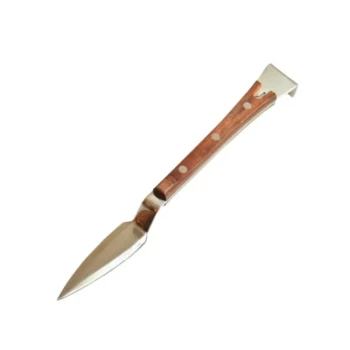
- HONESTBEE Premium Italian Style Hive Tool with Hardwood Handle
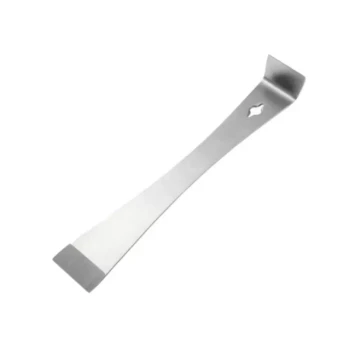
- Professional Stainless Steel Pry-Bar Hive Tool
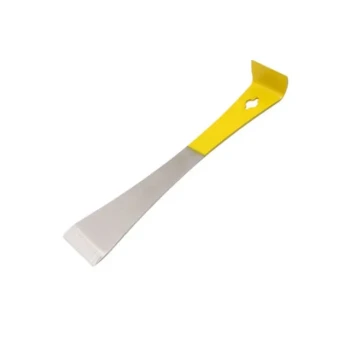
- HONESTBEE Classic Pry Bar Hive Tool with High Visibility Finish for Beekeeping
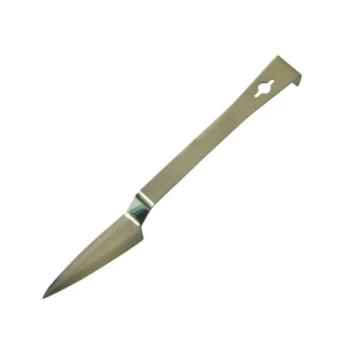
- HONESTBEE Professional Long Handled Hive Tool with Precision Cutting Blade
- Durable Plastic Interlocking Hive Connector for Beekeeping
People Also Ask
- What distinguishes an Italian hive tool? Master High-Leverage Beekeeping with This Extra-Long Design
- Which intervention materials and management tools are used in commercial apiaries? Protect Your Bees from Pesticides
- What are the common construction features of hive tools? Key Insights for Superior Beekeeping Efficiency
- What are the different types of hive tools available? Choose the Right Tool for Your Apiary
- How do hive tools and queen rearing equipment facilitate the bee colony splitting process? Restore Your Apiary Faster