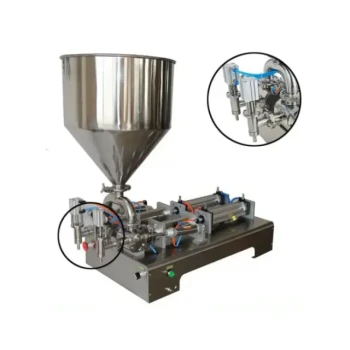
Automated filling and packaging machinery fundamentally transforms honey processing by delivering unmatched hygiene consistency and measurement precision. These systems elevate product quality, extend shelf life, and ensure compliance with international export standards, capabilities that manual operations simply cannot match.
The Core Competitive Edge Manual processing creates bottlenecks in scalability and introduces variability that limits market reach. Automation solves this by standardizing the entire production line, converting raw bulk honey into high-value retail products while simultaneously reducing contamination risks and material waste.
Ensuring Absolute Product Integrity
Unwavering Hygiene Standards
The primary advantage of automation is the guarantee of hygiene consistency. Unlike manual operations, automated machines often utilize enclosed environments that isolate the honey from external contaminants. This sterile processing is critical for maintaining biological safety and meeting the strict food safety requirements of large-scale distributors.
Preserving Sensory Quality
Automated systems are designed to handle honey delicately, preserving its unique sensory quality and extending shelf life. By minimizing human contact and controlling the exposure to the environment during bottling, these machines ensure the product retains the natural characteristics that consumers value.
Consistent Sealing Technology
Advanced sealing mechanisms integrated into these machines ensure airtight integrity for every unit. This prevents spoilage and leakage, issues that frequently plague manual bottling lines and damage brand reputation.
Operational Efficiency and Cost Control
Precision Measurement
Automated machines employ high-precision piston or weighing systems to control flow and net content with exacting accuracy. This quantitative dispensing ensures every bottle meets industry specifications, eliminating the risk of under-filling (regulatory non-compliance) or over-filling (profit loss).
Minimizing Material Waste
By strictly controlling volume, automation significantly reduces raw material waste. Over long production runs, the elimination of "giveaway" product—honey that exceeds the stated weight due to manual error—results in substantial cost savings.
Labor and Energy Optimization
Replacing manual filling with automated machinery reduces long-term labor costs and energy requirements. It allows producers to increase packaging speeds and scale operations without a proportional increase in workforce size.
Market Positioning and Brand Value
Meeting Export Standards
To access lucrative international markets, producers must demonstrate rigorous adherence to standards. Automated packaging processes facilitate compliance with international export regulations, providing the documentation and standardization required to bypass trade barriers.
Enhancing Brand Premium
High-quality, standardized packaging supports geographical indication strategies and premium branding. Automation ensures a uniform product appearance and can integrate anti-counterfeiting labeling, which increases the brand value and competitiveness of beekeeping products in the retail sector.
Understanding the Trade-offs
While the advantages are clear, adopting automation requires careful consideration of specific operational constraints.
Capital Investment vs. Volume
The shift to automation involves significant upfront capital expenditure. For very small, boutique producers with low output, the ROI may not justify the cost compared to manual filling, unless hygiene compliance is the primary driver.
Maintenance and Flexibility
Automated lines require technical maintenance to ensure sensors and filling heads remain accurate. Additionally, changeovers between different bottle sizes or honey varieties can be more time-consuming on a fully automated line compared to a manual setup.
Making the Right Choice for Your Goal
To maximize the return on your investment, align your equipment choice with your specific business objective:
- If your primary focus is International Export: Prioritize machines that offer enclosed sterile environments and precise data logging to meet rigorous international food safety and compliance standards.
- If your primary focus is Cost Reduction: Select equipment with advanced flow control and weighing systems to eliminate overfilling waste and reduce dependency on manual labor.
- If your primary focus is Brand Building: Focus on packaging lines that support high-quality aesthetic finishes and anti-counterfeiting labeling to secure a premium market position.
Automation is not just a tool for speed; it is the infrastructure required to turn a raw agricultural commodity into a standardized, high-value consumer product.
Summary Table:
| Feature | Manual Processing | Automated Machinery | Business Impact |
|---|---|---|---|
| Hygiene & Safety | Variable human contact | Enclosed, sterile systems | Reduced contamination & high compliance |
| Measurement | Manual estimation errors | High-precision piston/weighing | Zero product giveaway & legal compliance |
| Scalability | Slow, labor-intensive | High-speed, continuous | Lower unit costs & higher market reach |
| Product Quality | Risk of leaks/spoilage | Airtight sealing technology | Extended shelf life & brand reputation |
| Market Access | Limited by standards | Meets international regulations | Easy entry into global export markets |
Elevate Your Honey Production with HONESTBEE
Transitioning to automation is the definitive step toward scaling your commercial apiary or distribution business. At HONESTBEE, we specialize in providing professional-grade beekeeping tools and machinery, including high-precision honey-filling machines and hive-making equipment, designed to meet rigorous global standards.
Whether you are looking to minimize waste, ensure absolute hygiene, or command a premium price in the retail sector, our comprehensive wholesale solutions are tailored for your success. We supply everything from industrial hardware to essential consumables and honey-themed cultural merchandise.
Ready to modernize your operations? Contact our experts today to find the perfect equipment solution for your business.
References
- Nataliia Pravdiuk. INFORMATION SUPPORT FOR THE BEEKEEPING INDUSTRY: ACCOUNTING AND ANALYTICAL PRACTICE IN UKRAINE AND THE WORLD. DOI: 10.32782/bses.90-11
This article is also based on technical information from HonestBee Knowledge Base .
Related Products
- Fully Automatic Honey Filling Packaging Machine for Processing Line
- Economy Small Honey Filling Machine Honey Bottle Filler Packaging Machine
- Precision Automated Packaging Turntable Honey Spoon Filling Sealing Packing Machine
- Small Honey Filling Machine Sachet Packing Equipment Single Nozzle
- Double Nozzle Small Honey Filling Machine Honey Sachet Packing Packaging Equipment
People Also Ask
- Why are fully automatic honey filling and packaging lines essential? Boost Your Honey's Market Value and Quality
- What is a fully-automatic honey filler? Streamline Your Production with High-Precision Automation
- How do automated honey filling and packaging machines affect profitability? Boost Margins with HONESTBEE Technology
- How do automated honey filling and packaging machines contribute to the market value of honey products? Maximize Your ROI
- How do industrial-grade automated honey filling and packaging machines mitigate the risk of physical contamination?