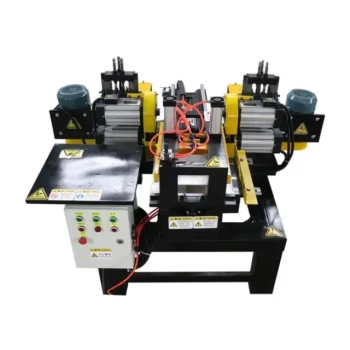
Box management is essentially non-existent for a top bar hive. Unlike standard vertical hives that require the beekeeper to stack, remove, and store heavy boxes (supers) to accommodate colony growth, a top bar hive is a single, self-contained unit. Management focuses on the internal arrangement of the hive rather than external expansion.
Top bar beekeeping replaces the vertical stacking of heavy boxes with the horizontal management of space. This design eliminates heavy lifting, making it ideal for those seeking a less physically demanding apiary workflow.
The Mechanics of a Single-Unit System
A Fixed-Volume Cavity
The defining feature of a top bar hive is that it is a fully self-contained unit. You do not add boxes to the top of the hive as the season progresses.
Instead, the total volume of the hive is determined by the length of the main body. The colony remains within this single long box for its entire lifecycle.
Simplified Access
Accessing the colony typically requires lifting only a light lid. In many designs, this lid is hinged, removing the need to lift it off entirely.
This stands in stark contrast to standard hives, where reaching the brood nest often requires removing multiple heavy honey supers and covers.
Elimination of Equipment Storage
Because the hive does not expand vertically, there is no need to store spare boxes.
In vertical systems, a beekeeper must store supers during the winter and deploy them in the spring. With a top bar hive, all necessary components stay in the field year-round.
Managing Space Instead of Boxes
Since you cannot add boxes, management shifts to manipulating the internal space using specific components.
The Follower Board
The primary tool for space management is the follower board. This acts as a movable wall within the hive body.
By moving the follower board further down the hive body, you expand the space available to the bees. This mimics the effect of adding a box in a vertical system but requires significantly less effort.
Top Bar Manipulation
Instead of moving whole boxes of frames, you manipulate individual top bars.
During inspections, you use a hive tool to loosen specific bars and lift them out one by one. This allows for granular management of the colony without disrupting the entire stack.
Understanding the Trade-offs
While the lack of box management offers ergonomic benefits, it introduces specific limitations that you must consider.
Limited Honey Production
The fixed volume of the hive design is not ideal for maximizing honey output. Once the horizontal space is full, you cannot simply add another box to capture more surplus honey.
Comb Fragility
Because the comb hangs freely from the top bar without a surrounding frame or foundation, it is extremely fragile.
When inspecting, you must lift bars straight up and keep them perpendicular to the ground. Tilting the bar can cause the heavy comb to break off, a risk that is less prevalent in framed box systems.
Inspection Rigor
While you don't have to lift boxes, you must monitor comb construction closely. You must ensure bees build straight comb along the guide; otherwise, cross-combing can fuse bars together, making management difficult.
Making the Right Choice for Your Goal
If you are deciding whether this management style fits your apiary, consider your end goals:
- If your primary focus is minimizing physical labor: The top bar hive is the superior choice, as it eliminates the heavy lifting of supers and simplifies equipment logistics.
- If your primary focus is maximizing honey production: A standard vertical hive is preferable, as unlimited vertical expansion allows for larger harvests.
By exchanging vertical stacking for horizontal precision, the top bar hive offers a streamlined, accessible approach to keeping bees.
Summary Table:
| Feature | Top Bar Hive Management | Vertical Hive (Langstroth) |
|---|---|---|
| Expansion Method | Horizontal (Moving Follower Boards) | Vertical (Stacking Supers) |
| Physical Demand | Low (No heavy lifting required) | High (Lifting 40-60lb boxes) |
| Storage Needs | Minimal (All-in-one unit) | High (Off-season super storage) |
| Honey Yield | Limited by fixed volume | Scalable for maximum production |
| Comb Handling | High precision (Fragile, no frames) | Robust (Reinforced with frames) |
Streamline your beekeeping operations with HONESTBEE. Whether you are a commercial apiary scaling up or a distributor seeking high-quality supplies, we provide the full spectrum of beekeeping machinery—from hive-making equipment to advanced honey-filling solutions. Contact us today to discover how our wholesale beekeeping tools and industry consumables can enhance your efficiency and growth.
Related Products
- Top Bar Beehive for Beekeeping Wholesales Kenya Top Bar Hive
- Long Langstroth Style Horizontal Top Bar Hive for Wholesale
- HONESTBEE Top Bar & Bottom Bar Forming Machine | Bee Frame Machine
- HONESTBEE Square Top Hive Bee Feeder Top Bee Feeder
- HONESTBEE Round Hive Top Bee Feeder for Syrup
People Also Ask
- How is burr comb and propolis removed from a top bar hive? A Practical Guide for Hive Maintenance
- How does comb construction differ between a top bar hive and a Langstroth hive? Choose the Best Method for Your Apiary
- Why do top bar hives require beekeepers to detach comb? Master the Detach-then-Lift Technique for Comb Safety
- How does the design of a top bar hive minimize disturbance to the bees during inspection? Achieve a Calmer, More Natural Approach
- What are the main differences between a top bar hive and a Langstroth hive? A Guide to Choosing Your Hive