The essential upgrade is not the box hive alone—it is the complete operating system around it. To maximize honey yield and quality, beekeepers transitioning from traditional hives need standardized box hives with removable frames, durable wax foundation, a honey extractor, and the tools required for inspection, colony protection, feeding, pest control, and hygienic handling. For distributors and commercial apiaries, supplying these items as an integrated package is more effective than selling hive boxes in isolation.
Modern box hives improve productivity because they make colony management and non-destructive honey extraction possible. The strongest equipment package combines standardized hive components, foundation-making capability, extraction machinery, protective equipment, and year-round colony management supplies.
Why the Transition Requires More Than New Hive Boxes
Standardized frames improve colony management
Modern box hives use removable, standardized frames that allow beekeepers to inspect brood, control swarming, monitor diseases, and manage honey stores more precisely.
Because the comb remains intact after extraction, bees spend less time rebuilding wax and more time collecting nectar.
Non-destructive harvesting supports higher yields
Traditional harvesting often damages or destroys the comb. A frame hive paired with a centrifugal extractor removes honey while preserving the wax structure for reuse.
This can shorten the colony’s recovery period and reduce the energy required for comb reconstruction.
Yield improvements depend on management quality
Modern hives can substantially increase productivity, but equipment alone does not guarantee a higher harvest. Results depend on colony strength, queen quality, forage availability, seasonal conditions, pest control, and beekeeper skill.
Reported yields vary widely by region and management system, so distributors should avoid treating any single production figure as universal.
Core Hive Equipment for the Upgrade
Improved box hives
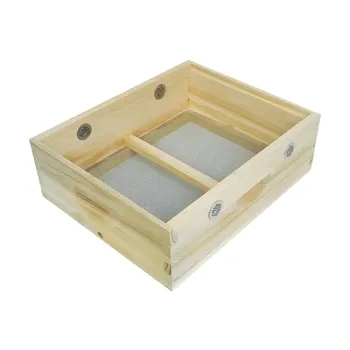
The foundation of the system is a durable, standardized box hive compatible with removable frames, supers, inner covers, bottom boards, and roofs.
For commercial operations, consistent dimensions across the product range are essential. Interchangeable components simplify inspections, repairs, inventory management, and expansion.
Brood boxes and honey supers
Brood boxes provide space for the queen and developing colony, while honey supers provide additional storage during nectar flows.
A scalable supply package should include extra supers because insufficient storage space can restrict honey production and encourage swarming.
Removable frames
Frames must fit the hive body accurately and withstand repeated inspection, transport, and extraction.
Strong, precisely assembled frames reduce comb breakage and help maintain clean, reusable comb throughout the production cycle.
Hive stands and covers
Hive stands improve ventilation, reduce ground moisture, and make inspections more practical. Weather-resistant roofs and properly fitted covers protect colonies from rain, heat, and temperature fluctuations.
These components are basic, but poor construction can undermine the performance of an otherwise well-designed hive.
Foundation and Comb-Building Equipment
Wax foundation sheets
Foundation sheets give bees a standardized starting pattern for comb construction. They encourage orderly comb placement and improve compatibility with removable frames.
Foundation also supports more efficient inspections and extraction because the comb is built within a predictable frame structure.
Comb foundation casting molds
A foundation casting mold is essential for apiaries producing their own wax foundation or for suppliers serving local frame-hive operations.
The mold should create sheets with consistent thickness, cell alignment, and dimensions. Durable construction and reliable temperature control improve production consistency.
Foundation embedding tools
Foundation must be securely attached to frames so it remains stable during comb building and honey extraction.
Useful accessories include embedding wheels, wiring tools, frame wiring equipment, and frame assembly fixtures.
Wax handling and storage equipment
Clean wax storage containers, melting equipment, filters, and safe work surfaces help maintain foundation quality.
Separating clean foundation wax from old, contaminated comb is important because wax can accumulate residues and contaminants over time.
Honey Extraction and Quality Equipment
Honey extractors
The honey extractor is the most important harvesting machine in a modern frame-hive operation. It uses centrifugal force to remove honey while preserving the comb.
Extractor selection should match the apiary’s scale, frame type, operating speed, and power availability.
Manual, motorized, and commercial extractors
Manual extractors may suit small apiaries and areas with limited electricity. Motorized radial or tangential extractors improve throughput and reduce labor for commercial operations.
For wholesalers and distributors, offering multiple capacity levels allows customers to upgrade without replacing their entire harvesting system.
Uncapping equipment
Before extraction, the wax cappings must be removed. Uncapping knives, forks, trays, and automated uncapping systems help expose the honey while reducing comb damage.
Commercial apiaries processing large volumes may require heated knives, uncapping machines, or integrated uncapping-and-extraction lines.
Strainers and settling tanks
Food-grade strainers remove wax particles and other visible material from extracted honey. Settling tanks allow air bubbles and fine particles to rise before filling.
These tools improve appearance and consistency without unnecessarily overheating or overprocessing the honey.
Honey pumps and food-grade containers
Pumps, buckets, drums, and storage tanks should be made from suitable food-contact materials and designed for easy cleaning.
Closed, hygienic transfer systems help protect honey from dust, moisture, foreign matter, and accidental contamination.
Refractometers
A honey refractometer helps measure moisture content before storage or packaging. This is a practical quality-control tool because excess moisture can increase the risk of fermentation.
It should be part of the standard equipment package for commercial beekeepers and honey-processing buyers.
Colony Management and Protection Accessories
Protective clothing
Beekeepers need veils, gloves, coveralls, and suitable footwear for safe hive inspections and harvesting.
Reliable protective equipment improves worker confidence and encourages more frequent, responsible colony management.
Smokers and hive tools
A smoker helps manage bee behavior during inspections, while hive tools separate boxes, lift frames, remove burr comb, and clean hive surfaces.
These are low-cost items, but they are indispensable for daily operations and should be included in starter and replacement kits.
Queen management equipment
Queen excluders, marking tools, cages, and suitable queen-handling accessories help beekeepers control brood placement and improve honey-super management.
Queen management is particularly valuable in commercial apiaries where uniform colonies and predictable harvesting schedules matter.
Inspection and record-keeping tools
Frame grips, hive scales, inspection sheets, and digital record systems support better decisions about colony strength, food stores, queen performance, and harvesting readiness.
The value of modern equipment increases when it is paired with consistent monitoring rather than occasional visual checks.
Feed, Water, Pest, and Seasonal Supplies
Feeders and water equipment
Feeders support colonies during nectar shortages, establishment periods, or other nutritional gaps. Clean water sources or waterers can reduce competition and help colonies maintain normal activity near the apiary.
Feeding should be managed carefully so it does not contaminate marketable honey or encourage robbing.
Mite and pest-control equipment
Commercial apiaries need approved mite-control treatments and application equipment suited to local regulations and label instructions.
Pest management should be planned as part of routine hive management, not treated only after colony performance has already declined.
Winterization supplies
Depending on the climate, winterization may require insulation, wind protection, ventilation components, reduced entrances, and suitable food reserves.
The correct package varies by region, so distributors should offer climate-specific options rather than a single universal winter kit.
Replacement hive components
Commercial operations should maintain spare frames, boxes, covers, bottom boards, and other modular components.
Replacement inventory reduces downtime when equipment is damaged, contaminated, or lost during seasonal operations.
Designing a Complete Commercial Supply Package
Match equipment to apiary scale
A small beekeeper may need a few box hives, manual extractors, basic strainers, and hand tools. A commercial apiary may require motorized extraction, larger settling tanks, pumps, foundation production, and standardized replacement parts.
Offering tiered packages makes purchasing simpler while keeping the equipment technically compatible.
Ensure component compatibility
Frames, foundation sheets, supers, extractors, and uncapping tools must match the selected hive dimensions.
Compatibility errors create hidden costs, including frame damage, slow harvesting, poor comb alignment, and unusable inventory.
Prioritize food-contact materials
Any equipment touching extracted honey should be easy to clean and made from appropriate food-grade materials.
Smooth surfaces, minimal crevices, and accessible components reduce sanitation risks and support consistent product quality.
Support local production where practical
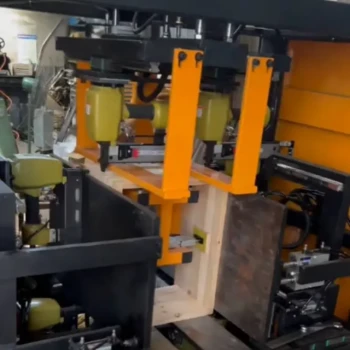
Foundation casting molds and hive-making machinery can help larger operations produce standardized components locally.
This may improve supply continuity and reduce dependence on irregular imports, provided the operation can maintain accurate dimensions and consistent manufacturing quality.
Add service and fulfillment value
For B2B buyers, the product offer should include spare parts, technical guidance, equipment matching, and responsive after-sales support.
Fast order fulfillment is valuable during peak flowering periods, when delays in obtaining supers, frames, or extraction equipment can directly affect the harvest.
Understanding the Trade-offs
Higher investment versus lower operating waste
Modern hives, extractors, molds, and processing tools require more initial capital than traditional hive systems.
The investment can be justified when reusable comb, improved inspection, lower harvesting damage, and higher throughput reduce long-term operating costs.
Equipment efficiency versus maintenance requirements
Motorized extractors and processing systems increase capacity but introduce motors, controls, seals, and other components that require maintenance.
Buyers should evaluate local repair capability, spare-part availability, power reliability, and warranty support before selecting advanced machinery.
Standardization versus local flexibility
Standardized frames and hive bodies improve interchangeability and efficiency. However, they may require local producers to modify traditional woodworking methods or adopt new manufacturing tolerances.
A transition plan should include training, sample units, and quality checks before large-scale production.
More equipment does not replace good husbandry
A high-quality extractor cannot compensate for weak colonies, poor queen management, inadequate forage, or uncontrolled pests.
The equipment package should therefore be accompanied by practical operating guidance and a management schedule.
Poor hygiene can reduce honey quality
Even modern extraction equipment can produce poor-quality honey if frames, containers, strainers, or storage tanks are dirty or exposed to moisture.
Cleaning procedures, dry storage, and moisture testing are essential parts of the upgrade.
Making the Right Choice for Your Goal
The best purchasing decision is a compatible, scalable package rather than a collection of unrelated products.
- If your primary focus is maximizing honey yield: Prioritize standardized box hives, removable frames, additional honey supers, quality foundation, and a non-destructive extractor that matches your production volume.
- If your primary focus is improving honey quality: Add food-grade extraction and storage equipment, strainers, settling tanks, hygienic containers, and a honey refractometer.
- If your primary focus is reducing operating costs: Consider foundation casting molds, hive-making machinery, reusable frames, and locally serviceable extraction equipment.
- If your primary focus is commercial scalability: Standardize hive dimensions and build a complete package with motorized extraction, uncapping equipment, pumps, replacement components, and technical support.
- If your primary focus is colony health: Include protective gear, smokers, hive tools, feeders, waterers, mite-control supplies, queen-management accessories, and climate-appropriate winterization materials.
- If your primary focus is distribution and resale: Offer tiered equipment packages, ensure cross-product compatibility, maintain spare-part availability, and provide rapid fulfillment during peak beekeeping seasons.
A successful transition combines the right hive design with the right harvesting, management, quality-control, and supply-support systems.
Summary Table:
| Category | Essential Equipment | Purpose |
|---|---|---|
| Core Hive Components | Box hives, supers, frames, covers, stands | Standardized housing for colony management and expansion |
| Foundation & Comb Building | Wax foundation sheets, casting molds, embedding tools | Guide bees to build uniform, reusable comb |
| Extraction & Processing | Honey extractors, uncapping tools, strainers, settling tanks, refractometers | Non-destructive honey harvesting and quality control |
| Protection & Management | Protective clothing, smokers, hive tools, queen management | Safe and efficient hive inspections and colony control |
| Feed, Pest & Seasonal | Feeders, waterers, pest control, winterization | Year-round colony health and survival |
| Commercial Support | Spare parts, technical guidance, rapid fulfillment | Operational continuity and B2B reliability |
Upgrade your apiary with HONESTBEE's comprehensive range of beekeeping equipment. From hive-making machinery to honey extractors, we provide everything you need for maximum yield and quality. For distributors and commercial apiaries, we offer tiered packages, OEM/ODM support, certified quality, and ultra-fast delivery. Contact us today to build your customized solution and secure your supply chain! Get in touch now.
Related Products
- High-Efficiency Pneumatic Bee Hive Making Machine for Rapid Box Assembly
- Automatic High-Speed Bee Hive Box Stapling Machine
- Steel Round Disc Entrance Reducer for Flexzion Bee Hive Nuc Box Gate
- Ergonomic Two Person Foldable Hive Lifter
- Langstroth Honey Bee Box Hive Boxes for Different Depths
People Also Ask
- How does the introduction of professional beehive-making machinery benefit sustainable beekeeping? Scale Your Apiary
- Why is specialized beehive-making machinery critical for low-defense breeding? Enhance Selection with Precision Tools
- How does the introduction of specialized beehive making machinery contribute to increasing the scale of regional beekeeping industries?
- What is the importance of specialized beehive making machinery in a circular bio-economy? Build Local Sustainability
- Why is specialized beehive-making machinery essential? Scale Your Apiary with Precision Industrial Standards