For a new apiary, the essential kit is protective clothing plus a smoker and durable hive tools. At minimum, equip each beekeeper with a full bee suit or jacket with a secure veil, sting-resistant gloves, protective boots, a good-sized smoker with bellows, and one or more heavy-duty hive tools for separating boxes, lifting frames, and scraping wax or propolis.
Core takeaway: Prioritize complete sting protection and reliable hive-opening tools before adding specialized equipment. A standardized, commercial-grade starter set improves safety, simplifies purchasing, and supports consistent hive inspections across beginner, educational, and production apiaries.
Build the Essential Protective Clothing Set
Full Bee Suit or Protective Jacket
A full-body bee suit provides the most comprehensive protection during inspections, transfers, honey harvesting, and work with defensive colonies.
For routine checks, an appropriately fitted vented bee jacket may offer better mobility, but it leaves the lower body dependent on separate trousers and footwear. Full suits are generally the safer baseline for beginners, staff, and educational programs.
Secure Veil and Hood
The face and neck require particular attention because stings in these areas can cause serious injury and quickly compromise a beekeeper’s confidence.
Choose a zip-up hood or integrated veil that remains securely attached to the suit. A brimmed hat or structured hood helps keep mesh away from the face, while properly sized veils are important when equipping multiple users.
Protective Gloves
Use heavy-duty beekeeping gloves with long gauntlets extending well up the forearm. The extended cuff helps close the gap between gloves and sleeves, reducing opportunities for bees to enter the clothing.
Gloves should provide sting resistance without making it impossible to grip frames or manipulate hive components. Experienced beekeepers may sometimes use lighter gloves or bare hands for dexterity, but beginners and commercial operators should start with reliable protective gloves.
Protective Boots
Wear sturdy, closed protective boots, commonly gumboots or similar footwear, to protect the feet and ankles.
Boots should overlap the trouser legs or suit cuffs so bees cannot crawl up the legs. Secure footwear is especially important when walking through grass, moving hive equipment, or working around colonies that are disturbed.
Equip the Essential Apiary Hand Tools
Heavy-Duty Hive Tools
A metal hive tool is the primary hand tool for apiary maintenance. It provides leverage for breaking propolis seals, separating hive bodies, loosening inner covers, and detaching frames that bees have fixed together.
The tool should also include a scraper or sharpened edge for removing excess wax and propolis. Because hive tools are frequently misplaced or used simultaneously by multiple workers, maintaining several tools is practical for both small and commercial apiaries.
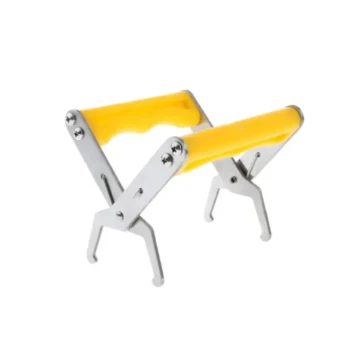
Frame Lifter
A frame lifter can make it easier to raise and inspect frames, particularly when frames are tightly packed or heavily propolized.
It is not always necessary for basic hive management, but it becomes useful when reducing strain, training new beekeepers, or standardizing equipment for teams conducting repeated inspections.
Bee Brush
A bee brush helps remove bees gently from frames, hive edges, or equipment when necessary.
It is a useful supporting tool for inspections and harvesting, but it should not replace careful handling. Excessive brushing can disturb bees, so it is best used selectively.
Include the Smoker as Essential Handling Equipment
Smoker with Strong Bellows
A good-sized bee smoker with a reliable manual bellows is essential when opening active colonies. Cool smoke temporarily disrupts the colony’s alarm communication, allowing the beekeeper to remove covers and inspect frames more safely.
Select a model with a protective wire grid or heat guard around the canister. This reduces the risk of burns when the hot smoker is carried or placed near other equipment.
Fuel and Safe Operation
The smoker must produce cool, controlled smoke rather than excessive heat or flames. Natural materials such as pine needles or suitable rotted wood are commonly used, provided they burn safely and do not produce harmful contaminants.
Operators should be trained to light, carry, place, and extinguish the smoker safely. The smoker is a handling aid, not a substitute for protective clothing or sound colony-management practices.
Match Equipment to the Apiary’s Users
Beginners and Educational Programs
Beginners, children, and visitors should receive appropriately sized full protective suits, secure veils, gloves, and boots before entering the apiary.
Standardized sizing and simple, reliable equipment reduce fitting errors and improve confidence. Training should begin with low-risk observation or supervised work rather than immediately opening large production colonies.
Commercial and Multi-Site Operations
Commercial apiaries benefit from durable, standardized equipment that can be replaced and replenished quickly.
A practical distributor or reseller package can include multiple hive tools, commercial-grade smokers, spare veils, replacement gloves, and several suit sizes. This supports rapid order fulfillment and avoids operational delays caused by missing or damaged safety equipment.
Routine Versus Higher-Risk Work
Lighter jackets may be suitable for experienced operators performing routine inspections in calm colonies. Full suits, long-gauntlet gloves, and complete footwear protection remain the better choice for beginners, night transfers, swarm work, transport, or defensive colonies.
The correct specification should reflect the task, colony temperament, operator experience, and site conditions.
Understanding the Trade-offs
Maximum Protection Versus Dexterity
Thicker gloves and full suits provide stronger sting protection but can reduce tactile control and increase heat buildup.
Thin gloves or lighter jackets improve dexterity and ventilation, but they provide less protection and require greater experience. For a new apiary, prioritize coverage first and introduce lighter equipment only when users understand the risks.
Standardization Versus Individual Fit
Buying one universal size may simplify inventory, but poorly fitting suits and veils can create exposed gaps or restrict movement.
For B2B and educational customers, stocking a range of suit, glove, boot, and veil sizes is more reliable than treating protective clothing as a one-size-fits-all product.
Low-Cost Tools Versus Service Life
Inexpensive hive tools and smokers may reduce initial purchasing costs, but weak metal, poor welds, or unreliable bellows can cause failures during hive work.
Commercial-grade tools generally provide better leverage, durability, and consistency. This is particularly important for distributors supplying professional beekeepers or customers managing multiple apiary sites.
Protective Gear Does Not Eliminate Operational Risk
Protective clothing reduces sting exposure but does not guarantee safety. Smoke must be used carefully, colonies must be approached calmly, and operators should follow appropriate local safety and apiary-placement requirements.
Protective equipment should therefore be supplied as part of a complete operating approach, including fitting guidance, smoker training, and supervised first inspections.
How to Apply This to Your Apiary
The following purchasing priorities help distributors, resellers, and beekeepers build a dependable starter inventory:
- If your primary focus is beginner safety: Supply full bee suits with secure veils, long-gauntlet gloves, protective boots, a smoker, and at least one durable hive tool per operator.
- If your primary focus is commercial efficiency: Stock multiple heavy-duty hive tools, reliable smokers, replacement protective wear, and standardized sizes for fast deployment across teams and apiary sites.
- If your primary focus is education or public demonstrations: Provide correctly fitted suits and veils in multiple sizes, plus supervised smoker use and simple frame-handling tools.
- If your primary focus is routine inspections: Combine a vented protective jacket or full suit with gloves, boots, a hive tool, and a smoker matched to the colony and operator’s experience.
- If your primary focus is one-stop sourcing: Build a complete product range covering protective apparel, smokers, hive tools, frame lifters, bee brushes, and replacement components with responsive fulfillment support.
A well-equipped apiary starts with reliable protection, safe smoke handling, and durable tools that make every hive inspection controlled and repeatable.
Summary Table:
| Equipment Category | Essential Items | Key Features |
|---|---|---|
| Protective Clothing | Full bee suit or jacket | Comprehensive sting protection, secure veil, breathable fabric |
| Gloves | Long gauntlets, sting-resistant, flexible | |
| Boots | Sturdy, closed-toe, overlap trousers | |
| Veil/Hood | Securely attached, mesh visibility | |
| Hand Tools | Hive tool | Durable metal, leverage, scraper edge |
| Frame lifter | Assists in lifting frames, reduces strain | |
| Bee brush | Gentle removal of bees from surfaces | |
| Smoker | Smoker with bellows | Produces cool smoke, protective grid, reliable bellows |
Equip your apiary with top-quality protective gear and tools from HONESTBEE. As a comprehensive wholesaler for commercial apiaries and distributors, we supply the full spectrum of beekeeping essentials, from suits and smokers to hive tools and machinery. Benefit from rapid response, dedicated service, and ultra-fast delivery. For distributors, we offer OEM/ODM support, certifications, and reliable supply to boost your profit margins. Contact us today to build a safer, more efficient apiary.
Related Products
- Professional Grade Foldable Beehive Handles
- HONESTBEE Professional Long Handled Hive Tool with Precision Cutting Blade
- Professional 600D Oxford Cloth Beekeeping Tool Bag with 8 Pockets and Elastic Loops
- HONESTBEE 15-in-1 Beekeeper Multi-Tool with Hammer and Pliers for Beekeeping
- HONESTBEE Premium Italian Style Hive Tool with Hardwood Handle
People Also Ask
- How do bee hive handles facilitate the evaluation of food stores? Use the Lift Test for Winter Survival
- How do the geometry and dimensions of hive handles influence operational safety and control? Expert Design Insights
- What is a bee hive tool? Discover Why It’s the Most Essential Hand Tool for Every Beekeeper
- What are the common sizes and features of bee hive tools? Choose the Right Tools for Your Apiary
- What is the role of professional hive tools in routine apiary maintenance? Expert Tips for Hive Health and Longevity