The natural crystallization of honey is primarily driven by its specific sugar composition and storage temperature. While often mistaken for spoilage, this process is governed by the ratio of glucose to water; specifically, honey with a glucose content exceeding 28% will crystallize rapidly, whereas honey below this threshold typically remains liquid.
Crystallization is a harmless, natural transition from liquid to a semi-solid state, usually triggered by moisture loss and specific temperature windows. It does not indicate a reduction in quality or flavor.
The Chemistry of Crystallization
Glucose Concentration
The primary determinant of whether your honey solidifies is its glucose content.
Honey is a supersaturated sugar solution. When the glucose level is above 28%, the sugar molecules struggle to remain dissolved, leading to rapid crystallization. Conversely, lower glucose varieties tend to stay in a liquid state for much longer.
Moisture and Aging
As raw honey ages, it naturally loses moisture.
This reduction in water content increases the concentration of sugars relative to the remaining liquid. This shift in saturation creates the perfect environment for crystals to precipitate and grow.
The Role of Environment
The Optimal Temperature Window
Temperature is the external switch for this process.
Research indicates that a stable environment of 14°C (57°F) is the optimal window for crystallization. In this specific low-temperature range, water activity and sugar saturation are perfectly balanced to accelerate crystal growth.
Static Conditions
Movement—or the lack thereof—impacts the structure of the honey.
In a static environment free from temperature fluctuations, honey forms large, irregular solid crystal networks. This occurs naturally according to kinetic laws, provided there is no mechanical intervention to disrupt the lattice formation.
Identifying Natural Crystallization
Visual Changes
You can identify crystallized honey by a distinct shift in color.
Because sugar crystals reflect more light than liquid syrup, crystallized honey often appears lighter in color and more opaque than its original liquid form.
Flavor Impact
Despite the dramatic change in texture, the chemical integrity of the honey remains intact.
Crystallization generally has little effect on the actual flavor profile. However, the physical change on the palate can sometimes result in a slightly increased perception of sweetness.
Understanding the Trade-offs
Texture vs. Pourability
The most immediate trade-off of natural crystallization is a loss of convenience.
While the honey remains safe to eat, the transition to a semi-solid state makes it difficult to pour or spread. This is a mechanical inconvenience, not a safety issue.
The "Spoilage" Myth
A common pitfall is discarding crystallized honey under the assumption that it has gone bad.
It is critical to understand that crystallization is not spoilage. It is a sign of natural, raw honey responding to its environment. The quality is preserved, even if the physical state has altered.
Managing Honey Consistency
Depending on your needs, you can manage or reverse this natural process using the following guidelines:
- If your primary focus is restoring liquid consistency: Gently warm the honey container in a water bath to dissolve the crystals without damaging the honey.
- If your primary focus is scientific observation: Maintain a constant temperature of 14°C in a static environment to observe the natural formation of crystal networks.
- If your primary focus is predicting shelf stability: Check the glucose specifications; honey with less than 28% glucose is your best bet for maintaining a liquid state naturally.
Understanding that crystallization is a function of chemistry, not age, allows you to utilize honey effectively regardless of its physical state.
Summary Table:
| Factor | Influence on Crystallization | Impact Summary |
|---|---|---|
| Glucose Content | High (>28%) | Rapidly triggers crystal formation |
| Moisture Level | Low/Decreasing | Increases sugar concentration; speeds up process |
| Temperature | 14°C (57°F) | Optimal window for accelerated crystal growth |
| Environment | Static/Undisturbed | Leads to large, irregular crystal networks |
| Visual Appearance | Lightened Color | Opaque crystals reflect more light than liquid |
Scale Your Beekeeping Business with HONESTBEE
Understanding honey chemistry is just the beginning. At HONESTBEE, we empower commercial apiaries and honey distributors with the professional tools needed to manage honey quality at scale.
Whether you need specialized honey-filling machines to handle various viscosities, industrial hive-making machinery, or a reliable wholesale supply of beekeeping consumables, we provide the full spectrum of equipment to optimize your production. From hardware to honey-themed cultural merchandise, our portfolio is designed to grow your brand and efficiency.
Ready to elevate your wholesale beekeeping operations? Contact us today to explore how our comprehensive equipment solutions can benefit your business!
Related Products
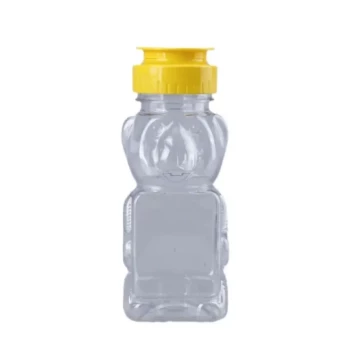
- Classic Honey Bear Jars with Flip Top Dispensing Cap for Liquid Sweeteners
- Economy Small Scale Honey Dryer Dehumidifier Thickening Machine
- Professional Plastic Honey Dipper for Easy Honey Drizzling
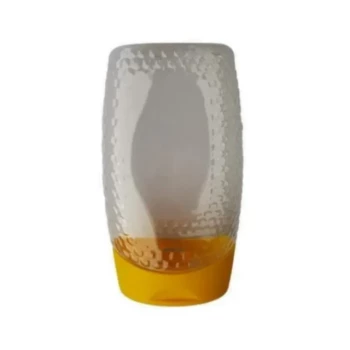
- Inverted Squeezable Honey Jar with No Drip Flip Top Cap for Easy Pouring
- Precision Honey Refractometer Instrument for Quality Assessment
People Also Ask
- What food safety standards must honey containers meet? Expert Guide to Packaging Integrity & Hygiene
- Why is it important to distinguish between weight and volume when selecting honey containers? Maximize Profits Now
- What are the benefits of purchasing honey containers in bulk? Maximize Margins & Secure Your Supply Chain
- What should be considered when choosing a container for honey to ensure effective sealing? Master Honey Packaging Success
- What is the best container to store honey in? Preserve Purity & Flavor for Years