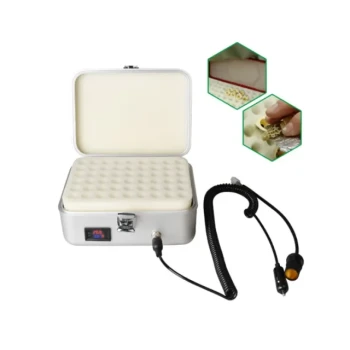
The honey bee instrumental insemination device functions as the primary hardware control for ensuring genetic accuracy in breeding programs. By mechanically performing Single-Drone (SDI) or Multi-Drone Insemination (MDI), the device eliminates the randomness of natural mating. This precise control over parentage allows researchers to generate the accurate pedigree data required to calculate high-confidence heritability parameters ($h^2$) for resistance traits.
By removing interference from unknown drones, instrumental insemination transforms the mating process into a controlled experiment. This creates the reliable data inputs necessary for mixed linear models, enabling breeders to mathematically prove whether resistance traits like Suppressed Mite Reproduction (SMR) are genetic or environmental.
Establishing a Controlled Genetic Environment
Eliminating Natural Interference
In natural settings, queens mate with multiple drones of varying and often unknown origins. This introduces "genetic noise" that makes it nearly impossible to trace specific traits back to a specific parent.
The instrumental insemination device solves this by allowing breeders to bypass natural mating flights. It serves as a substitute for geographic isolation, such as islands or mountain valleys, which are traditionally required to control breeding.
Precision in Paternal Contribution
Using this equipment, a technician can inject a specific mix of drone semen into a queen. This creates offspring with known, specific paternal lineages (patrilines).
Whether using Single-Drone Insemination (SDI) or Multi-Drone Insemination (MDI), the breeder dictates exactly which genetic lines are combined. This capability is the foundation for establishing a known pedigree.
The Link Between Hardware and Heritability Mathematics
Creating Accurate Pedigrees
Heritability calculations are only as good as the family tree data fed into them. If the father is unknown, the calculation is an estimate at best.
The instrumental insemination device provides the physical means to document parentage with 100% certainty. This creates a meticulous pedigree record, ensuring that the genetic inputs being analyzed are factual rather than assumed.
Enabling Mixed Linear Models
To calculate the heritability parameter ($h^2$), researchers typically use statistical frameworks known as mixed linear models. These models separate genetic factors from environmental factors.
Because the device ensures the pedigree is accurate, the resulting statistical output is "high-confidence." This allows breeders to quantify complex resistance traits, such as Recapping (REC) or Suppressed Mite Reproduction (SMR), and predict how effectively they will pass to the next generation.
Understanding the Trade-offs
High Barrier to Entry
While scientifically superior to open mating, instrumental insemination is resource-intensive. It requires specialized, costly hardware, including high-quality microscopes, capillary tubes, and handmade glass needles.
Operational Complexity
The process is not automated. It requires a high degree of technical skill to manipulate the insemination instrument and handle the delicate glass needles without injuring the queen.
Making the Right Choice for Your Goal
To determine if instrumental insemination is necessary for your specific objectives, consider the following:
- If your primary focus is calculating heritability: You must use instrumental insemination to establish the controlled pedigree required for statistical accuracy in mixed linear models.
- If your primary focus is production efficiency: You might utilize this technology to avoid the logistical costs and risks associated with transporting colonies to isolated mating stations.
By replacing environmental chance with mechanical precision, instrumental insemination devices provide the data integrity needed to breed stronger, more resistant honey bee populations.
Summary Table:
| Feature | Natural Mating | Instrumental Insemination |
|---|---|---|
| Paternal Control | Random/Unknown | 100% Controlled (SDI/MDI) |
| Pedigree Accuracy | Low (Estimated) | High (Verified) |
| Primary Use Case | Commercial Production | Genetic Research & Breeding |
| Data Reliability | Prone to Genetic Noise | Ideal for Mixed Linear Models |
| Required Setup | Isolated Mating Stations | Specialized Hardware & Lab |
Elevate Your Breeding Precision with HONESTBEE
At HONESTBEE, we empower commercial apiaries and distributors with the high-precision tools necessary for advanced genetic research. Our comprehensive wholesale catalog includes professional-grade honey bee instrumental insemination devices, specialized glassware, and honey-filling machinery designed to streamline your operations.
Whether you are a researcher calculating heritability parameters for Varroa resistance or a distributor supplying the latest in apiculture technology, our portfolio of hardware and essential industry consumables is built to meet your specific needs. Contact us today to explore our full spectrum of beekeeping tools and equipment—let's build stronger, more resilient bee populations together.
References
- Martin Gabel, Ralph Büchler. Heritability of Apis mellifera recapping behavior and suppressed mite reproduction as resistance traits towards Varroa destructor. DOI: 10.3389/finsc.2023.1135187
This article is also based on technical information from HonestBee Knowledge Base .
Related Products
- Queen Bee Artificial Insemination Instrument Equipment for Instrumental Insemination
- Stainless Steel Beekeeping Queen Grafting Tool for Honey Bee Rearing
- Plastic Beekeeping Honey Bee Larvae Grafting Tools for Queen Rearing and Chinese Grafting
- European Stainless Steel Bee Smoker for Honey Bee Hive
- Galvanized Beekeeping Smoker for Honey Bee and Apiculture
People Also Ask
- Why is maintaining sanitary conditions important during artificial insemination? Protect Your Queen from Fatal Infections
- Why are artificial insemination instruments critical in bee hybridization? Master Genetic Control & Pure Breeding
- What is the core value of bee artificial insemination instruments in breed improvement? Achieve Precise Genetic Control
- Why is professional bee artificial insemination equipment considered a core tool for genetic control in honeybee breeding? Ensure 100% Purity
- Why is high-purity CO2 used for queen bee artificial insemination? Unlock Precision Breeding & Faster Egg-Laying