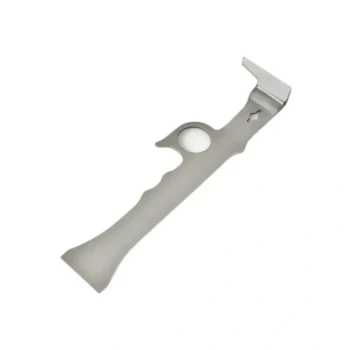
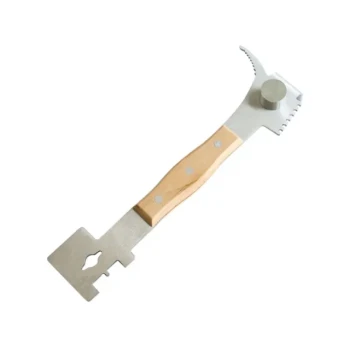
Professional beekeeping tools serve as the material foundation for modern agricultural stability by enabling the scientific management of pollinator populations. These specialized instruments and facilities allow technicians to preserve colony health, ensuring consistent pollination performance that directly results in increased crop yields and stabilized livestock feed supplies.
The Core Connection Professional tools transform beekeeping from a passive activity into a precise agricultural service. By ensuring the survival and efficiency of managed colonies, this equipment secures the pollination link necessary for food security, compensating for the decline in wild pollinator populations.
The Role of Tools in Colony Health
The primary function of professional beekeeping equipment is to maintain the vitality of the workforce—the bees themselves. Without healthy colonies, effective pollination is impossible.
Scientific Maintenance
Professional tools provide the physical means to move beyond traditional methods toward scientific colony management. They enable technicians to perform precise interventions that preserve the health of the hive. This creates a stable population capable of performing agricultural tasks consistently.
Environmental Protection
Modern hive systems function as a shield against external threats. They provide necessary breeding spaces that protect colonies from adverse weather conditions and chemical exposures, such as agricultural pesticides. This protection ensures a sufficient population survives to facilitate crop reproduction during critical flowering windows.
Scaling Pollination for Agriculture
To support food security on a global scale, beekeeping must operate efficiently at high volumes. Professional tools are the key drivers of this scalability.
Standardization and Efficiency
Standardized beehives and matching tools significantly reduce labor intensity compared to traditional models. This efficiency allows beekeepers to manage larger numbers of colonies effectively. It ensures that high-intensity pollination services can be delivered exactly when crops like rapeseed and fruit trees are flowering.
Impact on Crop Quality
The application of these tools correlates directly with agricultural output. By maintaining strong colonies, beekeepers ensure higher fruit set rates and superior seed yields. The result is not just more food, but higher quality produce with fuller fruit shapes due to successful cross-pollination.
Mobility and Strategic Deployment
Food security often relies on moving pollinators to where they are needed most. Professional equipment turns static hives into mobile agricultural units.
Precision Deployment
Mobile beekeeping equipment allows for the precise placement of colonies in orchards or fields, such as coffee or corn plantations. This capability is vital for addressing shortages in wild pollinators. By increasing pollination coverage in specific areas, these tools enhance the cost-effectiveness of large-scale farming.
Stress Reduction During Transport
Specialized transport vehicles are designed to maintain optimal ventilation and temperature during long-distance relocation. This minimizes stress on the bees, ensuring they arrive at the field ready to work. This leads to uniform flower visitation rates and stabilizes yields in pastoral agriculture.
Understanding the Operational Context
While professional tools are powerful, they function within a complex ecological and technical context. Understanding these nuances is critical for success.
Dependence on Managed Colonies
As wild honeybee populations decline due to threats like Varroa destructor infestations, agriculture has become increasingly dependent on managed colonies. Professional tools are no longer optional; they are essential for maintaining the high colony densities required to stabilize yields in the absence of wild pollinators.
The Necessity of Technical Expertise
Equipment alone does not guarantee results. High-performance tools achieve their full potential only when paired with standardized operating procedures. Institutional support and technical training are required to ensure beekeepers can effectively operate modern hives and pest control equipment.
Making the Right Choice for Your Goal
Selecting the right tooling strategy depends on your specific agricultural objectives.
- If your primary focus is maximizing crop yield: Prioritize mobile beekeeping equipment and transport systems to ensure high pollination coverage and precise deployment during peak flowering.
- If your primary focus is colony sustainability: Prioritize standardized hive systems and protection tools to shield bees from weather and chemical stress, ensuring long-term population health.
By integrating these professional tools, agricultural operations secure the biological engine—the honeybee—that drives the world's food production.
Summary Table:
| Tool Category | Primary Function | Impact on Food Security |
|---|---|---|
| Standardized Hives | Scientific colony housing & protection | Ensures stable pollinator populations against weather/pests |
| Mobile Equipment | Precise deployment & relocation | Maximizes fruit set rates through targeted field placement |
| Maintenance Tools | Health monitoring & pest control | Prevents colony loss to maintain pollination service continuity |
| Specialized Transport | Temperature & ventilation control | Reduces bee stress during transit to ensure pollination efficiency |
Secure Your Agricultural Future with HONESTBEE
As the decline in wild pollinators threatens global food systems, HONESTBEE empowers commercial apiaries and distributors with the professional machinery and tools needed to stabilize crop yields.
Our comprehensive wholesale portfolio includes everything from specialized hive-making and honey-filling machines to essential industry consumables and cultural merchandise. Partner with us to provide your customers with the equipment required for large-scale, efficient pollination services that drive agricultural success.
Ready to scale your beekeeping operations?
Contact HONESTBEE Today for Wholesale Solutions
References
- Alla Chmil. MODELING OF THE BEEKEEPING SECTOR BY USING THE AGMEMOD MODEL FOR UKRAINE. DOI: 10.32782/2415-8801/2019-6.37
This article is also based on technical information from HonestBee Knowledge Base .
Related Products
- Professional 600D Oxford Cloth Beekeeping Tool Bag with 8 Pockets and Elastic Loops
- HONESTBEE Professional Mini J-Hook Hive Tool for Beekeeping
- Double Head Beekeeping Grafting Tools for Beekeepers
- HONESTBEE 15-in-1 Beekeeper Multi-Tool with Hammer and Pliers for Beekeeping
- Professional Stainless Steel J-Hook Hive Tool
People Also Ask
- What is the recommended method for storing beekeeping tools? Expert Vertical Storage Solutions for Your Apiary
- How does a favorable microclimate interact with beekeeping tools? Boost Overwintering Success and Equipment Longevity
- Why is the treatment of beekeeping tools with high-concentration chemical disinfectants necessary for preventing AFB?
- Proper Beekeeping Tools and Regular Hive Maintenance: How to Mitigate Pest Infestations and Colony Instability?
- How does the genetic identification of honeybee populations influence the selection of beekeeping tools? Precision Gear Guide