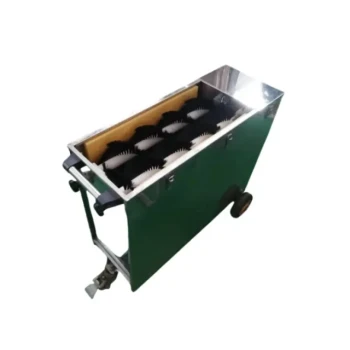
To effectively integrate bee pollen into Hazard Analysis and Critical Control Point (HACCP) systems, automated hardware must function as a continuous auditor, recording real-time data at every Critical Control Point (CCP) across production, storage, and processing. This technology is mandatory for establishing absolute traceability of raw material sources and enabling immediate, dynamic adjustments to control procedures in response to environmental variables.
Automated monitoring transforms bee pollen safety from a reactive process to a proactive one. By capturing granular data at every stage, this technology ensures compliance with rigorous food safety standards and mitigates the unique risks of environmental contamination inherent to bee products.
Core Functions of Monitoring Hardware
Real-Time Data Recording
The primary function of the hardware is the continuous capture of data during active operations. This applies across the entire lifecycle, including initial production, long-term storage, and final processing.
Capturing Critical Control Points (CCPs)
The hardware must be integrated specifically at identified Critical Control Points. These are the stages in the process where control can be applied and is essential to prevent or eliminate a food safety hazard.
Establishing Source Traceability
Beyond internal processing, the hardware must maintain a digital thread back to the raw material source. This function ensures that the origin of the bee pollen is verifiable, a crucial requirement for supply chain transparency.
Managing Quality and Contamination
Addressing Environmental Susceptibility
Bee pollen is highly sensitive to environmental factors and contamination. The monitoring hardware must function to detect conditions that could compromise the biological integrity of the pollen.
Facilitating Dynamic Adjustments
The hardware should not act as a passive recorder only. It must provide the data necessary to allow operators to make dynamic adjustments to control procedures.
Securing Stability in Supply Chains
By enabling real-time reactions to data, the system helps secure the safety and quality stability of the final product. This is particularly vital for bee pollen derivative products moving through complex food supply chains.
Understanding the Challenges
Implementation Complexity
While automated monitoring significantly enhances safety, it introduces technical complexity. Integrating sensitive hardware into rugged agricultural or processing environments requires careful calibration to ensure data accuracy.
Reliance on Data Interpretation
The hardware is only as effective as the protocols driving it. If the parameters for "dynamic adjustments" are not defined correctly in the HACCP plan, the real-time data cannot effectively prevent quality loss.
Implementing Traceability for Safety and Quality
To successfully deploy this technology, you must align hardware capabilities with specific HACCP goals.
- If your primary focus is Regulatory Compliance: Ensure your hardware provides immutable, real-time logs for every Critical Control Point (CCP) identified in your safety plan.
- If your primary focus is Product Quality: Prioritize systems that offer immediate alerts or automated control adjustments to counteract environmental fluctuations during storage.
Automated traceability is the bridge that allows a sensitive raw material like bee pollen to meet the rigorous demands of modern food safety standards.
Summary Table:
| Core Hardware Function | Role in HACCP System | Impact on Bee Pollen Safety |
|---|---|---|
| Real-Time Data Recording | Continuous Auditing | Eliminates manual errors & reactive monitoring |
| CCP Integration | Critical Hazard Control | Prevents environmental contamination at source |
| Source Traceability | Digital Supply Chain Thread | Guarantees raw material origin and transparency |
| Dynamic Adjustments | Proactive Mitigation | Maintains biological integrity during fluctuations |
| Stability Monitoring | Quality Assurance | Ensures product safety for complex supply chains |
Scale Your Bee Pollen Production with HONESTBEE Professional Solutions
At HONESTBEE, we understand that commercial apiaries and distributors require more than just tools—they need precision. Our comprehensive wholesale offering includes everything from industrial hive-making and honey-filling machinery to high-quality consumables designed to meet rigorous food safety standards.
Why partner with HONESTBEE?
- Advanced Machinery: Enhance your traceability and HACCP compliance with our specialized processing equipment.
- Full Spectrum Supply: We provide beekeeping tools and hardware tailored for large-scale operations.
- Wholesale Expertise: We cater to global distributors with reliable, high-volume manufacturing capabilities.
Ready to elevate your beekeeping enterprise or distribution network? Contact us today to discuss how our portfolio can streamline your path to safety and quality compliance.
References
- Slovak University of Agriculture in Nitra AgroBioTech Research Centre, Independent Research Institution Ukrainian Science Hub. INTEGRATION OF BIOCHEMICAL CHARACTERISTICS OF POLLEN INTO FOOD SAFETY STANDARDS. DOI: 10.64378/iriush.sc.2025.1.16
This article is also based on technical information from HonestBee Knowledge Base .
Related Products
- 30 cm Plastic Entrance Hole Bee Pollen Trap and Collector
- Plastic Bee Pollen Trap Strips Comb Catcher Collector
- Removable Plastic Pollen Trap With Ventilated Tray for Bees Pollen Collector
- Queen Bee Artificial Insemination Instrument Equipment for Instrumental Insemination
- Stainless Steel Pollen Shovel with Wooden Handle
People Also Ask
- What are the design principles and advantages of pollen traps in the collection of bee pollen? Boost Your Apiary Yield
- Why is frequent harvesting of bee pollen from traps necessary for quality control? Ensure Freshness and Prevent Mold.
- How often should bee pollen be harvested from a trap and why? Master Freshness and Prevent Spoilage
- What function do pollen traps serve in quantitative collection? Boost Your Apiary's Data & Production Efficiency
- What is the primary function of bee pollen traps? Optimize Your Pollen Harvest with Advanced Extraction Efficiency