For international bulk honey exports, an apiary needs a hygienic, integrated line—not just an extractor. The core machinery includes a motorized uncapping system, centrifugal honey extractors, cappings-processing equipment, multi-stage filtration, settling and storage tanks, moisture-control equipment where required, sanitary pumps, and bulk filling and packaging machinery. The complete setup must protect honey purity, control moisture and contamination, support traceability, and handle export-volume production consistently.
The essential export workflow is: receive and uncap frames, extract honey centrifugally, filter and settle it, control moisture when necessary, store it hygienically, and fill it into compliant bulk containers. Equipment supports compliance, but the apiary must also operate documented hygiene, quality-control, traceability, and food-safety procedures.
Build the Processing Line Around the Harvest Flow
1. Frame Receiving and Uncapping Equipment
Harvested supers or frames need a clean receiving area and dedicated handling equipment before extraction. Specialized honey supers, frame carts, conveyors, and stainless-steel receiving surfaces help separate incoming raw material from processed honey.
A motorized or automated uncapping machine removes wax cappings efficiently and presents the combs for extraction. For smaller operations, heated uncapping knives and uncapping trays may be sufficient, but high-volume exporters generally benefit from mechanized systems.
2. Industrial Honey Extractors
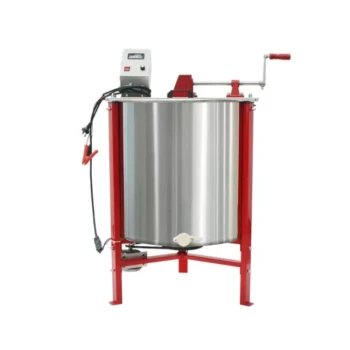
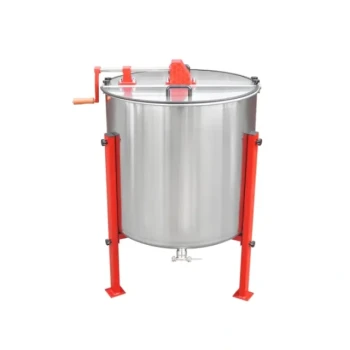
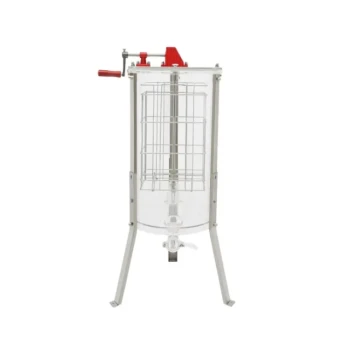
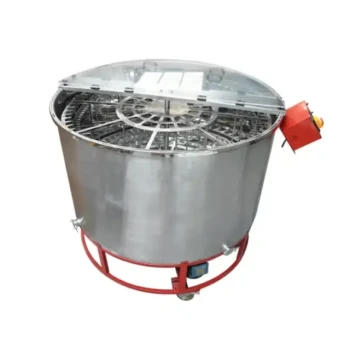
The primary extraction machine is a centrifugal honey extractor. It uses centrifugal force to remove ripened honey from the comb while preserving the wax structure for reuse.
Commercial extractors should be selected according to frame format, batch size, throughput, automation level, and available labor. Radial and tangential configurations are both used; the correct choice depends on the apiary’s frames and production workflow.
3. Cappings Processing Equipment
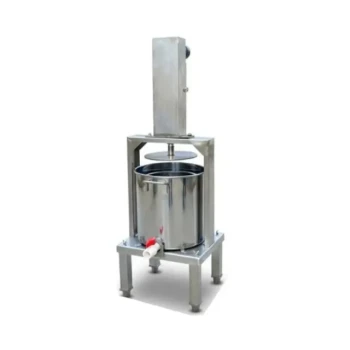
Wax cappings contain recoverable honey and require separate handling. A honey press, cappings spinner, or cappings-processing unit can extract residual honey while allowing the wax to be collected for further use.
This equipment is not always essential for a small operation, but it becomes commercially valuable when minimizing product loss and recovering clean beeswax are important.
Remove Impurities Without Damaging Product Quality
4. Strainers and Multi-Stage Filtration
After extraction, honey typically passes through coarse strainers to remove wax fragments, bee parts, and other visible solids. Export-oriented facilities should use a staged filtration system, rather than relying on a single basic screen.
Filtration should be designed to remove unwanted particulates while avoiding unnecessary processing that could affect the honey’s natural characteristics. Filter mesh selection, pump pressure, temperature, and cleaning procedures all influence performance.
5. Settling and Clarification Tanks
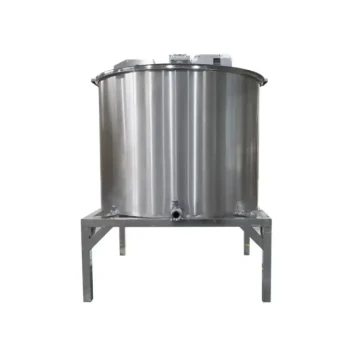
Settling tanks allow fine particles and air bubbles to separate from honey before final storage or filling. Tanks should be appropriately sized for the processing rate and equipped with hygienic outlets and covers.
Settling is especially useful when the apiary needs a stable, visually clean bulk product without forcing every particulate-removal task through fine filtration.
6. Sanitary Pumps, Pipes, and Valves
A continuous export line requires food-grade pumps, sanitary piping, valves, and transfer connections. These components move honey between the extractor, filters, tanks, moisture-control system, and filling station.
The system should minimize dead spaces, leaks, exposed product, and difficult-to-clean connections. Stainless-steel contact surfaces are generally preferred for durability, cleanability, and resistance to corrosion.
Control Moisture and Preserve Export Quality
7. Moisture Measurement and Reduction
Moisture content is a critical quality parameter because excessive moisture can increase fermentation risk and reduce shelf stability. A honey moisture meter or refractometer is therefore essential for batch evaluation, even though it is not itself a processing machine.
Where incoming honey requires correction, the apiary may need a controlled moisture-reduction or dehydration system. This must be operated carefully because excessive heat or prolonged exposure can negatively affect sensory and bioactive characteristics.
Moisture reduction should not be treated as a substitute for harvesting mature, properly capped honey. The strongest process combines good beekeeping practices with controlled post-harvest adjustment.
8. Temperature-Controlled Handling
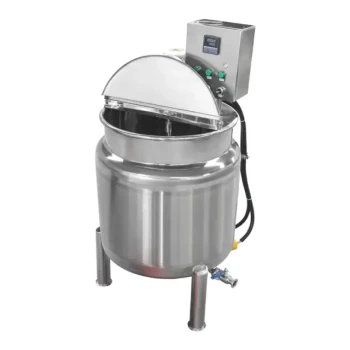
Honey may require gentle warming to reduce viscosity during pumping, filtration, or filling. A temperature-controlled tank or jacketed vessel can improve flow without relying on uncontrolled heating.
The objective is processability while preserving the product’s quality characteristics. Heating practices should be defined in the apiary’s quality system and aligned with the destination market’s requirements.
Prepare Honey for Bulk Export
9. Hygienic Storage Tanks
Filtered honey should be held in food-grade bulk storage tanks before shipment. These tanks need secure covers, hygienic outlets, level management, and sufficient capacity to prevent unnecessary transfers between containers.
Storage tanks also support batch segregation, sampling, blending control, and traceability. Each tank should be clearly identified by lot, origin, harvest date, and processing status according to the exporter’s documentation system.
10. Bulk Filling and Packaging Machinery
For international bulk trade, the filling system should be designed for approved bulk containers such as food-grade drums, pails, or larger intermediate bulk containers, depending on the buyer and destination market.
A precision honey filling machine provides consistent weights or volumes and reduces spills and handling contamination. Retail bottling equipment is optional unless the apiary also sells finished consumer packs; it is not the central requirement for bulk export.
11. Container Sealing and Identification
The packaging station should include reliable lids, seals, labels, lot coding, and container identification. Labels and shipping documents must correspond to the actual batch and container contents.
Export readiness depends on more than filling speed. The packaging process must preserve container integrity and make the honey traceable from apiary or supplier lot through shipment.
Support Machinery With Quality-Control Systems
12. Basic Honey Testing Equipment
Processing machinery cannot prove that a batch meets every importing-country requirement. The facility should have tools or laboratory access for parameters such as moisture, appearance, and other buyer- or market-specific quality criteria.
At minimum, the apiary needs a controlled sampling process and calibrated moisture measurement. Depending on the destination, additional laboratory testing may be required for residues, adulteration, microbiological quality, or physicochemical characteristics.
13. Cleaning and Sanitation Equipment
Export facilities need dedicated cleaning tools, wash stations, food-safe cleaning agents, and—where appropriate—a clean-in-place or simplified clean-out system for tanks and pipework.
Sanitation must be documented, scheduled, and verifiable. A stainless-steel machine does not automatically make a process hygienic if operators cannot clean it thoroughly.
14. Traceability and Batch Management
The machinery should support, rather than obstruct, lot separation and records. The apiary must be able to identify the source of the honey, processing date, filtration stage, storage tank, packaging container, and shipment.
This is particularly important for distributors and wholesalers who may require certificates, test reports, specifications, and rapid responses to customer or regulatory inquiries.
Understanding the Trade-offs
Automation Versus Investment
Automated uncapping, extraction, filtration, and filling lines increase throughput and reduce manual labor. They also require greater capital investment, operator training, maintenance, and spare-parts support.
A modular line is often more practical than purchasing maximum capacity immediately. Equipment should match current harvest volume while allowing future expansion.
Filtration Versus Natural Characteristics
Finer filtration can improve visual clarity and remove smaller particles, but excessive processing may remove desirable natural components or create unnecessary pressure and heat. The filtration strategy should reflect the buyer’s specification and the type of honey being sold.
International buyers may have different expectations for filtered, strained, raw, or minimally processed honey. Confirm the product specification before choosing a final filtration stage.
Moisture Reduction Versus Controlled Harvesting
Dehydration equipment can help correct unsuitable moisture levels, but it adds energy use, process complexity, and a risk of quality loss if poorly controlled. The preferred solution is to harvest mature honey and use moisture reduction only when justified by measured batch results.
Bulk Efficiency Versus Retail Flexibility
A bulk export line prioritizes tank capacity, sanitary transfer, accurate drum or IBC filling, and lot control. A retail bottling line adds bottle handling, capping, labeling, and consumer-pack inspection equipment.
Businesses should not overinvest in retail packaging machinery when their customers primarily purchase bulk honey.
Making the Right Choice for Your Goal
Select equipment as a coordinated system rather than as unrelated machines.
- If your primary focus is high-volume bulk export: Prioritize automated uncapping, high-capacity extractors, staged filtration, settling tanks, sanitary pumps, bulk storage, and precision container filling.
- If your primary focus is premium product quality: Prioritize gentle temperature control, measured filtration, moisture testing, batch segregation, and processes that minimize unnecessary heating and handling.
- If your primary focus is scalable investment: Choose modular stainless-steel equipment with compatible connections, expandable tank capacity, and automation that can be added as throughput increases.
- If your primary focus is distributor and buyer compliance: Build traceability, sampling, documentation, sanitation verification, and destination-specific testing into the machinery and operating workflow.
- If your primary focus is both bulk and retail sales: Use a common extraction and processing line, then add a separate retail filling, capping, labeling, and inspection section.
The right export setup is a hygienic, traceable, and scalable processing line that consistently delivers honey within the buyer’s required quality specification.
Summary Table:
| Machinery Category | Key Equipment | Purpose/Considerations |
|---|---|---|
| Frame Handling | Motorized uncapping machine, frame carts, conveyors | Efficiently remove cappings and prepare combs for extraction |
| Extraction | Centrifugal honey extractor (radial/tangential) | Separate honey from comb while preserving wax structure |
| Cappings Processing | Honey press or cappings spinner | Recover residual honey and collect beeswax |
| Filtration | Strainers, multi-stage filtration system | Remove solids without altering natural characteristics |
| Settling | Settling/clarification tanks | Allow fine particles and air bubbles to separate |
| Transfer | Food-grade pumps, sanitary pipes, valves | Move honey hygienically between process stages |
| Moisture Control | Moisture meter/refractometer, dehydration system | Monitor and adjust moisture to prevent fermentation |
| Temperature Control | Jacketed/temperature-controlled tanks | Reduce viscosity for pumping/filling without damaging quality |
| Storage | Food-grade bulk storage tanks | Store honey hygienically with batch traceability |
| Filling | Precision honey filling machine | Accurate filling into drums, pails, or IBCs |
| Packaging | Sealing, labeling, lot coding equipment | Ensure container integrity and traceability |
| Quality Control & Sanitation | Testing equipment, cleaning systems | Verify quality, ensure hygiene, support compliance |
Ready to elevate your honey export operation? At HONESTBEE, we supply comprehensive beekeeping machinery and equipment, from extractors to filling lines, designed to meet international export standards. For distributors and wholesalers, we offer competitive profit margins, OEM/ODM support, fully certified products, and reliable supply with ultra-fast delivery. Our one-stop sourcing and dedicated service ensure you get the right equipment to scale efficiently and comply with global regulations. Contact us today to discuss your specific needs and discover how HONESTBEE can enhance your productivity and profitability. Get in touch with our experts for a personalized consultation!
Related Products
- Electric Double Wall Honey Filtering Machine Purifier Equipment for Honey Processing Plant
- Honey Concentrating and Filtering Dehumidifier Machine 2T Capacity for Honey
- Stainless Steel Manual 8 Frame Radial Honey Extractor Machine for Beehives
- Double Wall Honey Heating Stirring Homogenizer Mixing Machine with Various Capacity
- Fully Automatic Honey Filling Packaging Machine for Processing Line
People Also Ask
- What is the process of filtering honey? A Guide to Clean, Pure, and Market-Ready Honey
- What types of equipment are used in honey filtering? Build an Efficient System for Pure, Marketable Honey
- What is the overall importance of using the right equipment in honey filtering? Boost Quality & Marketability
- What are the benefits of drying honey filtering equipment after use? Protect Your Honey Quality & Equipment Investment
- How should honey filtering equipment be properly maintained? Extend Equipment Life & Protect Honey Purity