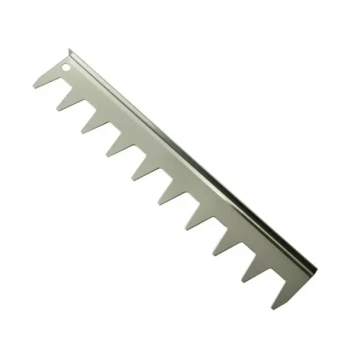
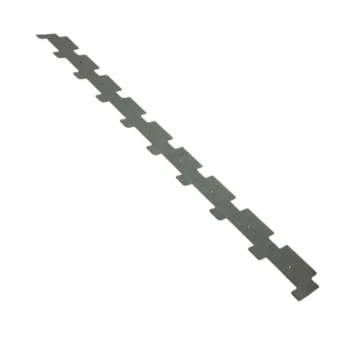
A widely adopted strategy among beekeepers is to utilize ten frames within the brood boxes while reducing the count to nine frames within the honey supers. While standard Langstroth boxes are technically designed to accommodate ten frames, this specific distribution is a frequent and accepted deviation from the default setup.
While the standard philosophy suggests filling every box to its maximum capacity, many beekeepers intentionally space out frames in the upper boxes. This approach maintains a dense configuration for the brood chamber while altering the spacing in the honey storage area.
Analyzing Frame Distribution
The Standard Capacity vs. Common Practice
The Langstroth hive design fundamentally accommodates ten frames per box. This is the "standard philosophy" for the equipment.
However, operational practice often differs from the manufacturer's maximum capacity. Beekeepers frequently maintain the full ten frames in the brood boxes (the bottom boxes where the queen lays eggs). Conversely, they often space the frames further apart in the honey supers, reducing the count to nine frames.
Frame Dimensions and Compatibility
Regardless of whether you arrange nine or ten frames in a box, the frame width remains standardized at 19-3/16 inches. The specific type of frame used depends on the depth of the box:
- Deep Frames: 9-1/8 inches deep (typically used for brood).
- Medium Frames: 6-1/4 inches deep (often used for honey supers).
- Shallow Frames: 5-3/8 inches deep (often used for honey supers).
Understanding Configuration Trade-offs
Equipment Size vs. Spacing Strategies
It is distinct to distinguish between spacing frames and changing equipment sizes.
The practice of using 9 frames in a 10-frame box is a spacing strategy. This is different from using an 8-frame hive, which is a separate category of equipment where the box itself is physically narrower. Both 8-frame and 10-frame configurations rely on the same fundamental principle: the use of removable frames to facilitate inspection.
Deviating from Design Intent
Using nine frames in a ten-frame box creates extra space between the combs.
While this is a common practice for honey supers, it represents a departure from the box's exact design specifications. Beekeepers adopting this method are intentionally varying from the standard ten-frame philosophy to alter how the bees utilize the available space in the supers.
Making the Right Choice for Your Goal
When setting up your Langstroth hive, your frame count should align with the function of that specific box.
- If your primary focus is the Brood Nest: Maintain the standard ten frames to maximize the area available for the queen to lay and the colony to expand.
- If your primary focus is the Honey Super: Consider reducing to nine frames to follow the common practice of increased spacing in honey storage areas.
Understanding the distinction between box capacity and operational practice allows you to manage your hive effectively.
Summary Table:
| Box Type | Recommended Frame Count | Frame Depth (Standard) | Primary Purpose |
|---|---|---|---|
| Brood Box | 10 Frames | Deep (9-1/8") | Queen laying & colony expansion |
| Honey Super | 9 Frames (Spaced) | Medium (6-1/4") or Shallow (5-3/8") | Efficient honey storage & easier uncapping |
| 8-Frame Hive | 8 Frames | Variable | Lighter weight for easier handling |
Scale Your Beekeeping Operation with HONESTBEE
Are you a commercial apiary or a distributor looking for high-quality, reliable equipment? HONESTBEE specializes in supporting professional beekeeping businesses with a comprehensive range of wholesale solutions. From precision-engineered hive-making and honey-filling machines to durable Langstroth frames and essential consumables, we provide everything you need to optimize your production.
Why partner with us?
- Wholesale Excellence: Competitive pricing on full-spectrum beekeeping tools and machinery.
- Industry Expertise: Specialized hardware designed for commercial durability.
- Unique Merchandise: Expand your brand with our honey-themed cultural products.
Ready to enhance your efficiency and output? Contact us today to discuss your wholesale needs!
Related Products
- Wooden Bee Hive Frames for Beekeeping and Wholesale
- Stainless Steel 9 Frame Hive Spacer Durable Precise for Commercial Beekeeping
- JZBZ Langstroth Queen Rearing Frame for Beekeeping
- Durable Plastic Frame Spacer
- Solid Bottom Board Australian Pine Wood Langstroth Bottom Board for Wholesale
People Also Ask
- How do wooden and plastic hive frames compare in terms of durability? Wood vs. Plastic Longevity & Repairability
- How does balancing the number of frames impact hive productivity? Optimize Your Apiary's Biological Output
- What are the main considerations when choosing between wooden and plastic bee hive frames? Optimize Your Apiary's Efficiency
- How should beehive frames be maintained to prolong their lifespan? 5 Pro Tips for Durable Beekeeping Equipment
- What is the primary function of frames within a beehive system? Structural Foundation and Hive Management