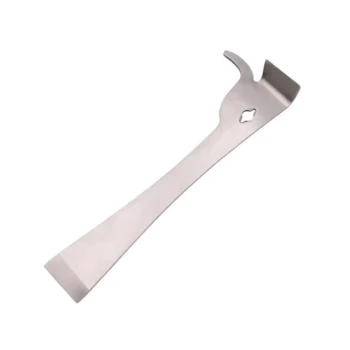
A hive tool is the beekeeper's primary instrument for access and leverage. It is a specialized, flat metal bar—often resembling a miniature crowbar or scraper—designed to pry apart hive components that bees have cemented together. Without this tool, performing routine inspections or maintenance is virtually impossible due to the strength of the biological seals bees create.
The honey bee environment is designed to be sealed and static. A hive tool is the essential mechanism that allows a beekeeper to disrupt this seal to manage the colony, enabling the separation of boxes and frames without causing excessive damage or agitation.
The Biological Necessity
The requirement for a hive tool stems directly from the natural instincts of the honey bee. You are not just fighting friction; you are overcoming a deliberate construction intended to secure the hive.
The Propolis Seal
Bees collect a resin-like substance called propolis from trees and plants. They use this material to glue every part of the hive together, creating an incredibly strong, airtight seal.
Filling the Gaps
If any space exists within the hive that is smaller than the standard "bee space," bees will fill it. They use propolis to seal cracks, secure the inner cover to the top box, and glue the telescoping cover down.
Brace and Burr Comb
Beyond propolis, bees produce wax to build brace comb or burr comb in unexpected places. This creates physical bridges between frames and hive bodies, fusing distinct components into a single solid unit.
Critical Functions of the Tool
The hive tool acts as a multi-purpose key, allowing the beekeeper to dismantle the hive layer by layer.
Prying and Leverage
The primary function of the tool is to act as a steel pry bar. It provides the necessary leverage to break the propolis seal between hive bodies (boxes) and to pry apart frames in the brood chamber or honey super.
Cutting and Detaching
In hives such as horizontal top bar hives or Warre hives, comb may be attached directly to the hive sides. A hive tool—especially those with a sharp edge or comb knife feature—is necessary to detach this comb without destroying it.
Scraping and Cleaning
During inspections, a beekeeper must maintain the internal dimensions of the hive. The tool is used to scrape away excess propolis build-up and burr comb that could crush bees or misalign frames if left unchecked.
Material and Design
Because the propolis seal is surprisingly strong, the tool itself must be robust.
Heavy-Duty Construction
High-quality hive tools are often hand-forged from 1/4 inch steel. This rigidity ensures the tool does not bend under the force required to "pop" the seals of a well-established hive.
Versatile Geometry
The design often combines a traditional prying end with a flat scraping edge or a comb knife. This versatility makes it effective for various styles, including foundationless Langstroth hives and top bar arrangements.
Common Pitfalls to Avoid
While the hive tool is essential, improper use or selection can lead to issues in the apiary.
The Risk of Component Damage
Because the tool is made of hard steel and the hive is often made of soft pine, aggressive prying can gouge or damage the wooden ware. Leverage must be applied carefully to separate components without splintering the wood.
Tool Maintenance
A dull or dirty hive tool is less effective and potentially dangerous to the hive's health. If the scraping edge becomes blunt, it requires more force to remove propolis, increasing the chance of slipping and jarring the colony.
Making the Right Choice for Your Goal
The specific design you choose may depend on the type of hive you manage and your specific maintenance habits.
- If your primary focus is separating heavy boxes: Prioritize a tool made of thicker, hand-forged steel to maximize leverage against strong propolis seals.
- If your primary focus is managing natural comb: Look for a tool that integrates a comb knife feature to detach comb from hive sides in Top Bar or Warre hives.
Mastering the use of the hive tool is the first step toward smooth, non-intrusive beekeeping.
Summary Table:
| Feature | Primary Function | Key Benefit |
|---|---|---|
| Prying & Leverage | Breaks propolis seals between boxes | Allows hive access without damaging wood |
| Scraping Edge | Removes burr comb and excess resin | Maintains 'bee space' and hive hygiene |
| Cutting / Detaching | Separates comb from hive walls | Crucial for Top Bar and Warre hive management |
| Material (Steel) | Provides rigidity and durability | Ensures tool won't bend under heavy pressure |
Elevate Your Apiary Operations with HONESTBEE
As a commercial beekeeper or distributor, your efficiency depends on professional-grade equipment that stands up to the toughest propolis seals. HONESTBEE specializes in serving the global beekeeping industry with a comprehensive wholesale portfolio—ranging from heavy-duty hand-forged hive tools and protective gear to advanced hive-making and honey-filling machinery.
Whether you are scaling a commercial apiary or stocking a distribution network, we provide the essential hardware and industry consumables needed for success. Contact us today to discuss our wholesale offerings and discover how our high-quality tools can streamline your honey production.
Related Products
- Professional Multi-Function Stainless Steel Hive Tool
- Professional Stainless Steel Pry-Bar Hive Tool
- HONESTBEE Professional Long Handled Hive Tool with Precision Cutting Blade
- HONESTBEE Premium Italian Style Hive Tool with Hardwood Handle
- Ergonomic Plastic Frame Spacer Tool for Rapid Hive Management Beekeeping
People Also Ask
- Why are professional hive tools considered indispensable? Master Beekeeping Maintenance with Precision Leverage
- What is the role of professional hive tools in routine apiary maintenance? Expert Tips for Hive Health and Longevity
- What are the benefits of a multi-functional hive tool? Streamline Your Apiary Workflow with One Tool
- What advantages do multi-functional hive tools offer? Maximize Your Apiary Efficiency and Workflow
- What are the common construction features of hive tools? Key Insights for Superior Beekeeping Efficiency