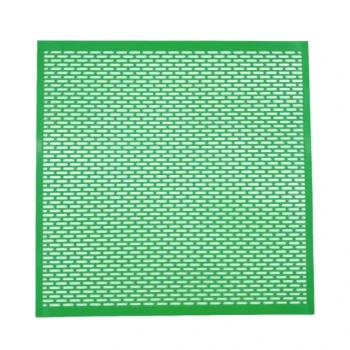
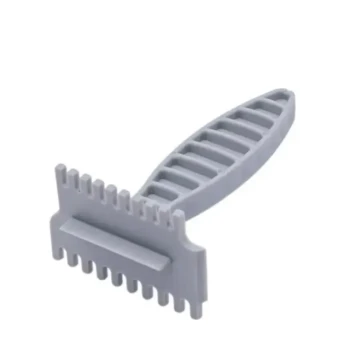
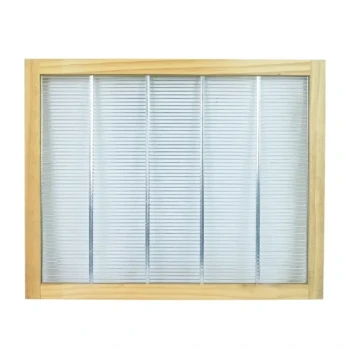
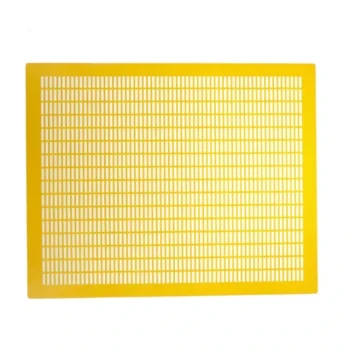
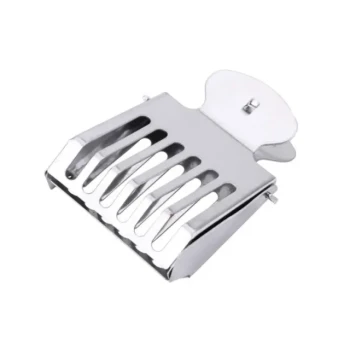
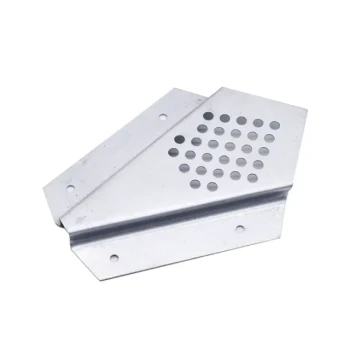
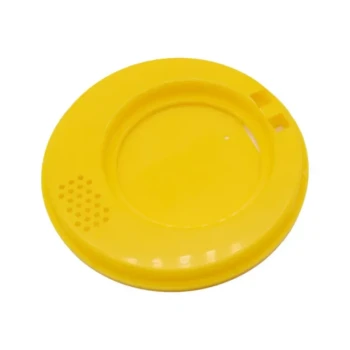
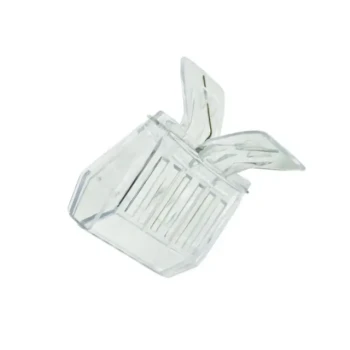
A queen excluder is a precision hive management tool designed to physically separate the queen bee from specific areas of the hive based on size. It typically takes the form of a perforated zinc sheet, a wire grid, or a plastic rack placed between the brood chamber and the honey supers. The device features slots or mesh openings specifically gauged to allow smaller worker bees to pass through freely while blocking the larger queen.
The core function of a queen excluder is to confine egg-laying to the brood chamber, ensuring that honey supers remain free of larvae. This guarantees that the upper sections of the hive are used exclusively for honey storage rather than reproduction.
The Mechanics of Exclusion
The Biological Principle
The device operates on a simple biological difference: the size of the bee's thorax. While worker bees are small enough to navigate tight spaces, the queen possesses a significantly larger thorax.
Precision Engineering
To exploit this size difference, the gaps in a queen excluder are manufactured to specific dimensions, typically between 4.1 and 4.4 millimeters. This tolerance is critical; it must be wide enough to prevent hindering the worker bees' traffic but narrow enough to create an impassable barrier for the queen.
Material Varieties
Excluders are constructed from various materials to suit different management styles. The most common forms include perforated zinc sheets, wire grids (often framed in wood), and molded plastic racks.
Primary and Advanced Applications
Segregating Honey from Brood
The most frequent use of the excluder is placing it directly above the uppermost brood box. This prevents the queen from ascending into the honey supers to lay eggs. Consequently, when beekeepers harvest these frames, they extract clean honey without the contamination or complication of developing brood.
Royal Jelly Production
In advanced apiary management, excluders are essential for producing royal jelly. By manipulating the queen's location, beekeepers can stimulate the colony to produce surplus royal jelly in specific queen cells.
Queen Rearing and Breeding
Excluders are utilized to rear new queens within a hive that already has a reigning queen. By isolating the queen from a section of the hive, the workers in that section can be induced to build queen cells, allowing for controlled breeding.
Multi-Queen Colonies
Beekeepers can use excluders to establish and maintain multi-queen systems (such as two-queen hives). The device allows worker bees to move between different queens' territories to share resources while keeping the queens physically apart to prevent them from fighting.
Understanding the Trade-offs
The Risk of Swarming
While effective for honey purity, restricting the queen's movement can have side effects. If the brood chamber becomes congested, the queen's inability to expand upward may contribute to a swarming impulse, causing part of the colony to leave.
Necessity in Large Hives
In hives that utilize multiple deep hive bodies for the brood nest, a queen excluder may not always be necessary. In these ample setups, the queen often naturally remains in the lower boxes, and the workers will store honey in the upper supers without physical barriers.
Making the Right Choice for Your Goal
Whether you should use a queen excluder depends on your specific objective for the hive:
- If your primary focus is clean honey extraction: Use an excluder to guarantee your supers contain 100% honey and zero brood.
- If your primary focus is rapid colony expansion: You may choose to omit the excluder to give the queen maximum freedom to lay eggs, provided you monitor the supers.
- If your primary focus is advanced management (breeding/royal jelly): The excluder is an indispensable tool for compartmentalizing the hive's functions.
Ultimately, the queen excluder is a tool of control, allowing the beekeeper to dictate exactly where the colony directs its reproductive energy versus its storage efforts.
Summary Table:
| Feature | Description |
|---|---|
| Function | Physically separates the queen from honey supers using size-based exclusion |
| Slot Size | Precision-engineered between 4.1mm and 4.4mm |
| Materials | Perforated zinc, wire grids (wood-framed), or durable plastic |
| Primary Use | Ensuring brood-free honey harvesting |
| Advanced Uses | Royal jelly production, queen rearing, and managing multi-queen colonies |
Elevate Your Apiary Operations with HONESTBEE
Maximize your honey yield and hive efficiency with professional-grade management tools. HONESTBEE provides commercial apiaries and distributors with high-precision queen excluders, hive-making machinery, and honey-filling systems designed for scale.
From essential consumables to advanced hardware, we empower your business with the equipment needed for superior results. Contact HONESTBEE today to discuss our wholesale offerings and how our comprehensive range of beekeeping solutions can drive your success.
Related Products
- High Performance Plastic Queen Excluder for Beekeeping and Apiary Management
- Lightweight Durable Plastic Queen Excluder Scraper for Beekeeping
- Premium Wood Framed Metal Wire Queen Bee Excluder
- Professional Plastic Queen Excluder for Modern Beekeeping
- Metal Queen Bee Excluder for Beekeeping
People Also Ask
- What are the characteristics of a plastic queen excluder? Key Benefits for Cost-Effective Beekeeping
- What are the operational and cost advantages of using plastic queen excluders over metal or wire excluders in commercial hive management? Discover how they reduce labor, prevent wing damage, and lower total costs.
- What types of queen excluders are available for beekeepers? Choose the Right Tool for Your Hive
- Why are standardized hive frames and queen excluders essential for maintaining honey purity and quality? Scale Your Purity
- Do plastic queen excluders work? A Cost-Effective Solution for Modern Apiaries