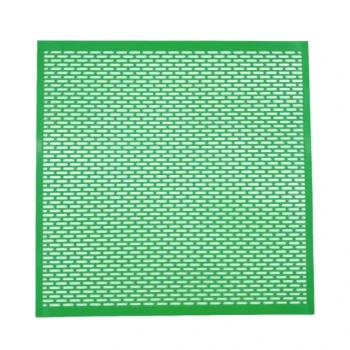
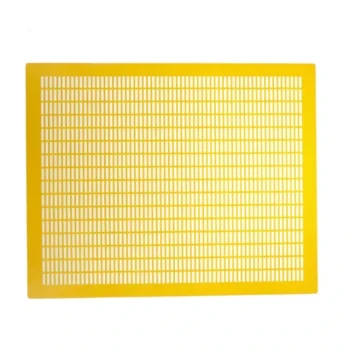
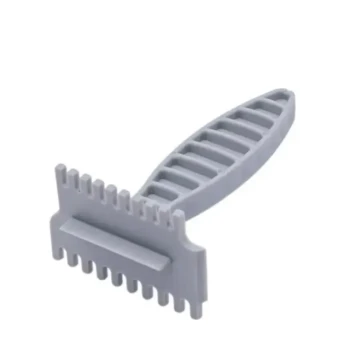
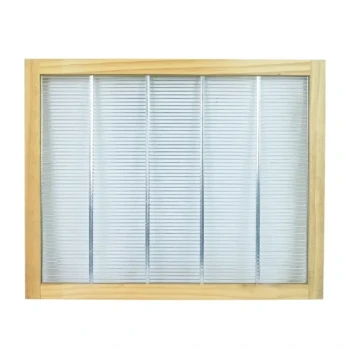
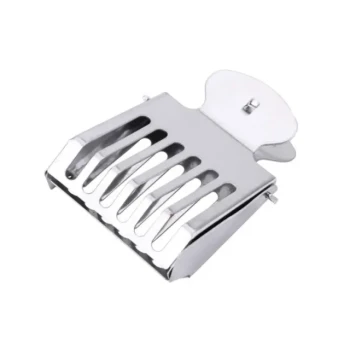
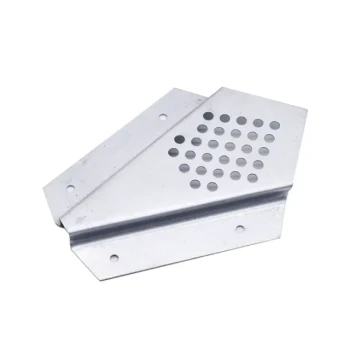
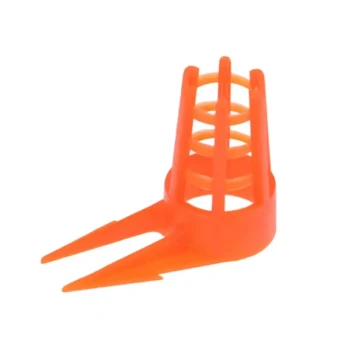
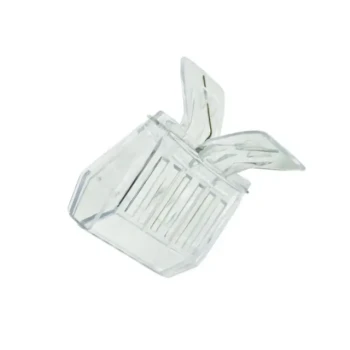
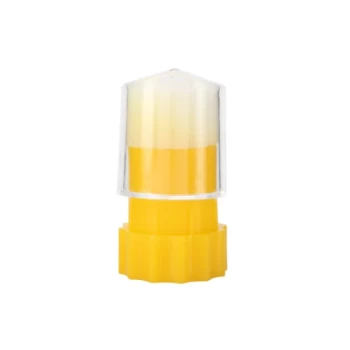
A queen excluder is a precision physical barrier used to dictate the internal geography of a beehive. Placed horizontally between the lower brood chamber and the upper honey supers, this device features a grid of slats or wires spaced specifically to exploit the size difference between bee castes. Its primary function is to physically block the larger queen from entering the upper boxes, ensuring she lays eggs only in the lower section while allowing smaller worker bees to pass through and store honey above.
The queen excluder transforms a hive from a fluid nesting space into a structured system, strictly separating the nursery (brood) from the pantry (honey harvest).
The Mechanics of Exclusion
Exploiting Caste Anatomy
The functionality of the excluder relies entirely on distinct size differences between female bees.
The thorax of a queen bee is significantly larger and deeper than that of a worker bee.
Precision Spacing
The grid openings—typically measuring between 4.1 and 4.4 millimeters—are gauged to extremely tight tolerances.
This specific width allows the smaller workers to slip through the gaps effortlessly to deposit nectar.
Simultaneously, the rigid spacing acts as an impassable wall for the queen, confining her reproductive activities to the designated brood boxes below.
The Operational Purpose
Ensuring Honey Purity
The most critical function of the excluder is to keep the honey supers free of protein (brood).
Without an excluder, a prolific queen may move upward to lay eggs in the honey supers, resulting in frames containing a mix of honey, pollen, and developing larvae.
Separating these zones ensures that when you harvest, you are extracting pure honey, not destroying future bees or contaminating the extraction equipment with larval matter.
Streamlining Management
By confining the queen to the lower chambers, the beekeeper knows exactly where the brood nest is located.
This simplifies inspections, as you do not need to hunt through honey supers to find the queen or check for hive health issues related to brood.
Understanding the Trade-offs
The "Honey Excluder" Effect
A common criticism is that these devices can act as a "honey excluder" by inhibiting worker movement.
If the grid is rough or sharp (common in cheap plastic models), or if the colony is weak, workers may be reluctant to pass through it, reducing the amount of honey stored above.
Increased Swarming Potential
Restricting the queen to a specific area can sometimes lead to congestion in the brood nest.
If the bees perceive the lower brood chamber as "full" because the queen cannot expand upward, it may trigger the colony's instinct to swarm.
Material Durability
Excluders are generally available in metal or plastic.
Metal grids are often preferred by experts because the round wires are easier for bees to traverse and they do not warp, whereas plastic can sag and alter the precise spacing required for the device to work.
Making the Right Choice for Your Goal
Whether you use a queen excluder depends on your specific management philosophy and the strength of your colonies.
- If your primary focus is pristine honey extraction: Utilize a metal queen excluder to guarantee your harvesting frames contain zero brood.
- If your primary focus is rapid colony expansion: Consider leaving the excluder off early in the season to allow the queen unrestricted access to lay, adding it only once the honey flow begins.
- If your primary focus is swarm prevention: Monitor the brood nest closely for congestion, as the excluder creates an artificial ceiling on the queen's movement.
Used correctly, the queen excluder is an essential tool for maintaining an organized, efficient, and harvest-ready apiary.
Summary Table:
| Feature | Specification/Detail | Benefit |
|---|---|---|
| Grid Spacing | 4.1mm - 4.4mm | Blocks the queen while allowing workers through |
| Primary Function | Caste separation | Keeps honey supers free of larvae and eggs |
| Material Options | Metal or Plastic | Metal offers better durability and bee passage |
| Impact on Harvest | Purity | Simplifies extraction by ensuring brood-free frames |
| Management | Structural Geography | Streamlines inspections and queen locating |
Maximize Your Honey Yield with HONESTBEE Professional Equipment
At HONESTBEE, we understand that precision is the key to a productive apiary. Whether you are a commercial beekeeper or a large-scale distributor, our comprehensive wholesale offering provides everything you need to scale your operations efficiently. From high-quality metal queen excluders that ensure pristine honey harvests to advanced hive-making and honey-filling machinery, we supply the full spectrum of professional tools and consumables.
Partner with HONESTBEE to benefit from:
- Industrial-Grade Durability: Precision-engineered hardware designed for heavy commercial use.
- Complete Supply Chain: A one-stop shop for everything from specialized machinery to honey-themed cultural merchandise.
- Expert Support: Tailored solutions to help you manage larger colonies and increase extraction purity.
Ready to elevate your beekeeping business? Contact us today to explore our wholesale catalog and expert solutions!
Related Products
- High Performance Plastic Queen Excluder for Beekeeping and Apiary Management
- Professional Plastic Queen Excluder for Modern Beekeeping
- Lightweight Durable Plastic Queen Excluder Scraper for Beekeeping
- Metal Queen Bee Excluder for Beekeeping
- Premium Wood Framed Metal Wire Queen Bee Excluder
People Also Ask
- What are the characteristics of a plastic queen excluder? Key Benefits for Cost-Effective Beekeeping
- What are the operational and cost advantages of using plastic queen excluders over metal or wire excluders in commercial hive management? Discover how they reduce labor, prevent wing damage, and lower total costs.
- What types of queen excluders are available for beekeepers? Choose the Right Tool for Your Hive
- Why are standardized hive frames and queen excluders essential for maintaining honey purity and quality? Scale Your Purity
- Do plastic queen excluders work? A Cost-Effective Solution for Modern Apiaries